The following is a guest piece written by Nicole Greene, vice president analyst in the Gartner Marketing Practice. Opinions are the author’s own.
The 2026 FIFA World Cup will be one of the biggest brand marketing opportunities in years. It will also test something more fundamental: whether marketers can still earn attention at scale and prove the value of sponsorships.
For years, the industry has leaned into digital channels and personalization to drive relevance. The assumption was that better targeting would lead to better outcomes. That premise is starting to weaken. Marketing budgets remain heavily digital, even as consumers become more adept at avoiding ads, skipping them, blocking them or ignoring them entirely. The result is a growing disconnect between where brands invest and where attention is actually available.
Artificial intelligence-fueled personalization is not enough to close that gap. In many cases, it makes the experience worse. When messaging feels repetitive or disconnected from context, it erodes trust and drives disengagement. Precision has improved, but impact has not kept pace. The challenge now is less about targeting and more about visibility and presence, specifically showing up in environments where people are already engaged.
Why the World Cup changes the attention equation
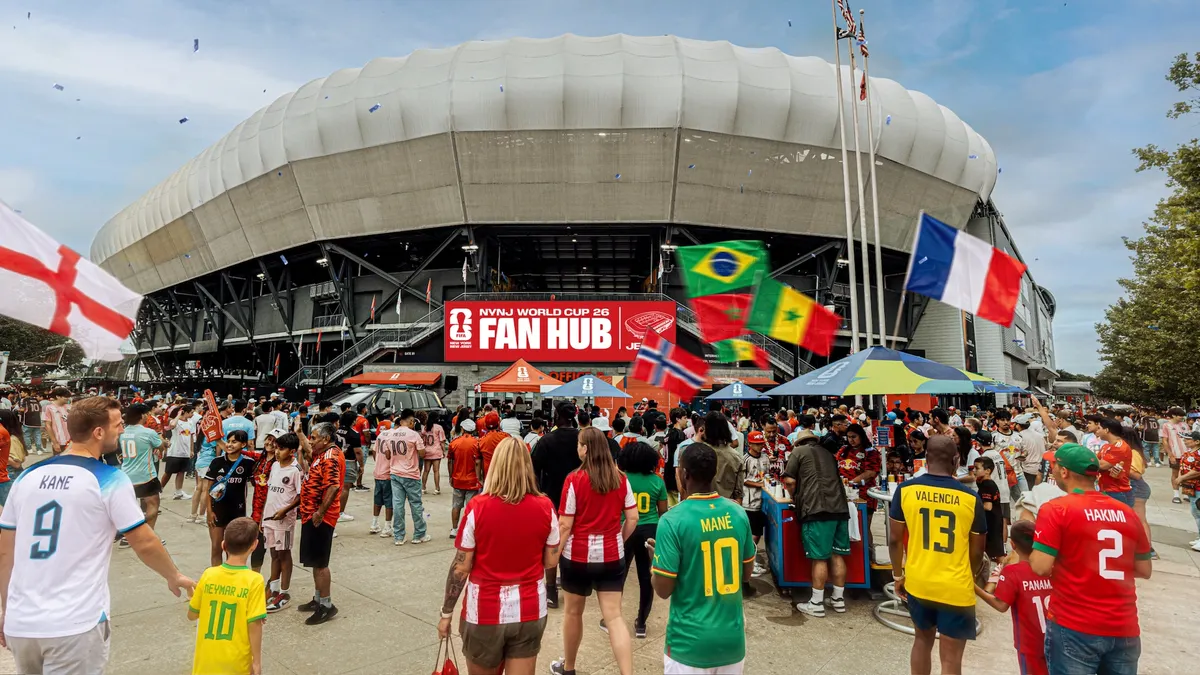
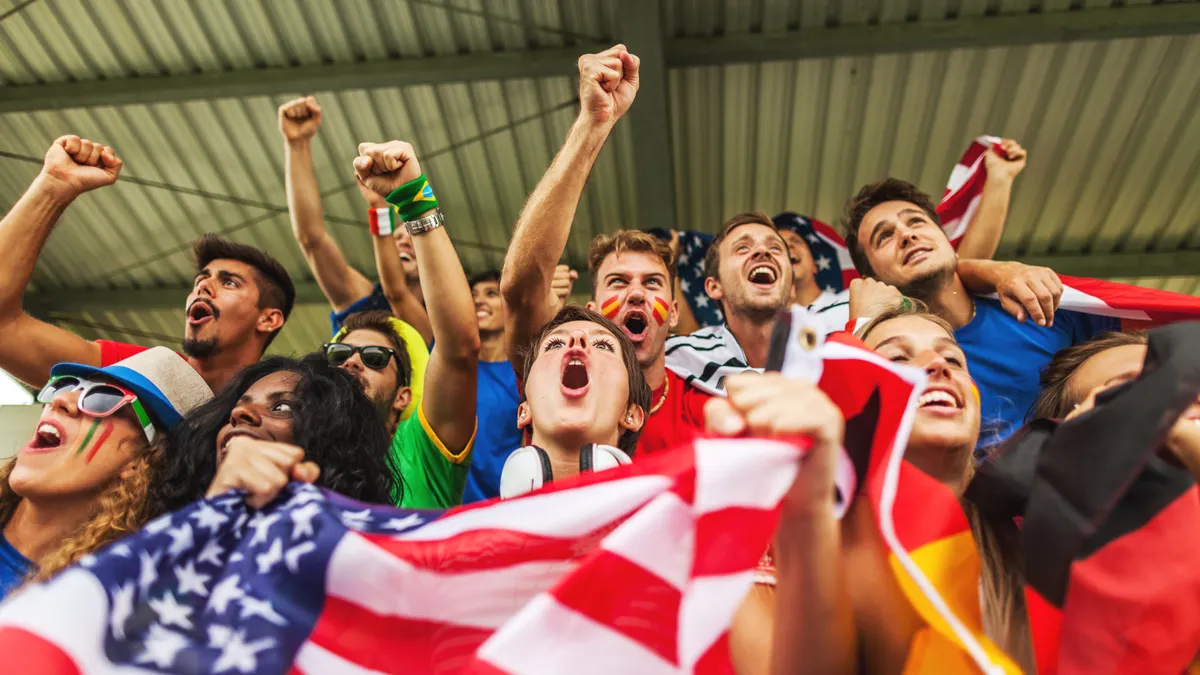
Unlike fragmented digital environments, the World Cup concentrates attention. It brings together emotion, ritual and shared context over an extended period of time. These are conditions that are increasingly difficult to replicate in the media landscape, and they create a natural opening for brands to seamlessly participate rather than interrupt.
Sponsorships can take advantage of that shift, but only when they are approached differently. Many brands still treat large-scale events primarily as visibility plays, focusing on logo placement, reach and exposure. Those elements still matter, but they are no longer enough. When every brand shows up in the same way, visibility becomes the baseline rather than the differentiator.
The campaigns that stand out do something more. They contribute to the experience itself, whether through fan engagement, cultural participation or locally relevant activations. They give audiences a reason to interact with the brand beyond simply noticing it. Joining the fandom, instead of distracting from it, is what separates effective sponsorships from forgettable ones.
Most sponsorship strategies start in the wrong place
Sponsorships place brands in environments where audiences are already paying attention. At the same time, they require significant investment, and expectations for measurable impact are rising. Gartner predicts that by 2028, 90% of CMOs who invest in sports sponsorships will struggle to prove return on investment because they have not clearly defined what success should look like.
That gap typically starts in planning. Too many organizations default to impressions as the primary metric because they are easy to report and compare. Impressions demonstrate reach, but they say very little about whether a sponsorship changed behavior or perception. Without a clearer definition of outcomes, even effective programs can appear difficult to justify.
A more effective approach begins with clarity. Most sponsorships are trying to achieve some combination of three outcomes: visibility, connection and trust. These concepts are not new, but they are often treated as interchangeable rather than distinct objectives that require different strategies and measurement approaches.
Visibility remains the foundation. The World Cup delivers scale through broadcast, social platforms, media coverage and on-the-ground presence. That exposure reinforces awareness, particularly at a global level. It is also the easiest outcome to measure and the least likely on its own to justify the investment.
Connection is where sponsorships begin to differentiate. Instead of pushing messages into crowded feeds, brands can align with how fans already engage, whether through in-person experiences, creator partnerships, retail tie-ins or localized programming. The goal is to participate in the experience instead of surrounding it with messaging.
Trust takes longer to build, but it is often what gives sponsorships lasting business value. Shared experiences carry more weight than typical brand interactions, particularly in a media environment increasingly shaped by automation. Brands that participate in a way that feels consistent and credible can strengthen their relationship with audiences in ways that extend beyond the event itself.
If you can’t define value, you can’t prove ROI
Not every brand needs to prioritize all three outcomes equally. Some will focus on reach, others on engagement or long-term brand perception. What matters is defining that priority upfront and aligning activation and measurement accordingly. Without that clarity, the results will be difficult to interpret after the fact.
The structure of the World Cup also expands how brands can participate. Official sponsorship is only one option, and often not the most flexible. Many brands will find greater impact through local activations, creator ecosystems, retail experiences or partnerships tied to specific audiences and communities. These approaches can feel more authentic and allow brands to move more quickly.
However, they also come with risk. Sponsorship environments are crowded, visibility can dilute quickly and one-time moments can fade without reinforcement. Partner relationships introduce reputational considerations, and execution quality has a direct impact on outcomes. These are not new challenges, but they are becoming more significant as budgets tighten and scrutiny increases.
Measurement needs to reflect this complexity. Evaluating sponsorship based only on in-event performance misses where much of the value is created. Momentum before the event, engagement during it and brand impact afterward all need to be part of the equation. These indicators are harder to quantify than impressions, but they are far more closely tied to business outcomes.
This is where many organizations still lag. They recognize that sponsorship can create meaningful impact, but they have not built the framework to demonstrate it with confidence.
The pressure on CMOs is making that gap harder to ignore. Leaders are being asked to deliver growth while navigating rising costs, privacy constraints and fatigue with traditional advertising. At the same time, consumers continue to respond to experiences that feel shared and emotionally real. The World Cup sits directly at that intersection.
Scale alone will not determine which brands succeed. The ones that stand out will be clear about the role they want to play, deliberate in how they activate and disciplined in how they measure outcomes. They will treat sponsorship as a way to build visibility, connection and trust, not simply extend reach.
As attention becomes harder to earn, the brands that succeed will be the ones that can show their sponsorships created value beyond visibility alone.