Campaign Trail is our analysis of some of the best new creative efforts from the marketing world. View past columns in the archives here.
In the last few years, Bosch has utilized celebrities Antonio Banderas and Guy Fieri to promote stainless steel home appliances and pneumatic power tools during the Super Bowl. But the German technology conglomerate’s latest spot, from its Mobility Aftermarket division, has a more mundane focus — the windshield wiper — and features anthropomorphized robots instead of recognizable faces.
Created with longtime agency Bailey Lauerman, “Impressive Innovation” demonstrates how Bosch brings precision and performance not just to the crowded wiper-blade category but to the rest of its portfolio, as well.
“That’s the thing about wipers: We’ve learned through research that people don’t think about them. They replace them when they’re not working, and they usually just buy the crappy one. But if you ever buy a good windshield wiper, you will have a little moment of clarity,” said David Thornhill, creative director at Bailey Lauerman.
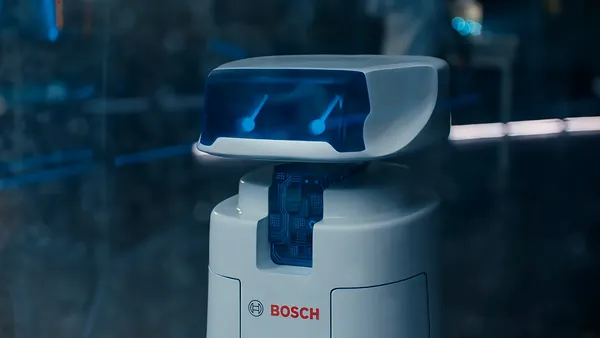
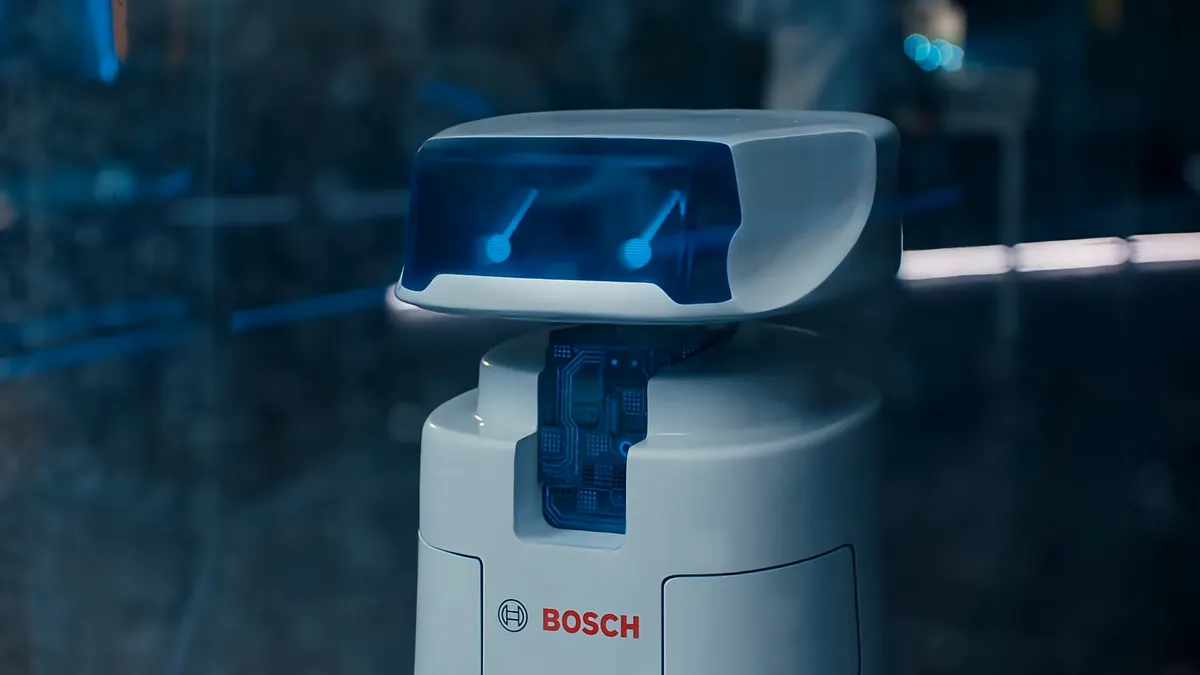
In the campaign’s 30-second hero spot, that moment of clarity is had not by a consumer but by robots in a Bosch research lab that eventually take the windshield wipers for a joyride. The campaign is running through March and includes, along with the hero spot, a 15-second cutdown and multiple short-form executions running across premium streaming, digital video, paid social, online audio, search and contextual placements.
“This work does a nice job of speaking to both more category-involved enthusiasts and more passive but important audience segments like ‘modern moms,’” said Aaron Jarosh, head of integrated strategy at Bailey Lauerman, in a statement. “We are always trying to find a narrative that has a balanced appeal between workshop installers and end-users. Automotive professionals are a major decision influencer at the moment of purchase, so the work needs confident storytelling but also heart and humor.”
Illustrating innovation
When creating the campaign, the Bosch and Bailey Lauerman teams brought a handful of strategic messages, including safety and innovation, into testing. The client eventually chose the innovation route, which was a new claim for the brand’s advertising.
“Bosch has been a leader in innovation for a long time, and engineering is their jam. We’re playing to their bread and butter — it just happens to be for a windshield wiper,” Thornhill said. “We realized that to make an innovation claim, we had to put something in market that’s pretty special, and everything that's seen has to pay off that notion.”
The agency briefed a spot anchored in the idea that “innovation recognizes innovation” featuring several robots watching the performance of a wiper blade in a Bosch testing facility. But the firm, based in Omaha, Nebraska, had never made robots or a testing facility with a rain chamber, so the team did a thorough search for a director, eventually landing on Dan DiFelice of Biscuit Filmworks thanks to a treatment that best captured the spirit of the brief.
“The visuals were beautiful and imaginative. When someone takes your idea and just sees it the same way you’re seeing it, and then advances it, we’re pretty sure we have the right guys,” Thornhill said.
After researching what actual Bosch facilities look like, Thornhill and company decided they wanted to create a lab from scratch. Although that approach could have been a challenge, Bosch accepted and gave the team the blessing to create a lab and robots that don’t exist but could better bring the sophistication of innovation to life. The agency and director then worked with Division, a production company based in Ljubljana, Slovenia, that created a working rain chamber and several robots that were modeled, 3D-printed and motorized for the spot.
“We wanted all three robots to be distinct and have their own personalities and their own names,” Thornhill explained. “That tells us what to do with them, and where to put them within the spot, and what their story is.”
Along with Biscuit Films and Division, Bailey Lauerman enlisted Whitehouse Post for editing and Universal Production Partners, the latter of which was responsible for much of the craft and beauty in the final spot. Plus, the agency made 360-degree digital recreations of each robot that can now be used in digital formats — a useful tool as the campaign’s story continues.
“We’re getting ready to take the robots on a Route 66 road trip, because it’s Bosch’s 100-year anniversary,” Thornhill said. “We’ll be road tripping with them soon and documenting along the way.”