Jelly Belly reintroduced itself to American consumers in May with a new brand positioning that focuses on core, fan-favorite flavors amid a broadened retail strategy. Drawing on both nostalgic and contemporary influences, the brand, which was acquired by confectioner Ferrara in 2023, aims to appeal to a younger consumer cohort that covets flavor and experience over novelty.
Introduced in 1976 around core eight flavors, the brand over the years became known for its more outrageous products, including a line of beans modeled after “Bertie Bott’s Every Flavour Beans” from the Harry Potter universe (and featuring flavors such as Vomit, Ear Wax and Rotten Egg) and the “Bean Boozled” game, which disguised unappealing tastes like Barf and Toothpaste, as more traditional flavors like Berry and Juicy Pear.
“What we know is that everything old is new again,” said Lauren Holtz Pezza, Jelly Belly global marketing director at Ferrara. “When we acquired Jelly Belly, we saw an opportunity to reinvest in this beloved, American brand, bring back its visibility and growth, and modernize it for today’s younger consumers.”
The revamped business strategy will be accompanied by a new marketing campaign, themed “Bean Appetit.” The effort, from Minneapolis-based agency Mono, is meant to playfully position Jelly Belly as the gourmet choice among candies, particularly jelly beans.
“‘Bean Appetit’ is really about reframing Jelly Belly from just being candy, or just jelly beans or just Easter candy, to a more gourmet flavor experience that can be consumed at any time of the year, across multiple occasions,” said Pezza. “It’s also just a fun pun. It’s short and sweet and really memorable.”
“Bean Appetit” includes video elements like two 15-second spots centered around the Very Cherry and Strawberry Jam flavors. The spots depict two people being transported to a world filled with flavor as they consume the Jelly Belly candies. The campaign will also include social video, showcasing Juicy Pear, Watermelon and Buttered Popcorn. The one featuring the latter depicts a man revealing the contents of a popcorn box to be full of jelly beans.
Rolling out with the larger campaign are a national shopper marketing program, featuring tastings throughout the country, and a revamped website that will feature signature pairings of different flavors meant to evoke other foods, such as cherry and buttered popcorn to make cherry pie. The site will include a space for consumers to enter their own pairings, with a chance to be featured on the brand’s social media channels.
“We’re positioning ‘Bean Appetit’ as an experience to be had, and we can create a community around that,” Pezza said. “We named [our target audience] ‘the social epicureans.’ These are people who enjoy the finer things in life. Their love language is to host a party or cook dinner for their friends.”
To that end, the brand will also conduct extensive influencer outreach, sending out kits that position the candies as a treat to be savored, almost like fine dining. They are constructed to resemble a caviar tasting experience, with curated flavors, sleek serveware, colorful tea towels and tips to encourage flavor experimentation.
“It’s a way to bring Jelly Belly back into today’s culture,” Pezza said. “We live in a creator-led culture right now, and [engaging influencers] is how you appeal to consumers, particularly younger consumers.”
The modernization plan puts a new focus on a core set of flavors. After extensive research, which included mining billions of social media conversations, executives found consumers were picking around the flavors they didn’t like to find the ones they did.
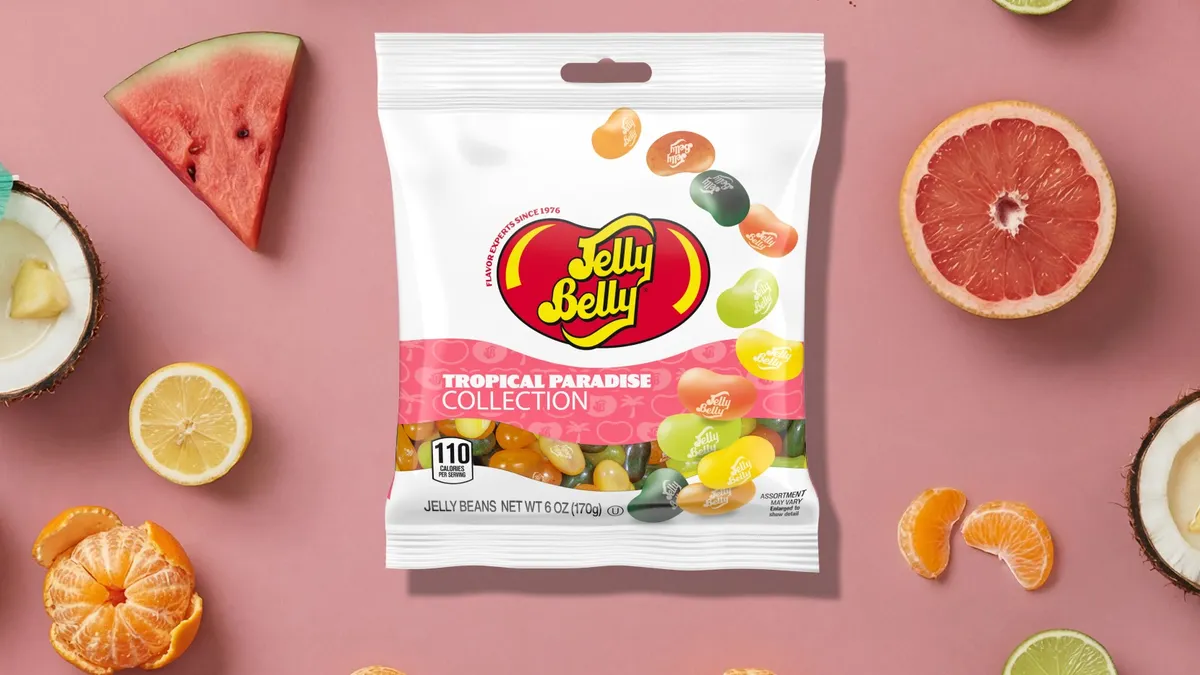
The brand pared down its primary offerings to a number of signature collections, such as a fruit-flavor-focused Signature 10 Collection and a broader Signature 20 Collection. There are also collections based on specific flavor profiles, such as Endless Summer, Farmstand Fruit, and Tropical Paradise.
The pared-down offerings are part of an expanded retail strategy that will see the brand move into more mass market stores like Walmart, Target, Costco and other grocery chains, while maintaining a presence in specialty candy stores.
“The footprint that we need to create is more in your national chain markets and mainstream retail,” Pezza said. “They only allow so much shelf space, and you need to make sure that your best curated types of collections that consumers really want are there.”