Dive Brief:
- Instacart has developed its own data clean room so CPG brands can safely integrate their proprietary data with first-party customer and sales information, according to a press release from the grocery delivery platform.
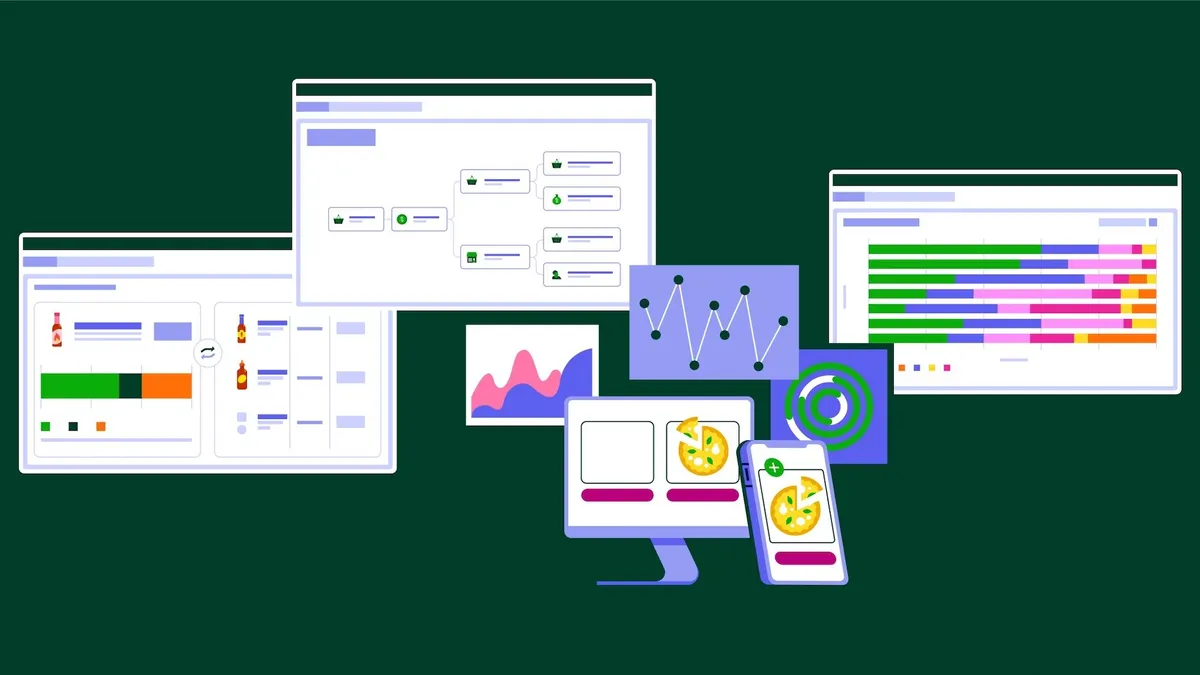
- Unveiled at the CES 2026 trade show, Instacart’s Data Hub will provide CPG companies and their agencies with deeper insights into first-party grocery shopping data and customer behaviors, including lifetime value, new-to-brand purchasers and repurchase frequency.
- Instacart has already piloted Data Hub with a select group of agencies and brands, earning praise from executives from WPP Media and Pacvue. The product will be expanded to additional partners throughout 2026.
Dive Insight:
As a marketing channel, retail media holds significant promise by purportedly giving marketers greater insights into customer behavior. The channel has seen increased investments by advertisers, with retail media being forecast to grow nearly 20% in 2025, per eMarketer. However, some marketers have raised concerns about the channel’s transparency, methodology standards and overall value. Instacart claims its new Data Hub will bring much-needed clarity to retail media as the company looks to demonstrate its advertiser-friendliness.
“Brands and agencies are eager for easier access to trusted, scaled sources of purchase data,” said Ali Miller, general manager of advertising at Instacart, in a release.
Using real consumer behavior from Instacart’s marketplace, Data Hub is intended to give CPG companies and their agencies a better understanding of shopping behaviors to inform strategies for reaching high-value customers and create more impactful media strategies.
Like most data clean rooms, Data Hub will allow companies to merge their first-party data with Instacart’s signals in a privacy-safe environment, analyze behavioral patterns, product affinities and shopping insights across the entire Instacart Marketplace, and build custom audiences that can be activated across channels to reach high-intent consumers.
Since introducing its retail media network, Instacart has been working to establish itself as an advertiser-friendly option. The company introduced a Consumer Insights Portal last year. The portal gives brands a ground-level view of consumer behavior and insights into how real-time shopping trends shape sales performance. Instacart also launched what it called the industry’s first end-to-end integration of retail media network data into TikTok’s Ads Manager platform.
In 2024, Instacart partnered with Google to boost shoppability and ad effectiveness through search and video via YouTube using the grocery delivery platform’s retail media data. The YouTube partnership also enabled ad viewers to jump directly to Instacart’s marketplace to place orders.