


NEW YORK — TikTok has drawn droves of marketers for its ability to turn products of all stripes, from Stanley tumblers to cranberry juice, into viral sensations. Since the social platform launched its Shop e-commerce marketplace in the U.S. a little over two years ago, brands have gotten better at quantifying just how much video crazes are translating into sales. TikTok Shop’s stature is growing enough to influence how retailers think about product mix, demand forecasting and content strategy, according to speakers at the National Retail Federation’s Big Show.
“It’s a place for us to learn what’s working versus not,” said Richard Cox, chief merchandising officer of the Gen Z-focused retailer Pacsun, during a Monday panel at the trade conference.
At the same time, Shop has gotten more crowded and competitive. It acts as a “bonafide retailer,” one NRF speaker said, hosting its own Prime Day-like deals bonanzas called Super Brand Days. Shop is robust enough at this point that TikTok no longer offers brands some of the incentives it once did to use the feature. A fresh level of maturity comes as the retail industry is beset by challenges related to tariffs and pullbacks in discretionary spending.
“Our main operational challenge is around profitability,” said Jenna Manula Linares, vice president of digital marketing at Tarte Cosmetics, during the panel. “As their platform has scaled, they started pulling back in what they’d been funding for us.
“We also know that the TikTok customer is value-driven,” added Linares. “So now we are at this intersection where we’re trying to find the balance between how much value [we can] offer a customer while still being conscious of our bottom line.”
Sales follow virality
TikTok Shop increasingly seems like one of the first major success stories for social commerce in the U.S. The marketplace accounted for about one-fifth of the social commerce segment in 2025 and is forecast by eMarketer to exceed $20 billion in sales this year.
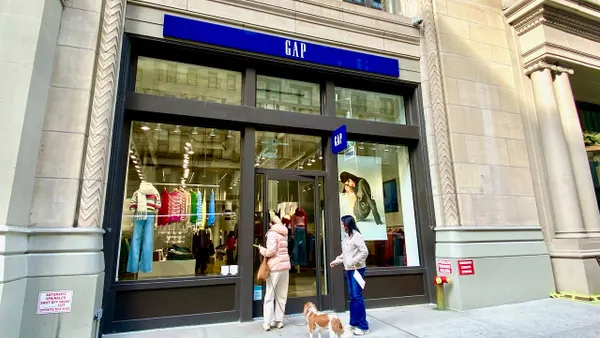
Pacsun’s first pop on TikTok Shop came as something of a surprise. Around Black Friday in 2023, a smaller influencer posted a video about the retailer’s Casey jeans, a low-rise, baggy cut of denim. The availability of the item on TikTok Shop dovetailing with a key holiday sales window resulted in 11,000 pairs sold on Black Friday alone, along with a long tail of popularity.
“We’ve sold over 100,000 pairs of that jean. In terms of halo effect, it’s helped our entire denim business,” said Cox.
Other brands on the panel shared similar case studies that speak to how Shop can link buzzy content to business results, sometimes in a chaotic fashion. Last year, Tarte — among the early adopters of Shop — noticed that creators were participating in a strange trend: They would draw under their eyes with a permanent black Sharpie and then cover up the markings with the brand’s CC under-eye color corrector, a testament to the concealer’s efficacy. Tarte has sold nearly 600,000 units of the product on TikTok Shop in the U.S., according to Linares, while noticing stronger demand in international markets through direct-to-consumer channels.
That said, Shop requires a different approach than a traditional DTC or e-commerce site. Tarte promotes a smaller assortment on Shop because the brand “can’t control the algorithm,” Linares explained. Speakers noted that TikTok’s unpredictable nature is disrupting some of the fundamentals of retail, increasing a reliance on social listening, media mix modeling and “analytics horsepower.”
“It kind of turns everything we all know about demand planning on its head,” said Feliz Papich, senior vice president of digital technology, experience and insights at Crocs.
Go with the flow
By that same token, marketers are adjusting some of their brand content to feed the Shop pipeline. Tarte, for instance, has introduced a mascot named Shapey, based on its shape-tape concealer, to attract viewers organically to its profile.
“If you come to our page, you’re actually not going to see a ton of tutorials or before and afters,” said Linares. “We’re doing a lot around humor.”
The discussion also touched on co-creation, the idea of enlisting everyday customers to create content on behalf of a brand. Some retailers may not like relinquishing that degree of control but ultra-polished ads don’t perform as well in TikTok environments, according to Cox. Additionally, high-performing organic content is becoming valuable fodder to convert into paid media or material for other social platforms.
A willingness to roll the dice on such marketing experiments is just one piece of the Wild West mindset needed to succeed on TikTok, an app that is still in the process of figuring out its future in the U.S. following a ban threat.
“TikTok wants to partner with brands that are willing to take smart risks and to move fast. They’re not going to read your legal red lines,” said Linares. “Just say yes and go with the flow.”