
For nearly two decades, ecommerce measurement followed a familiar playbook. Browser-based tracking pixels captured clicks, page views, add-to-cart events and purchases, translating digital behavior into dashboards executives trusted to guide growth. The system wasn’t perfect, but it was stable, widely understood and sufficient for an era defined by linear customer journeys and relatively permissive data environments.
That era is ending.
Ecommerce measurement is undergoing its most consequential transformation in more than 20 years. Privacy regulation, platform restrictions and changing consumer behavior have steadily degraded the reliability of browser-based tracking. At the same time, advertising platforms are shifting aggressively toward automation and AI-driven optimization. Together, these forces are reshaping not just how data is collected, but how performance itself is achieved.
The result is a new reality for ecommerce leaders: performance is no longer limited by spend or creative—it is increasingly limited by signal quality.
The Limits of the Pixel Era
The tracking pixel thrived because the digital environment was comparatively simple. Most interactions happened in a browser. Cookies persisted. Attribution models, while imperfect, operated within predictable constraints. Marketing, analytics and leadership teams aligned around a shared view of performance built on browser-level data.
Today’s customer journeys look nothing like that. Consumers move fluidly across devices, apps, social platforms, physical locations and emerging AI-driven interfaces. The browser is now just one of many touchpoints, yet legacy tracking models still treat it as the primary source of truth.
Privacy controls have further accelerated the breakdown. Cookie lifespans are shorter. Cross-site tracking is restricted. Third-party scripts are delayed or blocked. Even compliant implementations often lose fidelity before data reaches downstream platforms. In response, many organizations have added more tags, tools and integrations—introducing fragility, latency and complexity without restoring confidence.
Signal loss is no longer an edge case. It is a systemic feature of modern ecommerce.
A Structural Shift, Not an Incremental Fix
As the limitations of browser-based tracking have become unavoidable, leading organizations have begun to shift their focus from recovery to redesign. Rather than attempting to patch signal loss at the edge, they are rethinking how data is collected, governed and controlled.
Server-side tracking represents a fundamental architectural shift. Instead of relying on browsers to transmit data directly to external platforms, events are routed through brand-controlled infrastructure. This allows data to be validated, enriched, filtered and governed before distribution.
The implications are significant. Data ownership moves back to the brand. Privacy controls can be enforced centrally. Consistency improves across platforms. Most importantly, trust in measurement is restored.
Reliable data changes how organizations operate. When numbers are inconsistent, teams hesitate. Decisions stall. Alignment erodes. When data is trusted, discussions become clearer, planning becomes more disciplined and organizations move faster—not because they rush, but because they hesitate less.
From Measurement to Prediction
As ecommerce platforms continue to automate, the role of data is expanding beyond reporting. AI-driven systems do not simply evaluate past performance; they learn from signals to determine what happens next. In this environment, optimization depends on the richness, consistency and relevance of the data used to train models.
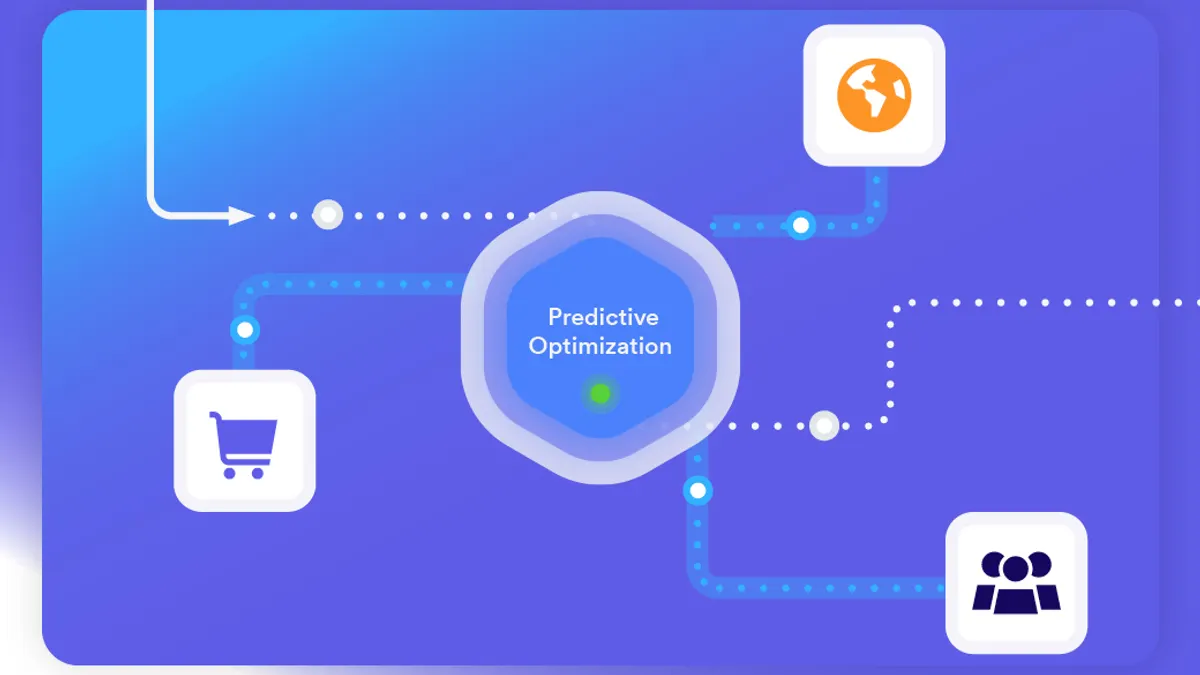
This is where predictive optimization enters the picture. Rather than focusing solely on historical outcomes, predictive systems use enriched signals to anticipate future behavior—likelihood to convert, expected value, intent and retention potential.
Clean, deterministic data is essential for this shift. Incomplete or noisy signals introduce bias and limit model effectiveness. High-quality signals enable better forecasting, more relevant personalization and more efficient media allocation. Tracking becomes a forward-looking asset, not just a retrospective record.
Accountability Has Moved Upstream
At the same time, responsibility for performance has shifted. Modern advertising platforms depend heavily on the data brands provide. Conversion events, value signals and contextual inputs shape how spend is allocated and audiences are prioritized. Platform sophistication can only go so far when signals are weak.
In practice, this means data infrastructure is no longer a support function. It is a core growth driver. Signal quality directly influences outcomes.
Preparing for 2026 and Beyond
Ecommerce now operates in a state of continuous change. AI advancement, evolving privacy expectations and rising efficiency pressure have made adaptability essential. The brands best positioned for the future are investing in data foundations that are resilient, governed and built for intelligence—not short-term workarounds.
The pixel defined an era of ecommerce measurement. The next era will be defined by server-side, signal-rich data architectures that enable prediction, personalization and performance at scale.
Tracking is no longer just infrastructure. It is a source of competitive advantage.
For a deeper exploration of these shifts—and what they mean for ecommerce leaders—the full 2026 Ecommerce Data Reality Report outlines the forces reshaping measurement and the steps brands can take to prepare for what’s next.