Campaign Trail is our analysis of some of the best new creative efforts from the marketing world. View past columns in the archives here.
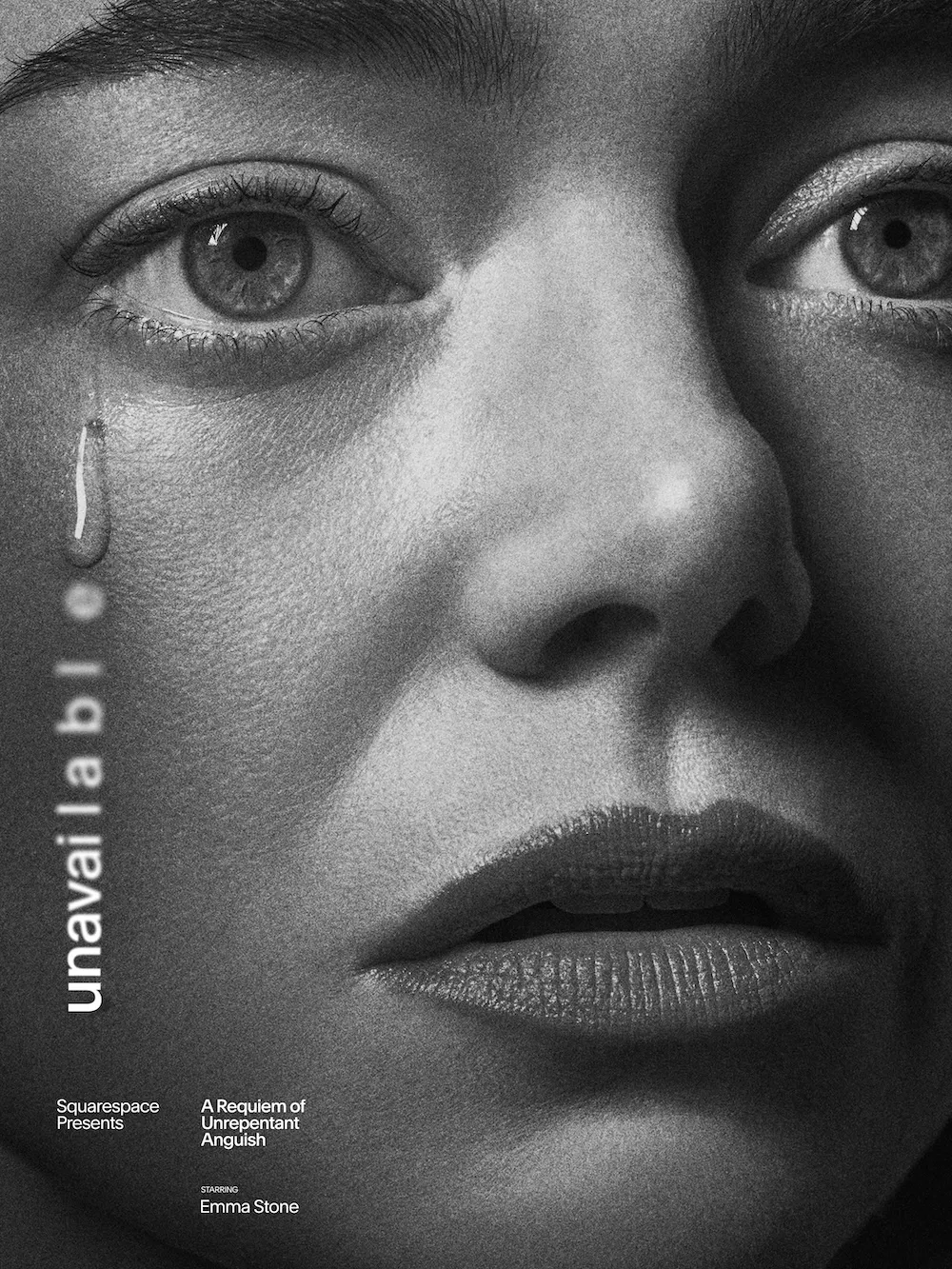
At Super Bowl 60, Squarespace ran a 30-second ad that featured an award-winning duo in front of and behind the camera: actor Emma Stone and director Yorgos Lanthimos, respectively — longtime collaborators who are known for films including “The Favourite,” “Poor Things” and last year’s “Bugonia.”
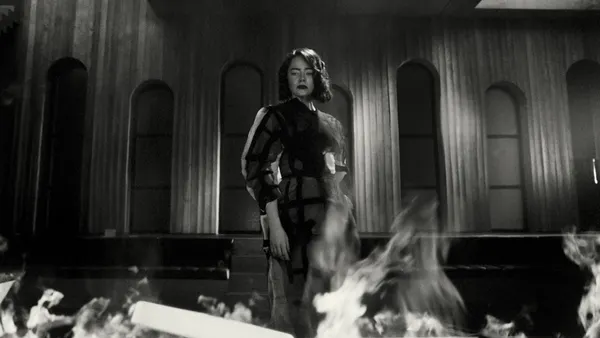
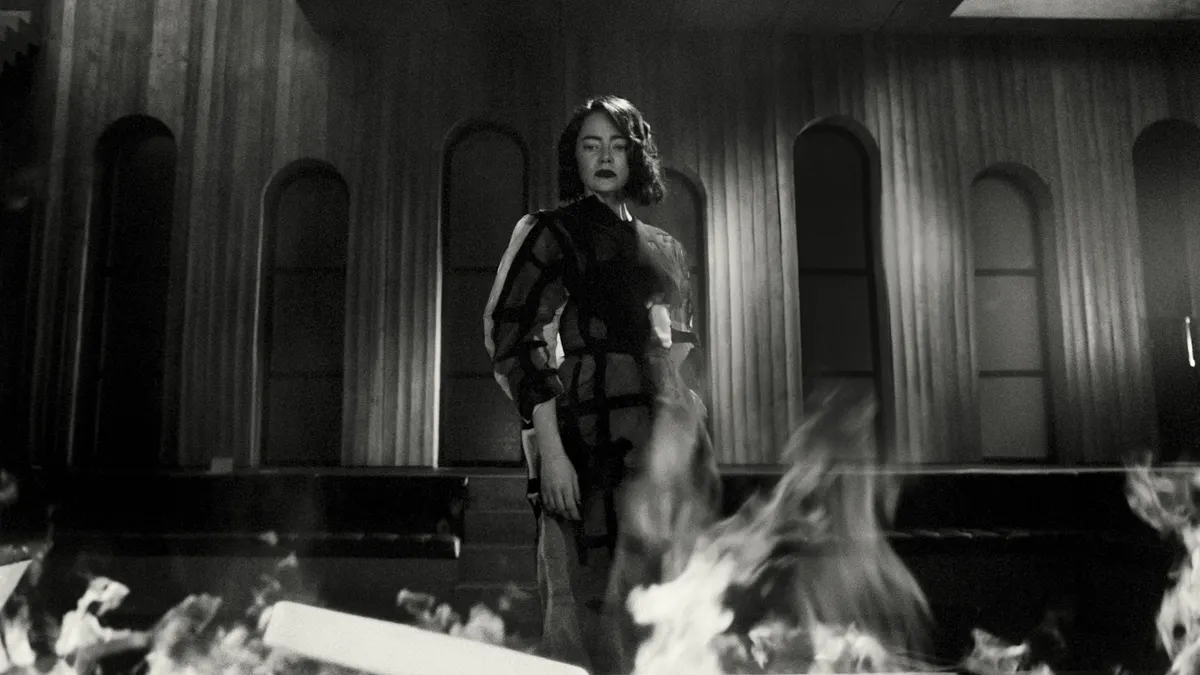
Shot in black and white, “Unavailable” revolves around a fictional version of Stone, who lives in a brutalist mansion on a remote island and is obsessed with registering emmastone.com. After each failed attempt at buying the domain name, the actor — at her most unhinged — destroys her laptop, either by snapping it apart or throwing it on the fire. “Get your domain name before you lose it,” reads the ad’s tagline.
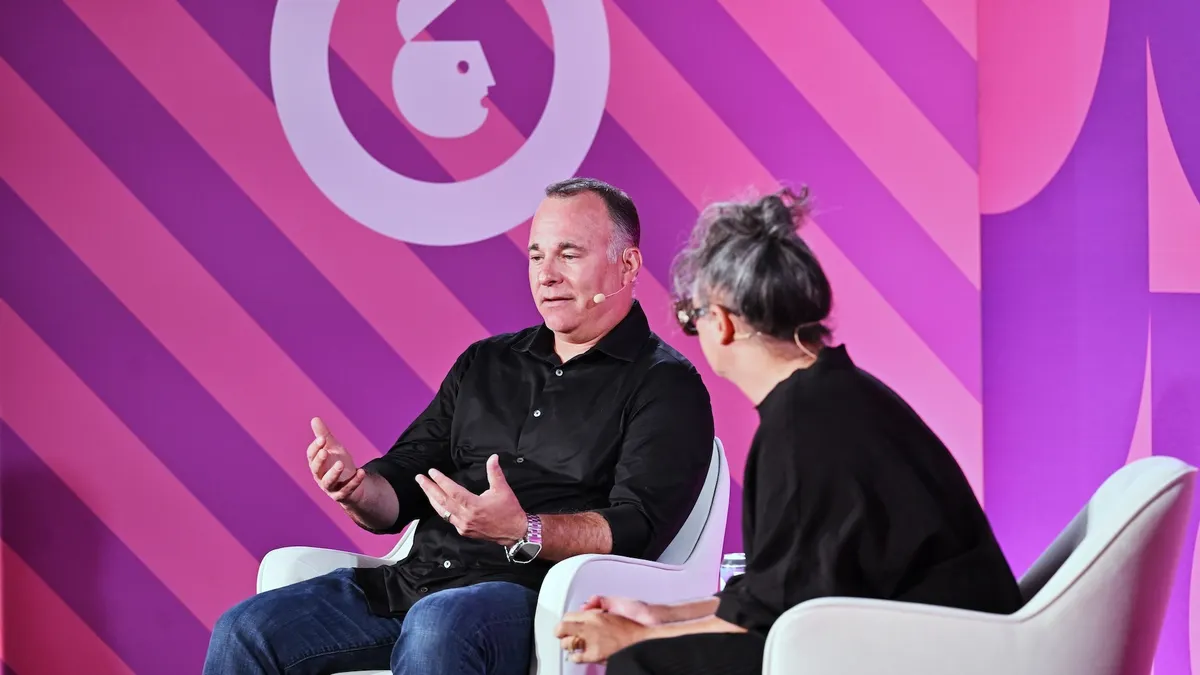
On Super Bowl Sunday, Squarespace’s ad was a standout in a slate of ads that mostly returned to familiar conceptual wells. And in a night dominated by emerging artificial intelligence providers, health and wellness brands and the usual suspects in beer and snacks, Squarespace looked to separate itself from “the sea of sameness,” said David Lee, Squarespace’s longtime chief brand and creative officer.
“We want to create work that represents the kind of brand that we are. We always feel like we're the independent A24 film that shows up [against] all the Marvel movies,” Lee explained. “They're franchises and reboots every year, because you see a lot of that every single year.”
Squarespace is one of the Super Bowl’s most reliable marketers, having run ads during twelve consecutive games. For years, the tech services brand has delivered high concept spots starring the likes of Hollywood stars Zendaya and Adam Driver and directed by famed talent including Martin Scorsese and Spike Jonze. Over the years, the company and its in-house creative team have worked to refine all aspects of how it crafts Super Bowl ads, from strategy to brief to ideation to production.
“If you're going to just try and blend in, we feel like that's a wasted investment,” Lee said. “Our philosophy has always been to swing for the fence. We also have a philosophy that you're not going to please everyone, so you have to pick a lane, and you have to go with an idea and a gut instinct on what you think represents your brand.”
An all-star production
Squarespace began thinking about its Super Bowl ad sometime late last summer. First, it determined a strategic angle that matched a business strategy. For 2026, the brand — perhaps best known for its website-building platform — sought to raise awareness of its status as one of the world’s largest domain providers. The brand keyed in on the uneasiness of not being able to buy your eponymous domain name, an idea it had explored in a decidedly less cinematic Super Bowl ad starring actor John Malkovich from 2017.
Previously, Squarespace has approached its Super Bowl ads as mini-movies, relying on cinematic tropes spanning sci-fi, musicals and comedy both smart and dark. Anticipating correctly that there would be a lot of ads featuring AI during Super Bowl 60, Squarespace zagged and decided to make a black-and-white spot that would evoke “Citizen Kane,” film noir and the early works of Alfred Hitchcock. The brand then sought out a true thespian who could deliver a performance that balances the script’s mix of highbrow style and lowbrow humor.
“The whole crux of this idea was to find someone who could take what's inherently a pretty dumb, banal kind of thing and really heighten and dramatize it to a point where it feels monumentally important, and that drama was going to be where the humor actually comes out,” Lee said.
Once Squarespace enlisted Stone, the brand was able to bring on her frequent collaborator Lanthimos, who in turn brought along his usual production team, including cinematographer Robbie Ryan, composer Jerskin Fendrix, costume designer Jennifer Johnson and production designer James Price.
“It really opens up the aperture when you get someone like Emma Stone to be involved, you get a director as accoladed as Yorgos involved, and then you get this blast radius of other talent to really create this world,” Lee said.
Shot in London over two days, the ad’s production was almost entirely practical, including the building of a functional set and the handmade waves washing up on the “shore” of a miniature model mansion. Visual effects were mostly limited to screen replacements on Stone’s laptop.
“The editing process is usually the most important part, where you either have it or you don't. Truthfully, more often than not, we go into the edit and we're like, ‘oh, boy, this didn't work out as planned.’ This one was very different, because the way Yorgos shoots, there's no fat — it's all muscle,” Lee said of one of the final parts of production.
Beyond the big game
Along with the ad, Stone appeared in an accompanying PSA-style ad and an online video that serves as mock behind-the-scenes footage for the Super Bowl ad. In that way, Squarespace, which also published a slightly less comedic behind-the-scenes video, joins the list of marketers that are looking to extend 30-second ads into more holistic campaigns before, during and after the big game.
“Yes, there's a 30-second ad that hundreds of millions of people see, but we have longer-form director’s cuts of the film. We are a brand that likes to maximize these opportunities and create other films and other assets that are used that stand on their own as well,” Lee said. “Whether you saw the Super Bowl commercial or the posters, that is a standalone piece that works on its own.”
Squarespace was also not alone in looking to capture consumers on game day. Unlike calls to action that didn’t work, Squarespace saw a surge in domain searches and subscriptions due to the campaign, tying the effort back to the business strategy that informed the brief. But the ad itself speaks to how Squarespace continues to carve out its niche, at the big game and beyond.
“We are Silicon Valley, but we are Madison Avenue. We do all of our own advertising. We work equally Hollywood, in the sense that everything that we want should be indistinguishable from the movies in the cinema,” Lee said. “We’re very happy to continue on that path and to try and own that space.”