With the U.S. drinking rate continuing to drop as young consumers increasingly abstain from alcohol, marketers in the category have had to rethink their approach. For several, that means prioritizing low-alcohol products, a strategy that comes as many consumers cite health concerns as a key reason behind their declining consumption.
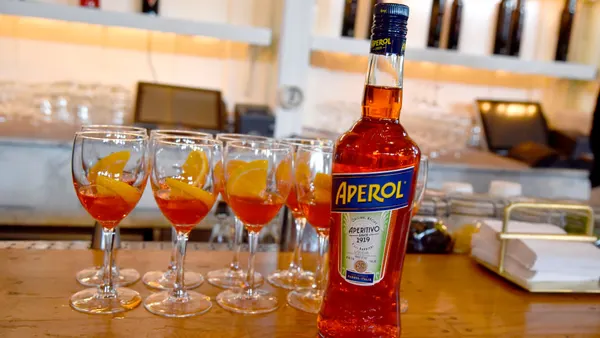
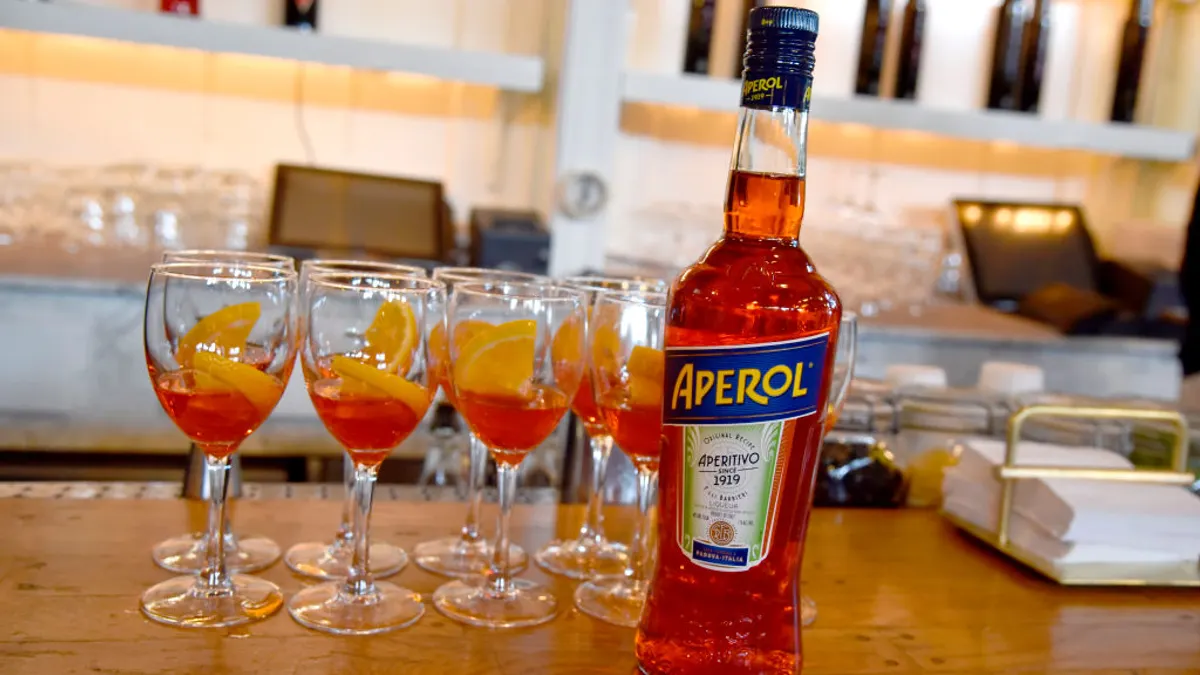
Campari, which owns brands including Aperol and Picon, is blending the low-alcoholic nature of its products with aperitivo culture to connect with younger consumers. Aperitivo, an Italian pre-dinner ritual of relaxing and socializing with light drinks and snacks, is a core concept of the conglomerate’s strategy.
Allison Varone, head of marketing for Campari America, spoke with Marketing Dive about how aperitivo culture is informing the brand’s marketing, how it is approaching other challenges, like uncertainty in the bourbon industry, and how the marketer is carrying lessons gleamed from 2025 into the new year.
The following interview has been edited for clarity and brevity.
MARKETING DIVE: What were some big wins of 2025? Did any one campaign stick out to you?
ALLISON VARONE: Our brands continue to grow in a challenging business environment. We've seen some great growth across brands, with Aperol and Espolòn being probably the biggest growth engines for our business.
We did some fun stuff on the marketing side. For example, Aperol, which typically we've focused on as a summer and spring occasion, we really went big into the holidays. We launched an Aperol holiday campaign, and we featured [actress] Nina Dobrev, one of our talented collaborators, to drive home classic holiday messaging with an Aperol twist. We're recognizing the brand is much bigger than just a spring and summer brand, and obviously it's becoming quite large.
We launched a new campaign for Wild Turkey called, “Don't Change a Damn Thing,” which we think resonates really well with consumers and is true to the brand identity. It's an homage to master distiller Jimmy Russell and is about being consistent in how we approach that brand.
Speaking of Wild Turkey, how is Campari handling the current uncertainty in the bourbon industry?
The category has been challenged, but we're faring very well. Our operations are very robust. We actually launched a new brand home a little while back and we're looking to bring more people to Kentucky, to bring people along the journey of Wild Turkey. It's a beautiful brand that has real history. We launched “Don’t Change a Damn Thing” as a way to drive home the idea that we've always been this way. We think that resonates really well with the consumer.
How are you handling other challenges in the industry, like younger consumers drinking less?
There are a couple ways we're doing that. First, we have the benefit of having lots of low alcohol options. Spritz is low alcohol, it's a lower-alcohol offering. We think that has lent itself well to the growth of our brands. We also introduced Crodino [in 2025], which is a nonalcoholic spritz that has been around in Italy since 1965 but we brought it to the United States. We're going to go much bigger for Dry January. We’re also seeing more distribution and more people adopting Crodino, which is exciting.
The other thing on the occasion front is, we're seeing that aperitivo culture is alive and well, the idea of the social aspect of getting together. And that doesn't mean drinking a lot of high-alcoholic beverages. That actually means being together with friends and family after work. That whole idea of having aperitivo in the early evening is a very moderate occasion where Aperol plays really well. We think that we're actually well-poised to appeal to the consumer that's looking to just consume more mindfully.
How does Campari’s on-premise and event strategy appeal to younger consumers?
Aperol is a good example, we’re still with Coachella, where we see our like-minded consumers who want joyful occasions outdoors. Festival life is alive and well in the U.S. and Aperol plays a role. We created an Aperol Piazza and created the aperitivo occasion at the festival. It's a festival with thousands of people, but we create an experience that is not something you can get anywhere else. We look for those moments in different festivals across the U.S., not just Coachella, for our brands because we think our consumer is there… our brands play well in that space.
What were some lessons learned in 2025, and how will Campari carry those into 2026?
I think that consumers want different experiences from brands that don't seem too mass marketed. We do some really interesting things locally that really resonate with our consumers more emotionally. I think the lessons we learned are not necessarily what didn't work, but what works better. It is really about trying to find those moments that emotionally connect with consumers in a more meaningful way. I think we're being much more intentional.