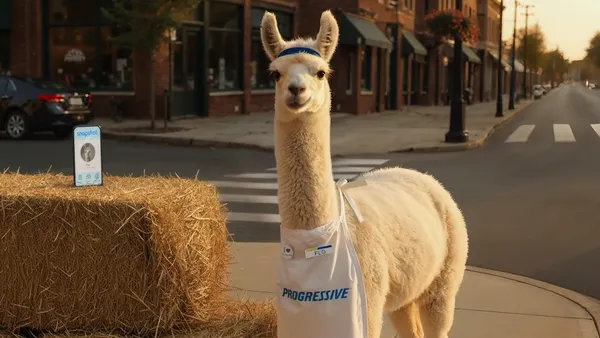
Progressive is working to balance authenticity with the utility of artificial intelligence amid increased consumer scrutiny of the technology. The insurance company’s “Drive Like an Animal” campaign showed the provider leveraging new AI tech while still supporting its brand values.
The strategy behind Progressive’s campaign was a topic of discussion during Marketing Dive’s Feb. 25 CMO Summit virtual event, which featured Meghan Walsh, vice president, business leader of integrated marketing at Progressive, and Dani Mariano, CEO of Razorfish. The conversation was moderated by Marketing Dive senior reporter Peter Adams.
“[The campaign] follows our core values of Progressive,” said Walsh. “Everyone is going to feel good about this work, and we’re doing it the right way. It took a lot of effort.”
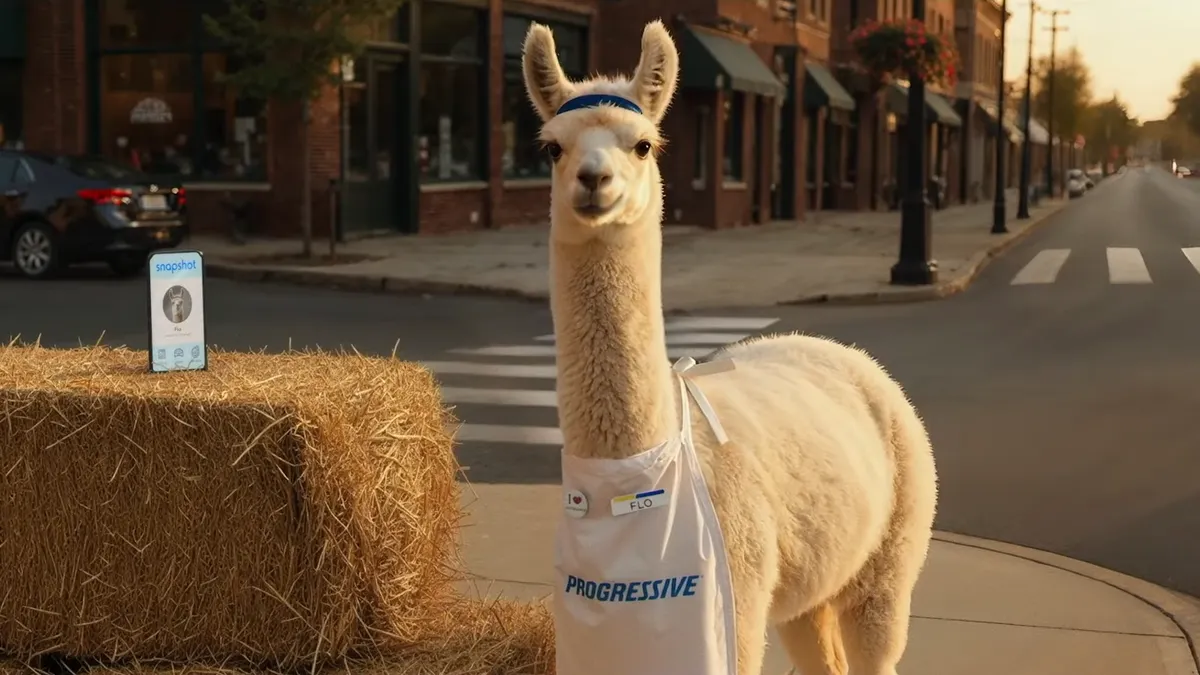
“Drive Like an Animal” was created in partnership with Progressive’s agency of record, Arnold. The brand’s in-house agency, Ninety6, and external agency Monks also contributed. A 30-second hero spot, which features AI-generated animals driving cars and getting into accidents, promotes the brand’s Snapshot tool. While generated with AI, the ad features the voice of Stephanie Courtney, the actress behind the brand’s iconic Flo character.
The idea to generate animals instead of humans was strategic. Animals fit the cartoonish aesthetic of AI better than humans, potentially leading to less of an “uncanny valley” feeling. Additionally, Progressive didn’t want to completely cut humans out of the process. The brand still worked closely with Arnold and made sure to run the concept by Courtney before proceeding.
“We leveraged Arnold. They still stayed in the mix, ensuring the humor of Progressive and the needs of the consumer were being met,” said Walsh. “We were still going to follow what we knew was going to test well and perform well in the market. If we were going to test AI, that was also the safest space to do it.”
Balancing act
AI use can be a balancing act. While the technology is poised to upend the marketing industry, consumers are still unsure about it. In fact, content that looks “overtly” generated by AI can be off-putting, with 37% of consumers saying it has a negative impact on their brand loyalty and only 24% saying it has a positive impact, per Razorfish data.
“We were very interested in the emotional resonance of commercials,” said Mariano. “What we found is that they just really weren't landing. And in addition to not being a negative sentiment for loyalty, it just didn't pull people in.”
“Drive Like an Animal” attempted to balance consumer sentiment with the benefits associated with AI usage, such as time and budget considerations. The concept for the campaign was initially developed in 2024, but would have required a lengthy production process and was outside of the allotted budget, according to Walsh. It was subsequently shelved and resurfaced about a year later when the brand needed to slot in another Snapshot advertisement before the end of the year. The concept around animals driving cars was then reimagined using AI, significantly cutting down on time and budget.
“We knew it was a strong message, but AI was going to allow us to get it out the door faster and meet our goals financially the right way,” said Walsh. “I would say it was like a night and day difference.”
While Progressive took measures to balance the brand’s needs with consumer expectations, “Drive Like an Animal” wasn’t universally well received. The comments under the YouTube video, which has over 142,000 views, are negative. Chatter on online forums like Reddit follows a similar pattern. However, the ad performed well by metrics including engagement.
“We did get comments about the creative, but we also got really strong engagement with the work,” said Walsh. “We were looking at how it performed for the business, and it performed well. It moved the needle for us from a business perspective.”