

Dive Brief:
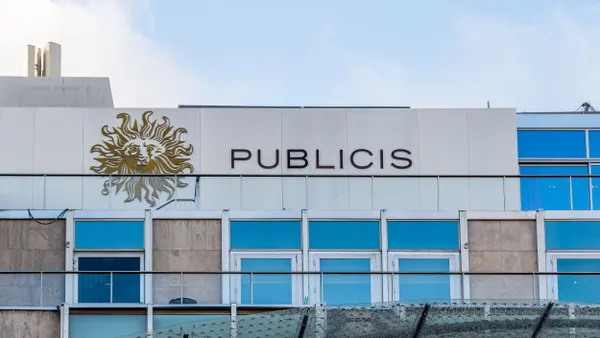
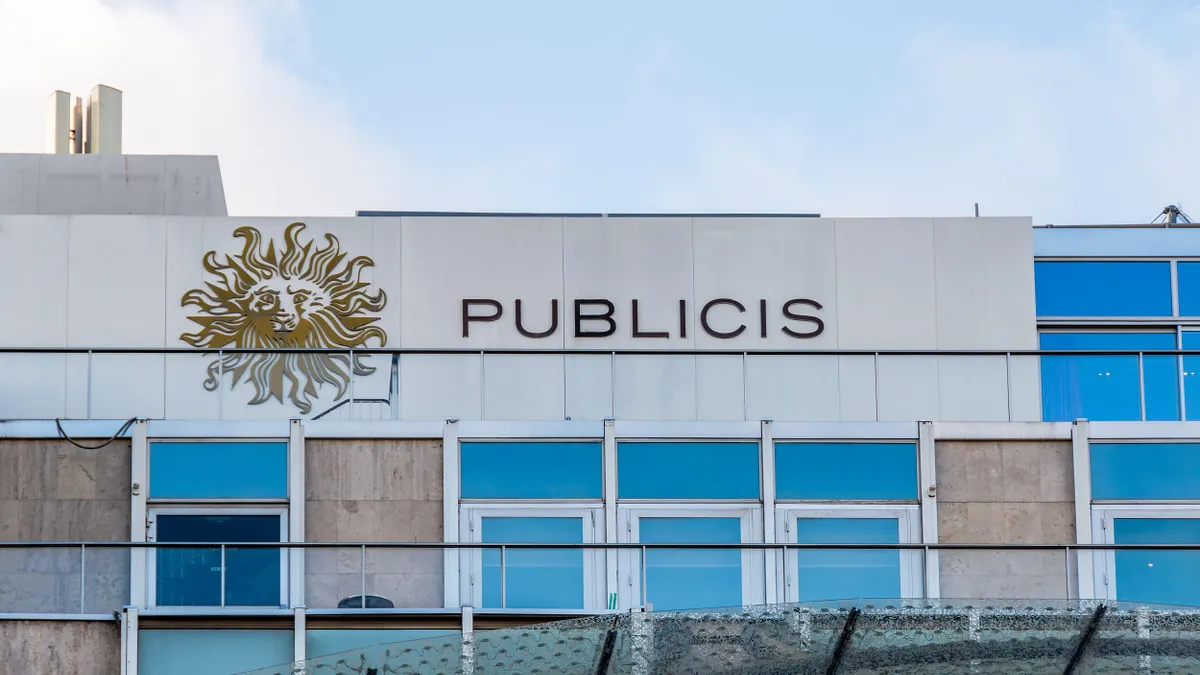
- Publicis Groupe’s internal artificial intelligence tool Marcel is getting its own leadership team as the ad-holding group moves to deepen its capabilities around agentic AI, according to a press release.
- Scott Hagedorn and Sam Levine Archer, two existing AI-focused executives at the agency, are stepping into the newly created roles of CEO and chief strategy officer of Marcel, respectively.
- Hagedorn and Archer will work to build out Marcel’s offerings in influencer and creator marketing, sports, culture and optimizing marketing for AI chatbot answers. They will lean on Publicis Sapient, Epsilon and Lotame to connect data stemming from enterprise, consumer and marketing intelligence functions.
Dive Insight:
Establishing a dedicated leadership team for Marcel, which debuted in 2017, speaks to the importance of agentic AI to Publicis’ growth plans and approach to agency workflows. Publicis focuses on what it calls a Power of One strategy, where agencies across the network can be tapped to collaborate on projects based on different client needs, an area where Marcel has played a role in breaking down silos.
The executive appointments mark an expansion of the work Archer and Hagedorn were already doing at Publicis over the past four years, a period when generative AI rose quickly to become a key piece of marketing services. Hagedorn previously served as Publicis’ chief solutions architect while Archer was chief solutions officer. Both executives joined Publicis from rival Omnicom, where they helped run the media division.
The duo’s mandate with Marcel touches on areas where Publicis has ramped up investment and M&A, including the creator economy, sports marketing, data connectivity and answer engine optimization. Lotame and Epsilon, two assets Marcel draws heavily on, were both acquisitions. Publicis is also in the process of finalizing a $2.2 billion deal for the ad-tech firm LiveRamp, a move it says will enhance the sophistication of agents it builds on behalf of clients.
As other ad-holding groups push to strengthen their AI know-how, Publicis sees data and scale as its competitive advantages. In acquiring Lotame last year, the firm claimed to have a window into nearly 4 billion unique consumer profiles, representing roughly 91% of internet-connected consumers globally.
Marcel having its own executives further legitimizes a tool that was the subject of a good deal of industry mockery and confusion around its unveiling nearly a decade ago but increasingly seems like a prescient bet on the significance of AI to marketing. Publicis has consistently outperformed its peers in terms of growth over the past several years, and is increasingly winning major accounts without engaging in a traditional pitch.
That said, booming interest in AI hasn’t always directly translated into results. Publicis executives have described demand for AI as bifurcated at the moment, with a high level of activity around agentic services but slower uptake for wide-ranging enterprise transformation, which can be costly and time-intensive. Publicis’ net revenue organic growth increased 5% in Q3, though the group’s technology arm, which is led by Sapient, continued to grapple with sluggishness.
“While our competitors are reducing headcount and scaling back investments, we are pursuing a polar opposite strategy,” Publicis CEO Arthur Sadoun said on a call discussing the quarterly results with investors. “We are strengthening our teams, doubling down on data and technology and extending our identity-first model.”