


UPDATE: Dec. 17, 2025: This story has been updated with additional details on WeightWatchers' relationship with creative agency Ogilvy.
Dive Brief:
- WeightWatchers is refreshing its brand identity and digital experiences as it moves to address the rise of GLP-1 weight-loss drugs, per details shared with Marketing Dive.
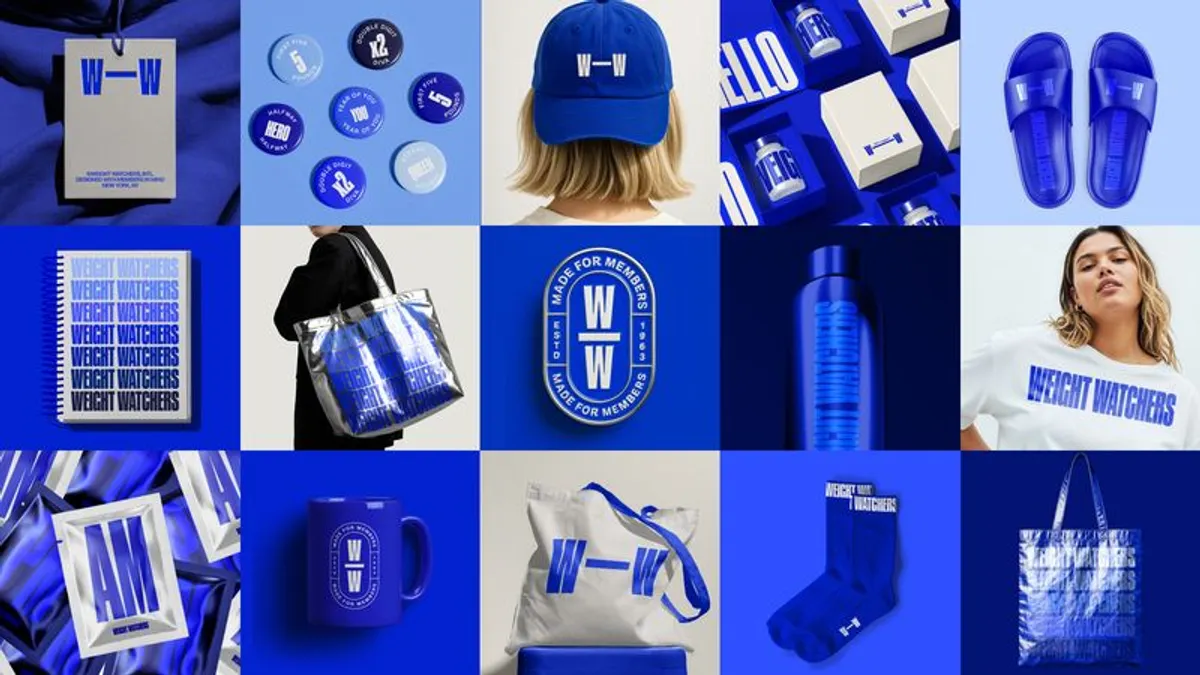
- Changes include a new logo that shows two Ws separated by a straight line symbolizing a progress bar toward realizing individual health goals. WeightWatchers is keeping a blue color scheme but with a modernized typography.
- Black-and-white editorial shot by photographer Cameron McNee spotlights real WeightWatchers members to support the rollout. The makeover is just one piece of a transformation effort that features new digital offerings, including an artificial intelligence-powered body scanner, and a new GLP-1 medical program.
Dive Insight:
The GLP-1 craze continues to shake up the health and wellness category and could be a needed lifeline for WeightWatchers, which filed for bankruptcy protection last May. In the bankruptcy announcement, the company cited a “rapidly evolving weight management landscape” as an area of focus in its turnaround strategy.
WeightWatchers has previously introduced GLP-1 offerings and promoted those programs in its advertising, but the overhaul makes the booming drug category a more central, integrated aspect of its brand identity and business model. In the press release, WeightWatchers emphasized that the changes were inspired by member feedback and are meant to reflect both the brand’s over 60-year-history and a drive toward modernization. The tweaks arrive ahead of the new year, when many consumers set personal fitness goals, and as the GLP-1 market is forecast to surpass $150 billion by 2030 on the back of momentum for blockbuster drugs like Ozempic, Zepbound and Wegovy.
“This evolution goes far beyond a new visual identity. For us, the WeightWatchers brand lives in how we show up every day — through our experience, our coaches, our community, and our medical support,” said Julie Rice, chief experience officer at WeightWatchers, in a press statement. “Everything is designed around a deep understanding of members’ real lives and goals, so support feels personal, connected, and consistent wherever someone meets WeightWatchers.”
Mrs&Mr, which was appointed WeightWatchers’ global brand agency of record in September, led the identity refresh. Pre-bankruptcy, and following the loss of longtime spokesperson Oprah as a board member, WeightWatchers appointed WPP’s Ogilvy as its global creative AOR. Ogilvy’s first campaign for the brand, “Fit You,” centered on customer testimonials for WeightWatchers’ clinical program. WeightWatchers’ Ogilvy relationship lapsed amid a period of financial difficulties and leadership changes at the brand, Marketing Dive has learned.
WeightWatchers has undergone several brand evolutions, including a rebrand in 2018 to WW that signaled a broadened focus on wellness. The latest update shifts the company’s logo from two white Ws stacked on top of each other within a blue circle to instead separate the pair of letters with a straight line embodying the journey to reaching weight-loss goals. Press materials and a sizzle reel display the revamped look on slippers, socks, caps and other WeightWatchers paraphernalia, complemented by a rich blue color scheme.
Beyond the marketing elements, WeightWatchers is implementing several new features for members, such as a dedicated GLP-1 program called Med+ that provides personalized nutrition guidance, medication dose tracking, support for managing drug side effects and tips for preserving muscle mass. In addition, WeightWatchers’ digital experience has been updated with an AI body scanner, a new Weight Health Score metric and in-app premium fitness content for strength and functional movement training.
WeightWatchers has recently made other moves to diversify beyond its historic association with points-based weight-loss plans. In September, it debuted its first dedicated menopause care program, with Queen Latifah acting as celebrity spokesperson.
WeightWatchers, which also does business as WW International, saw total revenues decline 10.8% year over year to $172 million for the Q3 period ended Sept. 30, its first first full quarter in operation post-restructuring. Revenue derived from clinical subscriptions was a bright spot, however, increasing 35.3% YoY to $26 million.