

Dive Brief:
- YouTube is revamping its visual identity to better unify various aspects of its business and firm up a positioning as a broad-based entertainment brand, according to a press release.
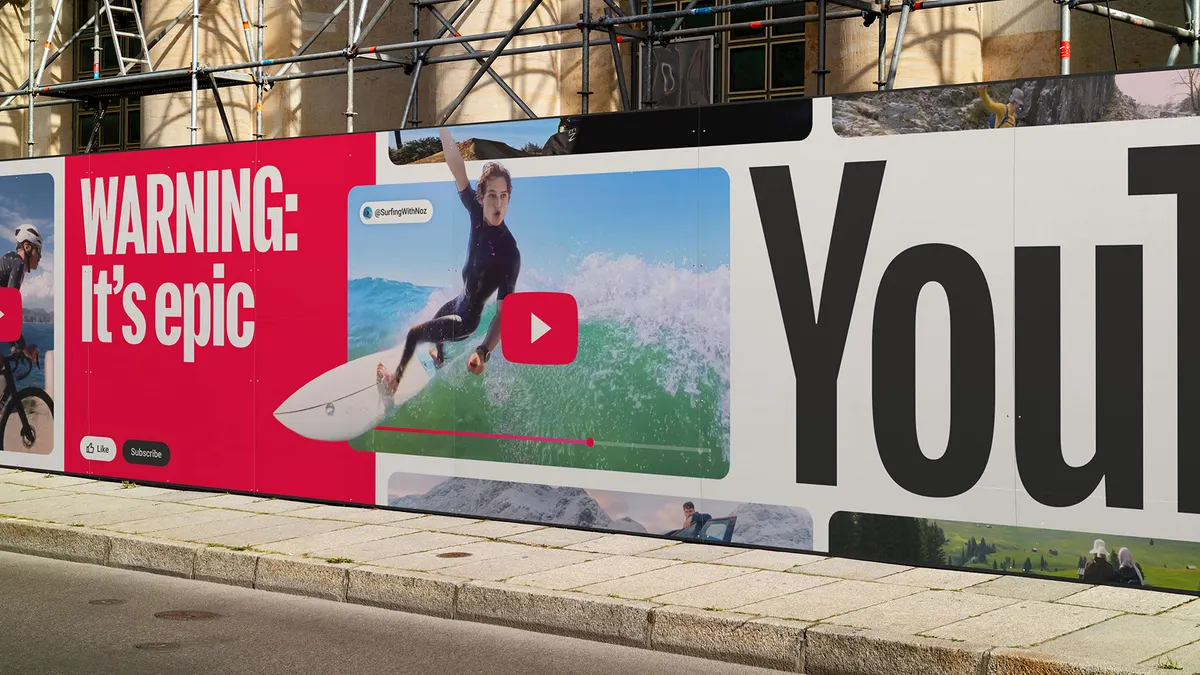
- Changes include a new illustration style and a display typeface, called YouTube Display, that is inspired by the site’s logo. In addition, the Google-owned platform is introducing its first motion identity, meant to capture elements of YouTube content such as camera shake.
- YouTube’s in-house creative team is behind the work, with Sharp Type assisting with the typeface and Gesture Systems with the illustration framework. The makeover arrives as YouTube continues to gain viewership in channels like streaming TV and command a sizable share of the creator economy.
Dive Insight:
YouTube’s identity refresh aims to bring a greater sense of cohesion to a suite of sub-brands the platform said had grown too far in different directions in terms of design and tone of voice. Now, offerings like YouTube TV, Shorts, Music, Premium and Kids will have a more consistent appearance, one that is guided by the concept of feeling “alive,” including through the use of what the company is calling its first motion identity. The new look, which follows the 20th anniversary of YouTube’s founding, is currently rolling out globally and being promoted in out-of-home ads.
“When a brand lives everywhere, it risks feeling like nowhere,” said Kieran Mistry, who led the project in a freelancing capacity for YouTube Creative Studio, in a press statement. “Our task wasn’t to reinvent YouTube, but to design a system that connects its many sides — unified but never uniform.”
A demo reel of the new motion identity shows YouTube clips as they rock back and forth and bounce around in response to what’s happening on screen, mimicking the feel of creator videos. Other tweaks may be harder for a casual viewer to spot. Still present is YouTube’s signature red, black and white color scheme, as well as user interface language such as “like,” “comment” and “subscribe.”
In the announcement, YouTube underscored a desire to move away from static visual language while emphasizing its site as a full-fledged entertainment destination. The broader social media landscape is also quickly changing with the rise of generative artifical intelligence — a major focus for Google — and the implementation of more e-commerce features to make video content shoppable.
YouTube at the same time is expanding further into channels like connected TV and streaming as more people tune into the service through living room screens, increasing competition with more conventional film and TV platforms like Netflix. The Google-owned firm has also doubled down on short-form content through Shorts, a TikTok lookalike that is gaining traction with advertisers and viewers. Google’s ad revenue derived from YouTube rose 15% year over year to $10.26 billion for the Q3 period ended Sept. 30.
Correction: A previous version of this story misstated Kieran Mistry’s role at YouTube Creative Studio. He lead the brand refresh project in a freelancing capacity for the studio.