

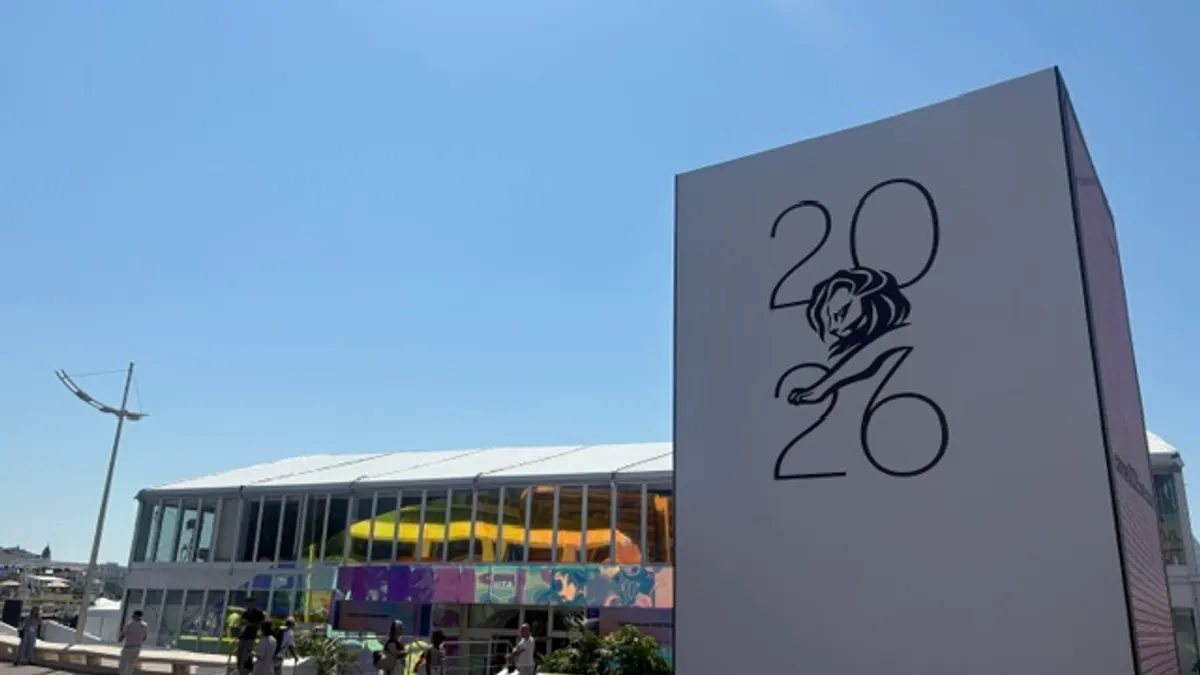
CANNES, FRANCE — Cannes Lions this year didn’t herald the arrival of many new trends that turned heads, but rather iterated on some that already had a rising profile and have become more entrenched in advertising since the last time the industry gathered at the French beachside town.
To the surprise of no one, artificial intelligence often felt like it subsumed all else. While full-blown panic around the technology has cooled, it remains incredibly divisive even with widespread adoption.
“Everyone’s in an arms race to try and demonstrate some form of value when it comes to utilization of AI,” said Angela Tangas, global CEO of Oliver, which develops in-house digital marketing capabilities for brands. “At the moment, all that value is focused on efficiency gains as opposed to focusing on true business impact.”
Content creators also continued to see a rising profile at Cannes, with more marketers talking about them as an integrated part of their strategy versus a siloed tactic. Overall, the push-and-pull between technology and creativity felt particularly pronounced.
Marketing Dive caught up with experts during the confab to ask them about their biggest Cannes surprises, frustrations and what they want to see more of next year. While opinions were split on many discussion points, everyone could agree on one thing: Cannes needs more air conditioning.
AI lacks ‘wow’
Many attendees believe AI is shifting from pure hype to something with more tangible applications, but not everyone is a fan of how the ubiquitous technology is manifesting at Cannes Lions. Part of the problem could be the festival’s format, with some believing it favors what’s eye-catching or sales-pitchy on the promenade over true innovation.
“There’s a lot of tech presence, there’s not a lot of technological ‘wow,’” said Rebecca Sykes, partner and head of emerging technology at The Brandtech Group.“You know the technology’s way more advanced than what’s actually on the show or being demonstrated because the focus is on the activations that make sense on the beach.”
Others echoed Sykes’ sentiment, seeing Cannes Lions talks as lagging what marketers already know from their day-to-day work with AI.
“You realize you’re five steps ahead of where the conversation is in many spaces,” said Daale Carter, chief client experience officer at BBDO.
Craft makes a comeback
About 40% of Cannes Lions submissions this year used AI in some form, Campaign reported. Counter to the AI explosion was recognition for ads that eschewed automation to champion a human touch.
“There’s been a double-down on craft, for sure,” said Dan Lucey, chief creative officer and co-CEO at Havas New York.
Take Coinbase’s “Your Way Out,” which employed practical special effects to meticulously recreate the look of a blocky retro video game. The effort took home the Grand Prix in Film Craft. Other decorated work had a similar execution.
“There's a juxtaposition I love… in the most AI-saturated Cannes yet, one of the most awarded pieces of craft was Apple TV’s rebrand, which was deliberately handcrafted and analog,” said Jeff Greenspoon, CEO of Americas at Kantar, over email. “That tension is the whole story, and I believe the best brands do lean into the tensions of the moment.”
Similarly, many attendees pined for brands to stop getting lost in data-driven perfection and instead reorient around their human side, embracing a warts-and-all mindset. A Dove campaign that featured real Reddit reviews, including ones picking apart the beauty brand, won widespread praise.
“People today and brands today are trying to be everything, and today you cannot be everything, because everything is too much,” said Fernando Musa, founder, partner and chairman at the agency David.
Leaner teams, sharper focus
For outsiders looking in, Cannes Lions has been something of a sore spot. After a year of massive agency layoffs, the idea that C-suite execs get to live it up in the south of France creates dissonance. Many industries are undergoing contraction and transformation, changing how they approach the show.
“It's a very different makeup of attendees,” said Sykes, noting that some CMOs are now attending with one or two support people rather than a cohort — and that’s if they come at all.
One upshot to the leaner approach is greater pressure to return to the office with concrete takeaways rather than simply treating the trip as a rosé-fueled bash. But there’s also something lost when young up-and-comers get less exposure to the festival.
“It’s getting too expensive, so I don’t think everybody gets a flight, a hotel or an Airbnb and then a chance to come and enjoy that, which is a shame,” said Lucey, noting Havas still carves out resources for junior staff to come and learn.
Seeking substance
Cannes Lions features some of the most high-profile meetings in advertising, set against a backdrop of yacht parties and beach concerts that draw hourslong lines. What’s not clear is how much attendees get out of the official festival itself.
“I have many friends here who’ve never seen anything at the Palais, don’t really know what’s been entered, don’t know the work being talked about … they’re here to talk about the tech and ad sales,” said Sarah Collinson, co-CEO at Havas New York.
For marketers who were popping in and out of key notes and panels this past week, some felt they carried more weight than in prior years, perhaps reflecting the deep uncertainty around subjects like AI.
“The most surprising thing for me has been I’ve actually had a few events with really substantive, thoughtful conversation,” said Instacart CMO Laura Jones, estimating that 90% of festival content is typically platitude-laden puff.
Joining forces with creators
As major marketers shift more media budgets to creators, a small army of online talent poured into Cannes Lions on the hunt for sponsorships and to build their knowledge about advertising.
“This joining of forces — of creators, creatives, brands — it’s part of the new way of doing things,” said David’s Musa.
Several people pointed out that creator and influencer marketing is hardly novel. What’s changed is the treatment of the tactic. More marketers see creators as a core channel that needs to be connected into their broader marketing ecosystems. Ad spending on creators in the U.S. alone is forecast by the Interactive Advertising Bureau to hit $44 billion in 2026.
“I’ve worked in fashion, I’ve worked in alcohol, I’ve worked in fast-moving consumer goods, and there’s different creators for every part of the business,” said Natalie Wills, senior vice president of integrated marketing and creative at Expedia Group. “You can target your advertising to talk to a really clear audience, so I think that it’s a wonderful advantage for all of us marketers.”