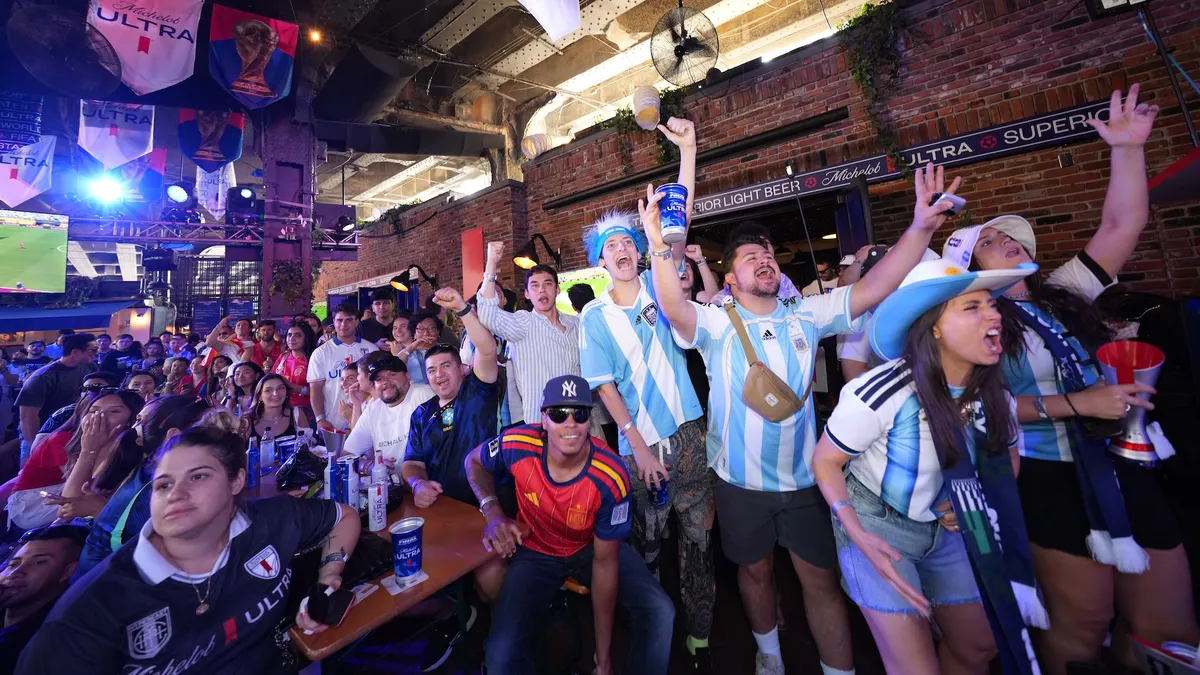
With 104 games across three host countries, the 2026 World Cup was the soccer tournament’s largest iteration ever, and possibly the biggest sporting event of all time. The event, held June 11 – July 19, broke and rebroke records for soccer viewership in the U.S. — great news for the advertisers who spent a combined $1.42 billion on media within game time across the full tournament, according to MediaRadar data.
In the run-up to the World Cup, marketers spanning alcohol, beverage, snacks and retail categories — both with and without official FIFA sponsorships — rolled out campaigns, some starting as early as January, that looked to engage consumers around the unprecedented excitement.
The results of these efforts have started to come into focus in recent comments by executives during calls with analysts to discuss broader financial performance. The full impact isn't likely to be known until the fall when companies report Q3 earnings, since the tournament ran across both the second and third quarters, with most World Cup marketers hoping to reap the benefits for a long time.
“I think a lot of companies are trying to assess whether it’s worthwhile investing in an official partnership, because it is a very crowded commercial space, and if you don’t have a really strong plan, and your creative, in particular, is not connected to the brand, you can spend a lot of money without having a lot of return,” said James May, co-lead of Kantar’s Sports Marketing Practice.
Take for example McDonald’s, the official restaurant sponsor of the World Cup and a FIFA partner since 1994. Executives on an Aug. 4 earnings call attributed about one-third of its customer traffic underperformance, relative to its expectations for Q2, to its FIFA campaign.
“While the campaign provided a lift to the business and generated excellent system excitement, the campaign underperformed versus our expectations,” CFO Ian Borden said on an earnings call.
The fast-food giant’s campaign might have missed the goal, but efforts by sponsors Coca-Cola, Adidas, Unilever, AB InBev and Home Depot scored by using a variety of marketing tactics.
Coca-Cola relied on brand principles
Coca-Cola kicked off the advertising frenzy around the World Cup back in January and iterated in the run-up to and during the tournament. The beverage giant’s campaign, which spanned over 180 markets and more than 20 million retail outlets, brought to life what Shakir Moin, chief marketing officer of Coca-Cola North America, previously described to Marketing Dive as a “de-averaging at scale” approach that uses passion-point data at the zip code level.
The hyper-personalized effort paid off: The World Cup activation contributed to trademark Coca-Cola volume growth of 5% in Q2 2026 — the brand’s strongest volume growth in 17 years, excluding COVID recovery, per an earnings call.
The execution, which also included the brand Powerade, drove an average incidence of over 80% at tournament venues across host cities, which equates to about one drink per attendee at the venues. That rate is a World Cup record for the company, which has been an official sponsor since 1978. The tournament helped the marketer collect more than 25 million first-party data points and generated more than 9 billion views through digital and social media activations.
“These insights give us [a] stronger foundation to better understand consumers, tailor our decisions, and improve how we show up in the marketplace,” CEO Henrique Braun said on the earnings call.
With its early start and continued pre-tournament marketing, Coca-Cola’s brand metrics began moving a month before the World Cup, with buzz and social media awareness more than doubling, according to data from Kantar. The success comes from a combination of Coca-Cola’s World Cup experience and understanding of soccer fandom, as well as the craft of the campaign, said Kantar’s May.
“Whilst TV was such an anchor for them, among the Gen Z group, it was really the social media activation that drove the buzz,” May said. “We actually see that then feeding through into stronger brand consideration and higher net promoter score, so they’re actually moving those brand health metrics in addition to generating a lot of momentum.”
Adidas fueled the fire with spend
Adidas has the longest and most endemic partnership with the World Cup, serving as the official ball supplier since 1970 and the outfitter of kits for 14 qualifying teams in 2026 — the most of any manufacturer — including the eventual top two Spain and Argentina.
That relationship helped grow currency-neutral revenues 14% in Q2 2026, leading to record net sales of about 6.7 billion euros, or $7.7 billion, per an earnings report. Adidas also notched an operating profit of 574 million euros in the quarter, despite spending 212 million euros more in marketing than a year earlier. While that incremental investment spooked investors, executives stood by the marketing strategy, which will not continue in Q3 and Q4.
“That doesn't have a payback in commerciality in the same period,” CEO Bjørn Gulden said on an earnings call. “For the brand heat going forward and also during the tournament, we had to invest in media, and we chose to do a lot of activations around the world to showcase the brand.”
To promote the brand’s World Cup merchandise — including the match ball, team kits, soccer boots and even pet clothing — Adidas activated across the globe and released a star-studded cinematic campaign that was the only World Cup-related campaign to be nominated for an Emmy. The brand saw positive metrics around awareness and engagement, but Gulden explained on the call that connecting that directly to conversion and sales “doesn't really work in the real business.”
“How much of that is marketing and how much of that is organic and how much is that because we have the distribution is very, very difficult to measure,” the executive said. “But everything that we do measure — and digital, you can measure much more [accurately] than you can in other parts — everything that is upper funnel has actually helped us all the way down to the lower funnel.”
Along with its record sales quarter, Adidas led full-tournament sponsor mention share of voice and ranked second for engagement share of voice, per Meltwater data shared with Marketing Dive. The brand drove top engagement through owned content and football-native formats because it is so embedded in soccer, per the intelligence firm’s analysis.
Unilever doubled down on creators
Since announcing plans last year to shift half of its digital media spend to social and work with 20 times as many influencers, Unilever has led the way on a social-first marketing strategy that has subsumed the advertising world. That strategy was on full display at the World Cup, where the marketer served as the official personal care sponsor.
Rather than approach the World Cup as a corporate sponsorship or one-off event, the marketer activated 35 brands across more than 120 markets by uniting creator content, social media production, retail distribution and local conversion, CEO Fernando Fernandez said on the company’s Q2 2026 earnings call. The work involved more than 50,000 content creators with a combined audience of more than 600 million consumers.
“The FIFA World Cup has been a pivotal moment for Unilever,” Fernandez said on the call. “We believe that this is a proof of what Unilever is creating in terms of a new social-first model of reach and engagement for our brands at a scale that I personally believe very few companies can match.”
Unilever’s personal care brands saw underlying sales growth increase 5.9% in Q2, momentum that was amplified by the World Cup marketing, which also helped the company build new capabilities in creator-led content and artificial intelligence-enabled asset creation, CFO Srinivas Phatak explained on the call.
The marketer’s World Cup campaign included a real-time social content hub on platforms including YouTube and TikTok, as well as in-person experiences designed to encourage social sharing.
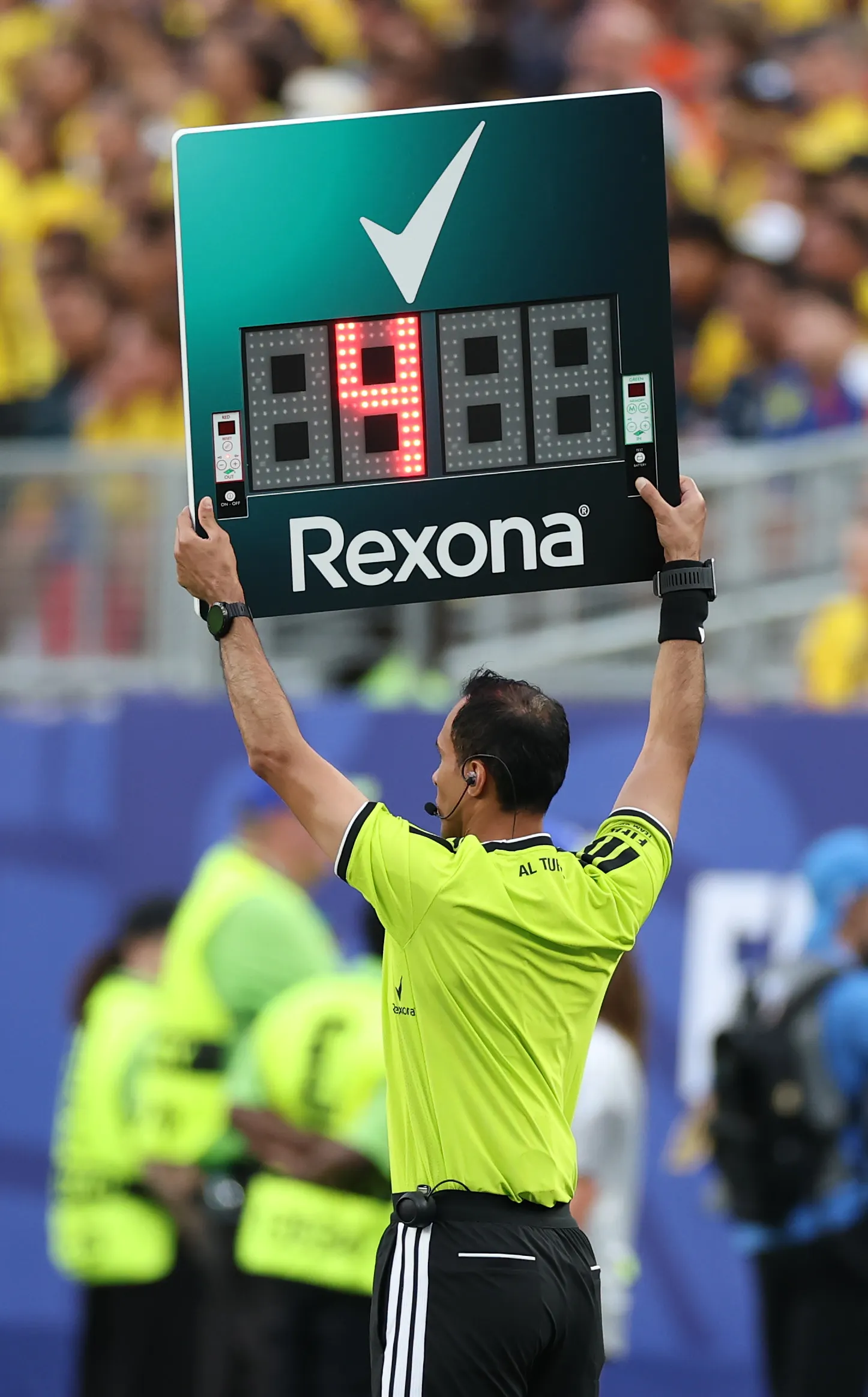
One highly visible brand was deodorant Rexona, which had branding not just on substitution boards during the tournament, but on the armpits of fourth officials — the people responsible for signaling substitutions and announcing added time. The brand also stood up a New York Sweat Club activation at the House of Fresh experience as a way to connect creators, athletes and fans. The World Cup work builds on the brand’s “It Won't Let You Down” platform in the same way that Unilever sees the tournament providing an ongoing halo effect.
“We don’t do an event like FIFA for a two month impact,” Fernandez said on the call. “We do this to increase the awareness and differentiation of our brands through the immersion of these brands in a massive cultural event like the World Cup. We believe that there will be a residual effect of this activity in terms of the strengthening of our brands.”
AB InBev tapped into long-term brand equity
In 2022, AB InBev was forced to deal with a last-minute decision by Qatari officials that prevented beer from being sold at the World Cup.
That was certainly not the case this year, with the tournament being hosted in beer-friendly cities across the U.S., Canada and Mexico. The beverage marketer was able to stick to its long-gestating plan — rolling out Michelob Ultra across the continent — and grew the low-cal beer’s revenue by 21% outside of its home market, with 40% of its volume growth coming from outside the U.S., per the company’s Q2 earnings report.
“We continue to execute our category expansion levers to expand choice, occasions and participation in the category by offering superior core brands, innovating balanced choices and expanding our premium and Beyond Beer portfolios,” CEO Michel Doukeris said on an earnings call. “This balanced choice idea is very relevant within our strategy. Michelob Ultra plays a central role on that and the rollout of the brand … will be one of the best outcomes of this investment that we've made for FIFA.”
Over the last 12 months, AB InBev invested $7.9 billion in sales and marketing, increasing investments organically by 9% in the first half of the year, CFO Fernando Tennenbaum explained on the call, with sales and marketing investment more skewed towards Q2 and Q3 due to the World Cup. The World Cup is expected to provide 20 to 30 basis points of full year volume benefit for AB InBev, per the call.
As with Adidas, this increased investment helped AB InBev take advantage of its official sponsorship, leading engagement share of voice at about 31%, per Meltwater data. The strong performance was due to FIFA’s amplification of assets like the Michelob Ultra Player of the Match and the Budweiser Celebration of the Match that put the brand at the center of fan conversations.
To capture consumer engagement on the ground, Michelob Ultra activated Pitchside Club activations in New York and Santa Monica, California that served as fan destinations beyond tournament stadiums. Events at the experiences received more than 100,000 RSVPs, with the brand doling out thousands of soccer jerseys, trophy cups and photo opps, per details shared with Marketing Dive.
“The FIFA World Cup 2026 wasn’t just a moment for Michelob Ultra — it was a months-long opportunity to build anticipation and create meaningful connections with fans on a national scale,” Ricardo Marques, senior vice president of marketing at Michelob Ultra, said in a statement. “While the matches were played in stadiums, we wanted supporters everywhere to feel part of the tournament journey.”
Home Depot built it with Beckham
For someone who retired in 2013, English soccer legend David Beckham was arguably as ubiquitous as any other player in the World Cup, due in large part to his presence in nearly a dozen ad campaigns. The risk for these marketers is having their spot remembered for the celebrity, and not their brand.
“Some brands did a little bit too much in the way of focusing on the celebrity,” said Mike Griffin, vice president within the insights division at Kantar. “The celeb ads tend to be the most engaging and deliver the most emotions, so when you’re able to connect the brand effectively to that… you get best-in-class performance.”
First-time World Cup sponsor Home Depot emerged as one of the winners of the Beckham bowl with a campaign that launched in March. Along with content and Beckham’s Backyard experiences, the effort centered on a TV spot that followed Beckham’s Home Depot-assisted DIY efforts. The ad helped make Home Depot the most-seen brand by TV ad impression share of voice, per iSpot data, and helped the retailer engage with Gen Z, according to Kantar.
“When you think about Gen Z, they're not buying big houses with the backyards that have the built-in TVs, the awnings and all the rest of it,” Kantar’s May said. “Even though David Beckham could probably buy 500 houses, [the ad] built on the idea of him doing something very do-it-yourself… I think that was actually a really smart plan.”