

The “now” part of Nike’s high-stakes Win Now turarnound plan is starting to feel like a “later” to some industry watchers nearly two years in. The legendary sportswear giant is beset by challenges related to tariffs, deflating growth in China and an overall uncertain global environment. A lack of clear marketing vision may be further amplifying its problems, with a recent stumble around the Boston Marathon indicative of Nike’s difficulties replicating the aspirational messaging it once delivered with a rare level of finesse.
There are critical fronts, including women’s sports, where Nike can and is still winning. But it may need to pare down focus and switch up tactics to make its narrative cohere in a way that appeals to both choosier consumers and impatient investors. Nike reported flat revenue for the Q3 period ended Feb. 23, with company leaders admitting they were not satisfied with the pace of progress for the Win Now strategy. Marketing experts are in line with the sentiment.
“They feel really lost to me,” said Nate Jaffee, senior vice president of integrated strategy at the creative communications agency Praytell. “It feels like they just haven’t gotten their footing down in this sort of new world, this new media landscape that is out there.”
Stumbling blocks
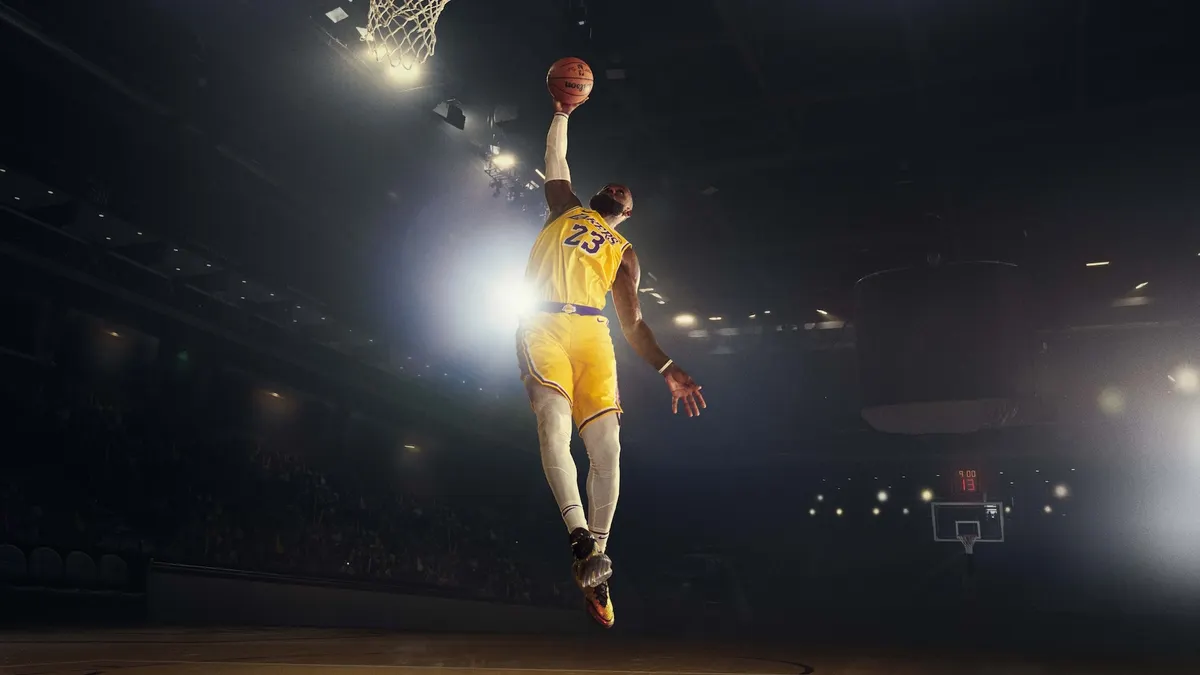
One of Nike’s chief aims is reestablishing favor with performance athletes who have gravitated more to upstarts in categories like running and see Nike as falling behind on product innovation. Two years ago, Nike debuted “Winning Isn’t for Everyone,” a campaign that dissected the ruthless qualities, including a lack of empathy, that separate top athletes from everyone else. Gritty in style, willing to court offense and loaded with celebrities like LeBron James and Serena Williams, the work was meant to kickstart a comeback following a post-pandemic slump that ended in an unceremonious CEO exit.
But the drive to win back the elite athlete set has resulted in other efforts critics call tone deaf, clashing with a brand mission statement that claims, “If you have a body, you are an athlete.” Take the Boston Marathon last month: an outdoor ad that read “Runners Welcome. Walkers Tolerated.” rankled disability advocates and played like an odd bit of punching down in an area where Nike has felt more pressure from rivals like Hoka, On and Brooks Running. Nike quickly pulled the ad, explaining it views athletes as its most honest critics and the greatest champions of its brand.
“What that moment reinforced for us is how deeply people feel about this sport, and we respect that,” a Nike spokesperson said in an email to Marketing Dive. “We’re always learning, and our goal is to make sure we show up in ways that celebrate all runners and every form of movement.”
Despite its relatively minimal media footprint, the “Walkers Tolerated.” misstep nevertheless became fodder for rivals and stirred plenty of discourse around the brand’s perceived misalignment with its target consumers.
“They were doing something that the brand would have gotten away with 20 years ago, but it misses the mark today because the audience — simply the value system — has changed,” said Fura Johannesdottir, global chief creative officer at Interbrand, noting the bigger consumer emphasis on inclusion.
Uneven execution
The Boston Marathon is a dramatic example, but isn’t the only bit of inconsistency experts see with modern-day Nike. The brand in 2025 made a much-heralded return to the Super Bowl after a nearly three-decade hiatus with a spot celebrating women in sports. “So Win,” which featured athletes like Jordan Chiles, Caitlin Clark and Sha’Carri Richardson alongside the rapper Doechii, was Nike in peak form: anthemic and bold while lifting up a diverse group of rising stars.
“They feel really lost to me."

Nate Jaffee
Senior vice president of integrated strategy at Praytell
It marked a victory for a brand trying to reclaim its creative bona fides, securing the Super Clio Award, and a high point for Nike’s marketing since CEO Elliott Hill took over in 2024 to right the ship. Then Nike skipped the big game this year, at a moment when women’s sports continue to surge. A lack of purposeful advertising was sharply felt at Super Bowl LX, where many of the spots felt aimless and unoriginal.
Nike potentially missed out on an opportunity to shore up its strengths in women’s sports, which are formidable. Brand consideration of Nike among a nationally representative group of U.S. women rose over nine points between April of last year and January, a month before Super Bowl LX, according to YouGov data shared with Marketing Dive. Consideration is particularly strong with Gen Z women, a valuable cohort for marketers, YouGov found.
“Nike’s recent marketing efforts seem to have focused on short-term wins, rather than long-term brand building, and as a result, it has felt disjointed,” said Jenn Szekely, president at design agency Coley Porter Bell, in emailed comments.
The roots of the problem may go deeper than marketing. A number of leadership restructurings, layoffs and longtime executive departures are potentially diluting a once well-defined — albeit occasionally problematic and cult-like — corporate culture. The churn doesn’t appear to be letting up, as Nike last month slashed 1,400 jobs as part of Win Now.
“When you have a lot of new people coming in, and you have to train every single one, I think that’s where the inconsistency is coming from,” said Johannesdottir, who worked with Nike as a client in past agency roles. “We’re talking about marketing today and what’s happening from a marketing standpoint, but there are so many other layers within the organization that need to be redone.”
Where Nike can still win
Nike is showing signs of recovery in certain respects. Sales in North America, its largest region, were up 9% in Q2 and 3% in Q3. In both cases, the gains were partially offset by steep losses in China.
Climbing consideration among young women speaks to the savviness of moves like Nike investing in Clark, a leading figure in the WNBA. The brand last August named the Indiana Fever point guard as a signature athlete and unveiled a custom logo for the basketball prodigy.
“They’ve stopped looking at women’s sports as an extension of men’s sports and really as its own entity. It’s my belief that women are reacting to that,” said Brandy Hecke, vice president of enterprise partnerships at YouGov. “They’re starting to feel like Nike is more a brand for them and not just a men’s performance brand that they can participate in.”
Elsewhere, some see Nike as overly reliant on legacy, hitched to old concepts — “Just Do It” recently got a Gen Z-friendly makeover — and top-tier athletes who can support tentpole advertising occasions that are generating less impact in a media ecosystem increasingly oriented around quick-hit social content and creators.
“Mass marketing and Michael Jordan and that being the thing that carries the brand and creates a halo for everything — I think that’s over,” said Praytell’s Jaffee. “It is a decentralization, a fragmentation of what we pay attention to and what people are excited about and interested in.”
Running is often cited as a sore spot for Nike, where smaller companies have grabbed market share by better capitalizing on the boom in running clubs and community events. Doubling down on a boots-on-the-ground approach and smaller and niche tastemakers could help put Nike back on the right footing, according to experts.
“While celebrities, athletes, those have great visibility, I think they can’t exist in a silo,” said Quinn Gawronski, senior director of content at Props, a creator marketing platform. “Being more tapped into the everyday people, everyday athletes as well, would help [Nike] build back up that trust in that particular category.”
An inclusionary approach
Several sources interviewed for this piece pointed to On’s partnership with Zendaya as an example of how a sportswear brand is resonating with consumers through a lifestyle-led approach. The “Euphoria” and “Dune” actor was enlisted as an On brand partner in 2024. The multiyear deal produced its first co-created collection in April, supported by a brand film directed by Spike Jonze.
“While celebrities, athletes, those have great visibility, I think they can’t exist in a silo.”
Quinn Gawronski
Senior director of content at Props
Brands tapping A-listers as creative directors and collaborators is hardly novel, but On — which reported double-digit net sales growth last year — is expressing a willingness to relinquish some control and bring on outside voices to keep pace with culture beyond a narrow sports lens. Some of Nike’s outside-the-box collaborations are generating hype. See: NikeSkims. Others feel comparitvely tame.
“When you actually look at what On is putting out from the advertising and content perspective of Zendaya, it’s really interesting and it feels like her … And so they have captured that sense of personality that cuts through in the media with a celebrity,” said Jaffee. “Nike’s just not doing that.”
It’s hard to count Nike out despite some misfires and stiffer competition. The swoosh is among the most-recognized logos in the world and Nike was No. 1 in YouGov U.S. fashion rankings published in March. Advertising can still pack a punch when aligning purpose with product, as “So Win” demonstrated. The FIFA World Cup, which kicks off in June across North America, will be another test of whether Nike can still command the spotlight or get pushed to the sidelines at a closely watched moment for sports marketing.
“Storytelling about sport and athletes has always been at the heart of Nike’s marketing,” the Nike spokesperson said. “We fuse emotional storytelling with the cultural weight and impact of our athlete roster, and no stage offers a greater canvas than this summer’s World Cup, where we have an incredible opportunity to harness the power of sport to inspire and remind all athletes of their unlimited potential.”