The first quarter of the year has been a boon for the movie business, with the domestic box office reaching $1.77 billion — the best start to the year since the COVID-19 pandemic. As their quest to be part of the cultural fabric continues, brands this year have increasingly used their budgets on long-form content and short films.
Heineken, E.l.f. Cosmetics, Tecovas and Texas Pete are among the major marketers that have rolled out branded films this year. Along with Hollywood talent and production values, these efforts have included red carpet premieres, film festival screenings and digital activations that extend the experience for viewers. The current wave of branded films is the latest battle in the war for consumer attention and, like any marketing tactic, carries with it both risks and rewards.
“When long-form content is done right, it enables brands to tell a deeply resonant and connective story. It has the power to shift perceptions by showing the brand’s commitment to an ideology or point of view,” said Vida Cornelious, senior vice president of creative and strategy at New York Times Advertising, via email.
L'Oréal Groupe recently teamed with New York Times Advertising’s T Brand content studio for “Meeting the Moment,” a 30-minute documentary featuring Olympian Noah Lyles, soccer player Jules Koundé and lucha libre wrestling stars Persephone and La Catalina that highlighted beauty’s unexpected role in athletic performance.
“Brand-supported films flip the model, allowing consumers to opt-in to stories that spark curiosity and human interest, unlike short-form ads where consumers choose to skip or scroll within five seconds,” Cornelious said.
Documentaries and mockumentaries deliver
As with L'Oréal’s effort, the documentary form allows brands to demonstrate how their brands extend into the real lives of consumers. Heineken in March expanded its “For the Love of Pubs” platform with “The Pub That Refused To Die,” a 10-minute documentary that it took on the road and premiered at the Dublin International Film Festival. In kind, Kotex’s recent “Art’s Missing Period” campaign to destigmatize art about menstruation included a documentary by Emmy-award winning filmmaker Kathryn Everett.
“People are craving more nutritional content,” said Sara Sabzehzar, group strategy director at agency AntiSocial, about the rise of long-form content and branded films. “Brands aren't really competing with each other anymore. They're competing with culture. They're competing with whatever is hot to watch at that particular moment.”
There is arguably no hotter genre than true crime, which has been a staple of brand content for years. E.l.f. — no stranger to long-form content — recently went back to the true-crime well for “Vanity Vandals,” a mockumentary that debuted at the TCL Chinese Theatre in Los Angeles and was supported with a red carpet hosted by an iHeartMedia personality and a live watch party on Twitch. The effort follows 2024’s “Cosmetic Criminals,” a 15-minute parody documentary that, at the time, was the longest branded content spot to ever run on the big screen.
“Everything we create comes with an entertainment lens,” said E.l.f. Chief Integrated Marketing Officer Patrick O’Keefe. “We love taking the absurd and making it more absurd, and that's our vision when it comes to creating some of the work that we're doing in the space. It’s the trifecta of brand, creative and marketing that has come together to build the narrative.”
E.l.f. started its entertainment play back in 2019 by turning its brand name into a TikTok-ready song. The cosmetic marketer launched an entertainment arm, E.l.f. Made, in 2024, which spans experiential and content marketing in spaces including gaming, sports and music. Determining whether campaign creative will be 30 seconds, 60 seconds or even longer involves investigating insights and a creative process with agency partners like Movers+Shakers, E.l.f.’s agency of record.
“Vanity Vandals” was drawn from insights about real consumer behavior — the act of over-cluttering vanities due to a surplus of beauty products — that resonated with the brand’s community. E.l.f. garnered 3 billion earned impressions from the campaign, with more than 14 million organic views, sentiment over 90% and an 80% view rate, O’Keefe shared. The short film, in addition to the premiere events and other activations, helped pull consumers through the traditional sales funnel.
“We're seeing great success from an engagement and sentiment perspective, and when you have that, it takes people through the consideration and then eventually the purchase,” said O’Keefe, who credited the company’s executive team for the freedom they provide. “It does require an investment, but they can see the results.”
Brands head west
The Western has been a film and television staple as long as the forms have existed, from John Wayne and Clint Eastwood classics through to Taylor Sheridan’s “Yellowstone” TV universe. In kind, the West has a certain appeal for marketers, either as a way to tap into Americana or toy with the familiar tropes of the genre.
Tecovas last month debuted “Love Letter to Texas,” a 14-minute short film loaded with Hollywood talent. The short was written and directed by Jeff Nichols, stars Academy Award-winning singer-songwriter and actor Ryan Bingham and featured actors Michael Shannon and Hassie Harrison, with narration by Sissy Spacek.
True to its title, the project pays homage to the films of the Lone Star State, with nods to “Paris, Texas,” “No Country for Old Men” and more. “Love Letter to Texas” debuted at the South By Southwest festival before hitting Tecovas’ owned channels on April 7, but did not feature branding except for being named on a title card.
“We didn't want to approach this like a campaign or an ad or anything,” said Samantha Fodrowski, vice president of brand marketing at Tecovas. “For us, it feels like it's more of a cultural investment and a way to support storytelling and celebrate the craft that really inspires our brand.”
Hot sauce brand Texas Pete went the other way with regard to branding in its latest effort, a parody of classic Italian westerns titled “Texas Pete Spaghetti Western.” Created by AOR McKinney, the film follows a cast of characters that builds to a duel of dishes between Johnny Alfredo and Clyde Carbonara. The film’s 53-minute run time is padded by the inclusion of cooking videos, a tongue-in-cheek intermission and recipes that roll during the credits.
“This was the idea that we couldn't stop talking about. It gave us the most runway to work with a lot of our different products within one campaign, and also gave us a lot of content to use in different locations,” said Katie Chaffin, director of marketing at Texas Pete parent Garner Foods.
Along with the poster and trailer, the cooking videos provided another way to extend the effort and engage with consumers in an unexpected way, such as using Texas Pete’s sweet habanero hot sauce on spaghetti. The brand did a lot of work on TikTok for the campaign — generating more engagement than anything else the brand has done on the platform, outside of influencer content.
“Consumers sit in a really interesting space right now where they'll watch a six-second video, or they'll watch a 60-minute video, and they don't really watch much in between,” Chaffin said. “We were looking for a way to do something to capture interest and keep people entertained… while also giving people something to connect with on a deeper level.”
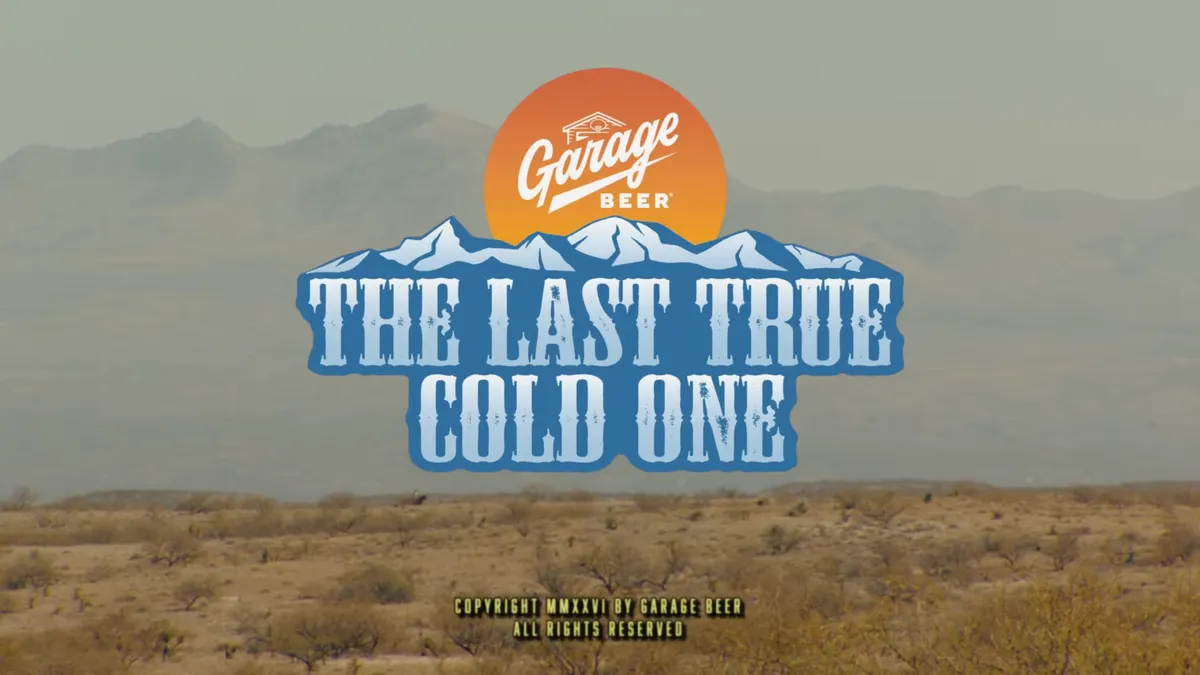
Western parodies are on trend, as the style was also utilized by Garage Beer in its latest film effort. “The Last True Cold One,” out today, April 23, features the brand’s co-owner Jason Kelce as a cowboy on the hunt for a cold beer. Former Philadelphia Eagles teammate Beau Allen co-stars as the black-hatted villain, with Kelce’s wife, Kylie, as a local fixer.
“The Last True Cold One” was directed by Jordan Phoenix and shot at the Mescal Movie Set, the site of legendary films including “Tombstone” and “The Quick and the Dead.” The 15-minute film features the brand’s self-described “dumb” sense of humor — including barroom brawls and ice on Allen’s nipples — as well as a soliloquy by Jason about how beer represents the values of community, civility, tradition, and when needed, rebellion.
The western short is Garage Beer’s third foray into branded films, following a tie-in to “Predator: Badlands” called “Thermal Buzz” and a martial arts-themed project called “Brewmite.” In this case — no pun intended — the film is timed to and focused on Garage Beer’s recent move into bottles, an innovation that will “dynamically change [the] business,” according to Garage Beer Chief Creative Officer Corey Smale.
“We're trying to attach bigger concepts to actual product and retail pushes,” Smale said in a previous interview with Marketing Dive. “We made a huge ass movie about it, it’s featured in the movie and it's gonna be a big deal for us.”
Getting it right
Despite the proliferation of branded films, marketers must carefully consider the whys and hows of stepping onto the stage. Timing the launch, determining the right partners and figuring out an approach to the content roll out are all crucial questions marketers must ask before getting into branded films.
“The main risk is, of course, how expensive it is and how easy it is to get wrong,” said AntiSocial’s Sabzehzar. “If there's not really a strong idea there or a plan for how it's going to live beyond the launch, then it can be a high-cost moment that disappears quickly.”
Marketers can turn to films to serve as brand platforms in their own right, as sources of additional content and as a way for brands to plant their flags around a position or purpose. But they must also show restraint, putting their brands in a supporting role versus a centerpiece of the story. That was the case with the Tecovas film and the Heineken documentary, the latter of which was a human story about resilience — not about beer.
“Genuine human stories will always have an audience,” said New York Times Advertising’s Cornelious. “But the ultimate test of success is, if you removed the logo, would this be a film you would watch? If the answer is no, it's just a very long ad.”