Amazon and Nike are the top brands in households with Gen Alpha teens, an age group that wields significant sway over household purchasing decisions, according to an early look at data HarrisX and Allison Worldwide shared with Marketing Dive.
McDonald’s was the top-ranked food brand and third-ranked brand for both teens and their parents, but, when looking at teens alone, Chick-fil-A comes in second. Walmart comes in fourth overall, but is the top-performing brand for parents, largely due to strong performance among moms, per the data.
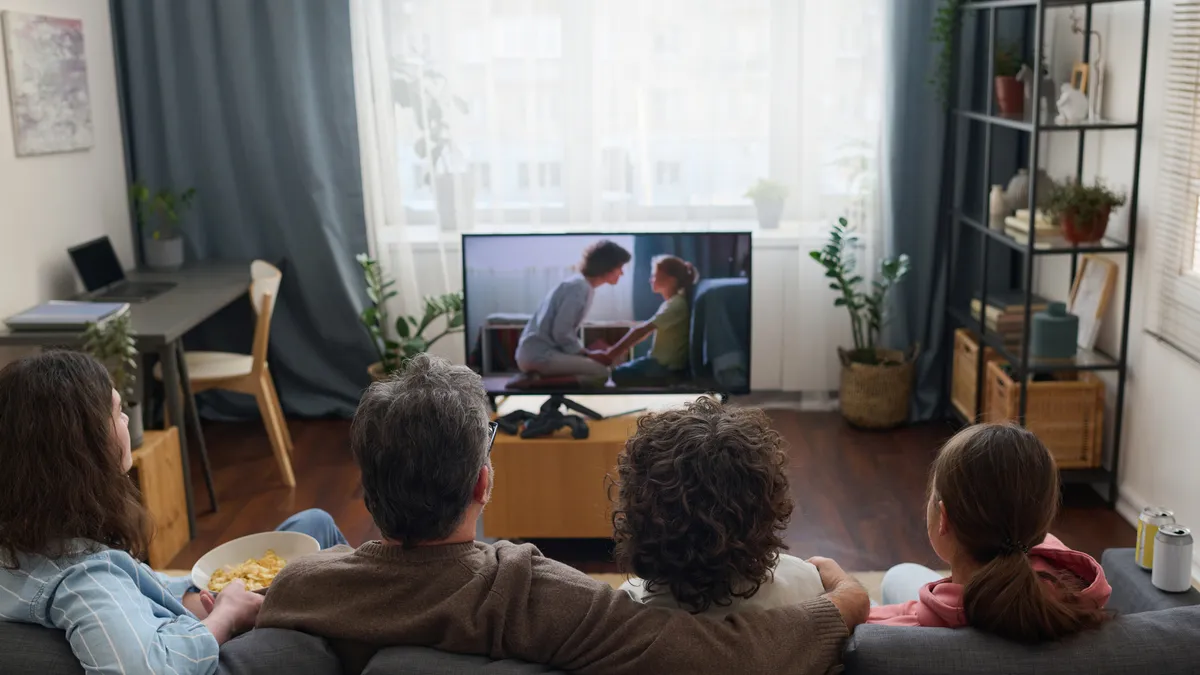
Of the approximately 67 million Gen Alpha children in the U.S., about 16 million are ages 13 to 16. These teens are largely raised by millennials, creating a household environment where both the parents and children grew up, or are growing up, with the internet, per the report.
The parents have tremendous influence over what brands their kids like, with 80% of teens saying their parents have sway over their preferences. Moms have a greater influence than dads, with the mother being cited by 73% of teenage respondents compared to the 58% who cited the father. The relationship goes both ways. Of the parents surveyed for the study, 91% said their teens influence what brands they like, more than any other influence measured.
"When it comes to shaping what brands Gen Alpha teens like, mom is more influential than any social media platform, creator or celebrity. Brands that miss the household will miss an early opportunity to build loyalty and commercial success with Gen Alpha and their gatekeeper mom,” said Anne Colaiacovo, CEO, North America of Allison Worldwide, in emailed comments.
The teenaged CMO
Certain brands demonstrate stronger teen-driven purchasing power than others. Nearly three quarters of the parent purchases for Sephora and E.l.f. Cosmetics were initiated by the teen. Beauty brands have proven to be cultural mainstays for teenage girls, E.l.f. especially.
When presented with several beauty brands, 60% of girls said they would ask their parents for E.l.f. products. Starbucks and Bath & Body Works also ranked in the top 10 brands in this demographic. Teen girls are more likely to drive the purchases parents make for them, at a rate of 67%, than teen boys, who drive 59% of the purchases made for them.
Data for the “Gen Alpha Household Influence Study” was collected between May 4 and May 12, 2026. The survey yielded responses from 705 Gen Alpha teens aged 13 to 16 and from 750 parents. To ensure the sample was representative, results were weighted for age, region, gender, income, race/ethnicity and other factors, with a margin of error of +/- 2.5%.
The study will be conducted quarterly, with the data serving as the foundation for the Gen Alpha Household Intelligence Platform, a new brand performance system run by Allison Worldwide and HarrisX. The offering will gauge how brands resonate across both teens and their parents using a Gen Alpha Household Brand Score that tracks six audience segments and factors like purchase decisions and loyalty.
When it comes to actually reaching these consumers, no one platform holds the key to the whole family. TikTok (42%) and Pinterest (19%) are the most important platforms for teen girls, while YouTube tops the ranking for both teen boys (35%) and dads (32%). Facebook is the most popular with moms (24%).
“This fragmentation means marketers need to stop thinking about a single-channel strategy and reimagine brand building for a household strategy. The brands that win will understand where discovery starts, who builds momentum and who ultimately converts that influence into a purchase,” said Colaiacovo over email.
Parents are not a monolith, according to the study. For example, Walmart is the top brand with mom, while ranking third with dads. Wendy’s also plays better with moms than any other group measured, ranking fifth. Among dads, Nike ranks first and McDonald’s second. Adidas comes in fourth while Samsung ranks eighth, outperforming with dads compared to other groups. Dads are also more likely to introduce teens to new brands compared to mom, at a rate of 60% vs. 39%.
“Both parents hold the power of the purse, but how and where you reach them requires a completely different approach. That's not a footnote. That's a media strategy," said Dritan Nesho, founder and CEO of HarrisX, in an email.
Clarification: This story was updated to better reflect moms' relationship to Walmart.