Last summer, a record-low 58% of U.S. adults said they were “extremely” or “very” proud to be an American, per a Gallup poll. That figure was down nine points from the previous year, and down nearly 30 points from when the firm first polled Americans about their pride in January 2001. While Gallup has yet to reveal this year's findings, 2026 so far has delivered month after month of political polarization and economic strain, which has taken a toll on consumers.
The shrinking pride U.S. consumers have in their country presents a particular challenge for brands looking to capitalize on the 250th anniversary of the nation’s founding on July 4, whether through an official partnership with the nonpartisan America250 commission or simply by catching the slipstream of the patriotic celebration. For an example of how difficult the moment can be to navigate, look no further than the fate of the planned musical performances at “The Great American State Fair,” which President Trump has suggested cancelling after nearly all artists backed out, citing the politicization of the event.
But even as the culture wars that have ensnared brands like Bud Light and Target continue — this time with a red, white and blue facade — there is still value in being associated with America. For example, Brand Keys’ 25th annual index of patriotic brands includes a top 10 featuring institutions like Coca-Cola, Ford, Disney, Amazon and Walmart — companies with big marketing footprints and bigger market values.
“As we gear up for the 250th party, more brands are viewed through a political lens — and authentic patriotism is more important than ever,” Robert Passikoff, president of research firm Brand Keys, said in a press release. “When a brand truly embodies patriotism, it goes beyond marketing-as-usual and holiday sales. It taps into a deep well of shared history, pride, and purpose, driving stronger loyalty, consumer engagement, and better behavior in the marketplace.”
Whether seen as patriotic or not, all brands marketing around America’s 250th birthday must tread carefully in an area that is perhaps even more emotionally charged than other cultural battlegrounds.
“The most important thing for brands when jumping on something like this is to make sure that they have a right to be doing that,” said Alex Abrantes, chief creative officer at Iris North America. “Is this part of what my brand stands for, or am I just trying to jump on a bandwagon?”
More than flag waving
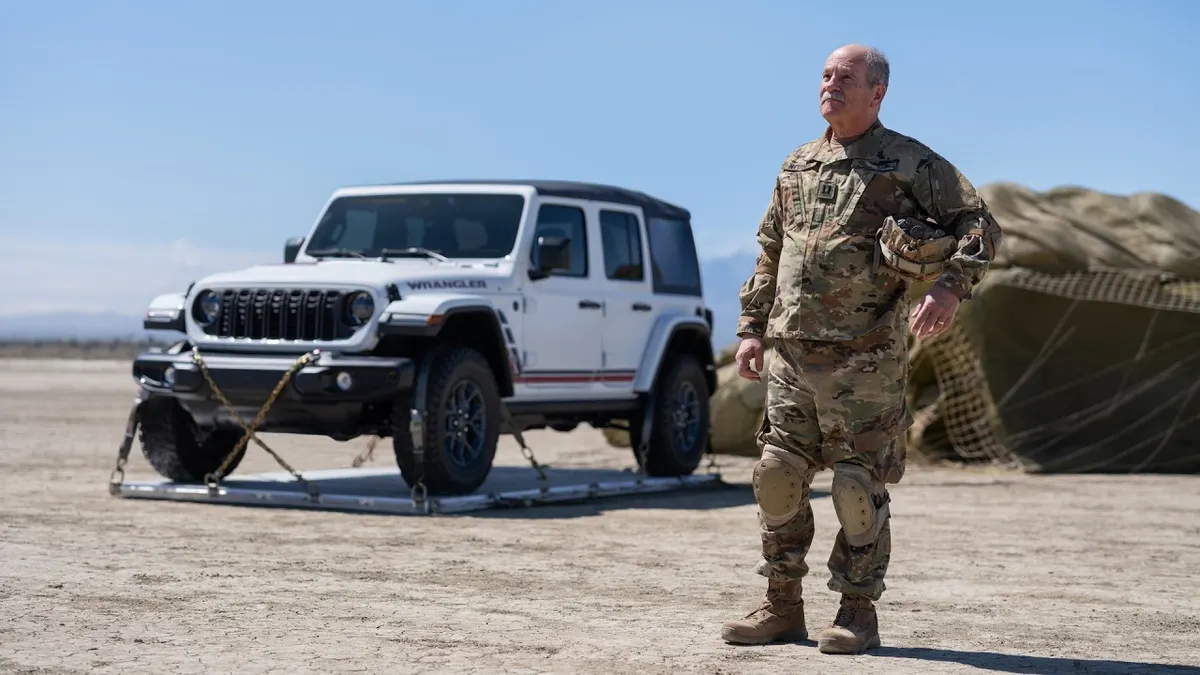
Jeep isn’t jumping on the patriotism bandwagon: It’s leading the charge. The Stellantis brand has held onto the top spot of the Brand Keys survey since its inception in 2001 and is making the most of its parent company’s exclusive automotive partnership with America250, which also includes sister brands Chrysler, Dodge and Ram.
The auto brand last month announced a multistage marketing campaign that sees it teaming up with Marvel’s Captain America — a character born the same year, 1941, that the brand’s namesake vehicle went into production. Built around a special edition Jeep Wrangler with red, white and blue design elements and a Captain America shield tire cover, the partnership includes a comic book, videos and a co-branded campaign later this year in support of the upcoming film “Avengers: Doomsday.”
Jeep’s effort is the rare example where a brand’s marketing inspired the product — not the other way around, Stellantis Global Chief Marketing Officer Olivier François said of the marketer’s America250 efforts on a media call last month.
“We felt there was an opportunity to do something more meaningful,” the executive said. “We could just put an American flag on a car and call it a day. This is not how we do things. We are more passionate than that. Jeep is a very passionate brand, and we are very passionate marketers.”
Alongside Stellantis, official America250 sponsors including Coke and Kraft Heinz have already rolled out major marketing efforts, with the latter’s push representing its largest portfolio campaign to date.
While Coke’s campaign centers on an ad that reimages the song from its iconic 1971 “Hilltop” ad as “I’d Like to Buy America a Coke,” it also includes a goal of generating 250,000 volunteer hours this year. The volunteer programs, in collaboration with local bottlers and community partners, will focus on issues including food insecurity, disaster relief, sustainability, youth empowerment and honoring military members and veterans.
“Coke's doing a great job at both the higher-up level, the anthem level, but they're also doing good things at the local level, sponsoring events and things like that,” said Morgan Seamark, managing partner at brand consultancy Triggers. “It's not just waving flags and beating the patriotism drum: It's about how you bring it down to that level, prioritizing participation rather than messaging.”
There have also been campaigns by brands like Ford and Chevrolet that are not official sponsors of the festivities but are looking to play up their patriotic bona fides to reach consumers this summer. Like Coke’s effort, Chevy’s campaign reworks an iconic piece of brand marketing by using the song “See the USA in Your Chevrolet.”
“I thought [Chevy’s] was a really nice way to play. It helps you to remember that there is so much to explore [in the U.S.], and it doesn't hurt that she's sitting atop like this beautiful scenery,” said Chris Konya, chief strategy officer at strategy and design firm Sylvain.
While Clorox is not an official partner of America250, the marketer is using the opportunity for a portfolio play that spans the gathering, grilling and clean-up moments that it expects to see this summer. Clorox-owned brands Hidden Valley Ranch, Kingsford, Glad and Burt’s Bees all recently launched efforts spanning limited-edition packaging, retail partnerships, social media and paid search campaigns and more.
For Clorox, America’s 250th birthday elevates its usual summer activities due to increased interest from consumers and retailers like Walmart and Sam’s Club.
“From a marketing standpoint, we have a really good opportunity to talk to consumers at a culturally relevant time in a celebratory way, where our brands naturally fit,” said Stacy Stokes, commercial vice president of marketing and sales for Burt’s Bees and Hidden Valley Ranch. “But then when we look at our retail partners, we know they're thinking the same thing, and it becomes an opportunity to be a part of their merchandising and corporate programs in a bigger way, too.”
Playing politics
As other culture war battles have demonstrated, areas previously considered unremarkable or uncontroversial can quickly become divisive minefields for marketers. Advertising around America’s 250th birthday is likely to be no different.
“It's such a difficult thing to navigate, and it's not surprising,” said Sylvain’s Konya. “This country is in the midst of reshaping some of our most deeply entrenched value systems.”
Utilizing nostalgia — a frequent marketing tactic — is particularly difficult when celebrating America: Not all consumer groups have been treated equally throughout the country’s history, to say nothing of ongoing cultural battles around race, country of origin, sexual orientation and gender identity.
“I think the magic is going to be finding the balance between nostalgia and bringing that nostalgia forward in a modern way that allows it to be inclusive of what America stands for today,” said Triggers’ Seamark. “It's not about making America great again, if you will. It's more about what binds us and what makes us America going forward.”
Several marketing experts stressed the need for brands to play up values that speak to the best of what America can be — not necessarily what it is in the current political moment.
“In today's landscape, people really are looking for community, support, craftsmanship, integrity, innovation and ingenuity,” Konya said. “These are also values of America that may not be as central as freedom and individuality, but are still pillars of how we see ourselves and what we try to aim to do every day.”
For Clorox, marketing around America’s 250th birthday allows its brands to be part of consumers’ lives at moments of celebration and connection that serve as a respite from the pressure and stress on their wallets and in their newsfeeds.
“These moments of joy, gathering and celebration can look a lot of different ways, but at the end of the day, it's about being around the people that we have fun with,” said Clorox’s Stokes. “Our intention with this [campaign] is more to be all about the gathering and the smile, whatever that looks like for you, your friends and your family.”