


NEW YORK — CMOs may occupy one of the more creative C-suite roles, but it can be a tough gig to excel at. Tenure is trending downward while responsibilities are multiplying, including around artificial intelligence. Even marketing decision-makers who deem themselves in-the-know about consumer tastes struggle to translate their savvy to the enterprise.
Among CMOs, 41% report feeling culturally tuned in but view their organizations as laggards on this front, according to a recent study from brand consultancy Lippincott and Bloomberg Media. Eighty-one percent of respondents already active in cultural marketing would do more in the space without obstacles such as localization challenges, legal or regulatory hurdles and societal polarization in their way.
Despite the raft of headwinds hitting CMOs, executives at Advertising Week New York still see the upsides in a job with a seemingly ever-expanding remit.
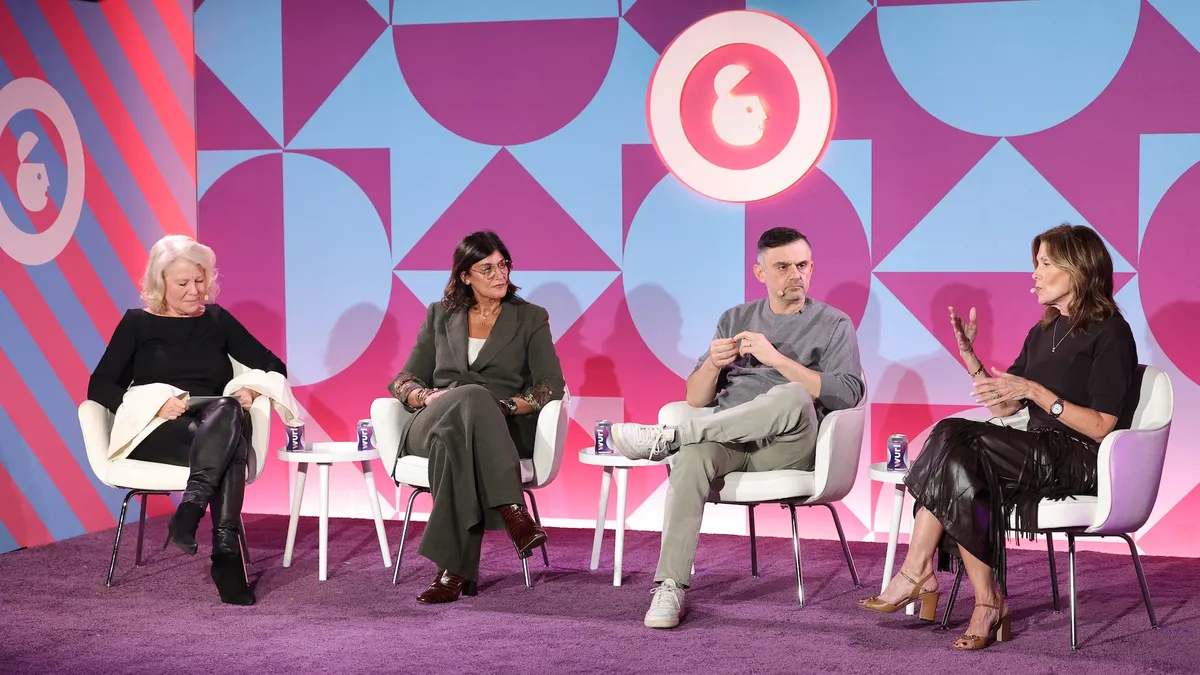
“I think it’s the best time to actually join marketing,” Aude Gandon, global chief digital and marketing officer at The Estée Lauder Companies, said during an Advertising Week panel moderated by Lippincott. “More and more, we actually have marketing sitting at the decision table because we are all hunting for growth.”
CMOs’ credibility conundrum
The journey to CMOs becoming bigger corporate stakeholders can be complicated. The prioritization of results-focused performance marketing may be providing CMOs with fresh credibility in the boardroom, but has potentially come at the cost of enduring cultural relevance and brand love, Lippincott and Bloomberg Media found.
“The results of our study suggest that CMOs are winning influence internally to the long-term detriment of the brands they steward and their relationship with the customers they serve,” the report reads. “In other words: The pursuit of internal trust can undermine external trust.”
Some Advertising Week panelists don’t see the two ends of the marketing funnel as inherently in tension, but rather viewed a lack of consistency from CMOs as the larger culprit hampering impact.
“The biggest challenge is if you change your strategy every quarter, every year, and you focus on different products or ad campaigns,” said Carina Ertl, CMO of the luxury watch retailer Bucherer USA, during the Advertising Week panel. “If you stay consistent and start with that short-term performance impact, you build a brand long-term as well.”
Inconsistency could also be amplified by a hefty amount of churn which may, in turn, be informing the desire to prove out short-term results. Average CMO tenure has dropped 35% since 2010, research from Findem and CMO Huddles found, and CMOs are generally seen as among the shortest-tenured members of the C-suite.
CMOs at the same time may need to do a better job at shaping the narrative around which types of marketing produce business outcomes, an area where performance is dominant but doesn’t capture the full picture.
“Strong brand-building campaigns and advertising actually drive short-term sales. I think we need to re-educate our communities, and we also need to educate our CFOs and the leadership,” said Gandon.
AI and emotional intelligence
Perhaps no technology better embodies the double-edged sword CMOs deal with today than AI. Automation promises to unlock new efficiencies and creative frontiers, but is also costly, complicated to master and prone to producing low-quality or inaccurate outputs.
Just 11% of CMOs surveyed by Lippincott and Bloomberg Media said their organization has an “excellent” ability to adopt new marketing technologies and innovate with them, while just over one-third rated their companies as average in this respect. That’s to say nothing of consumer-facing strategies, where there has been strong backlash to AI-generated campaigns.
Estée Lauder has followed those cues from consumers. While the beauty and cosmetics giant sees AI as enabling certain aspects of creativity — Gandon said it would be ridiculous not to take advantage of AI tools given what she sees as incredible capabilities — the company is committed to not using the technology on anything related to humans, aligning with stances adopted by other marketers in the category.
“At the end of the day, we’re selling a product with a specific benefit. You actually want to show the benefits,” said Gandon.
The panel closed out on a discussion of the next generation of marketing talent and how AI may affect that cohort. Findings from Gartner indicate that a majority of advanced marketing organizations will be able to eliminate entry-level jobs by 2030 due to AI, and the researcher encouraged CMOs to consider giving junior employees more substantial duties earlier in their career to preserve their talent pipeline. The Advertising Week speakers again expressed optimism about the future, believing the technology takeover will be balanced out by a demand for more human-oriented skills.
“The opportunities are just crazy to continue to evolve, to be more data-driven, to be more creative. I don’t think there are any borders to stop us. We need junior talent,” said Gandon. “You still need the human managing the machine and you still need the creativity and the intelligence and the emotional intelligence.”