Ad tolerance is growing as ad-supported streaming becomes more popular. Two-thirds of consumers indicate they don’t mind watching ads as much as they used to and 69% say they would choose to watch ads if it saves them money, an 11-point increase from 2021, according to data from Hub Entertainment Research, a market research firm that focuses on technology and media consumption.
“Viewers overall are way more accepting of ads than they've ever been,” said Mark Loughney, senior consultant, Hub Entertainment Research. “Now, the other thing that I would say…is don't take advantage of them.”
The latest iteration of Hub’s “TV Advertising: Fact vs Fiction” report surveyed 3,000 consumers between the ages of 16 and 74 who watch at least one hour of TV per week. Data collection was completed in April 2026 and was U.S. census balanced. Consumers did not need to have broadband access in order to be included.
Is this just cable?
American households spend an average of $924 a year on recurring entertainment subscriptions, and consumers are paying 19% more for TV, music and other apps now than they did in 2020. This increased cost and the proliferation of ad-supported tiers together are driving the interest in more cost-effective options, even if that means more ads.
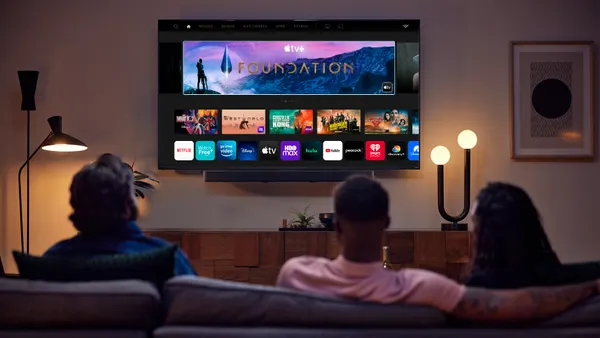
As a result, there are now multiple channels where viewers watch content interspersed with ads. Sound familiar?
“The future is looking a lot more like the past of TV, with the majority of people accepting advertising in the majority of what they watch,” said Loughney. “Our advisory to anybody who's in the ad sales business or was in the streaming business is to not get to that point where we were with linear cable channels and very very long commercial breaks.”
However, ads on streaming platforms are not being consumed the same way as ads on traditional television. Largely, consumers are less likely to skip an ad on a streaming service than a broadcast channel, as channel surfing isn’t possible, says Loughney.
Additionally, despite the prevalence of second-screening, Gen Z viewers are more likely to be aware or somewhat aware of ads at a rate of 69%, 22 points higher than Gen X and boomers. Just 9% of Gen Zers say they are not at all aware of ads when multitasking compared to 15% of Gen X and boomers.
The algorithmic tradeoff
Not only are consumers getting acclimated to ads on streaming, they also trust TV services with their data more than social media platforms. Gen Z and Gen X/boomers strongly agree or somewhat agree that TV services are more trustworthy with personal information over social media platforms at relatively the same rate, 57% and 56%, respectively.
Users who are routinely shown targeted ads tend to be more accepting of them, according to the study. When looking at consumers who regularly use social media versus those who never use it, social media users were significantly more likely to feel positive about targeted ads, at a rate of 40% vs 14%. Less than 15% of social media users felt negatively about targeted ads, compared to 32% of non-social media users.
However, not all information is seen as equal. Sixty-five percent of respondents are completely or somewhat willing to share the kind of shows they watch with TV services for more relevant advertising. Gender (59%) and age (57%) are also pieces of information consumers are willing to share. They are less willing to share social media posts (36%), annual income (35%) and AI chat history (33%).
Artificial intelligence’s use in entertainment has also proven divisive. Most respondents, 55%, feel positive or somewhat positive towards AI when it's used for better ad timing and reducing ad repetition. However, favor decreases when it's used to generate trailers (37%), for personalized dynamic ads (36%) and to generate commercials (34%).
“AI can help with keeping the ad load more manageable,” said Loughney. “But when it comes to creative, not many people these days want to see ads created through AI tools. That's where people are still more or less drawing the line.”