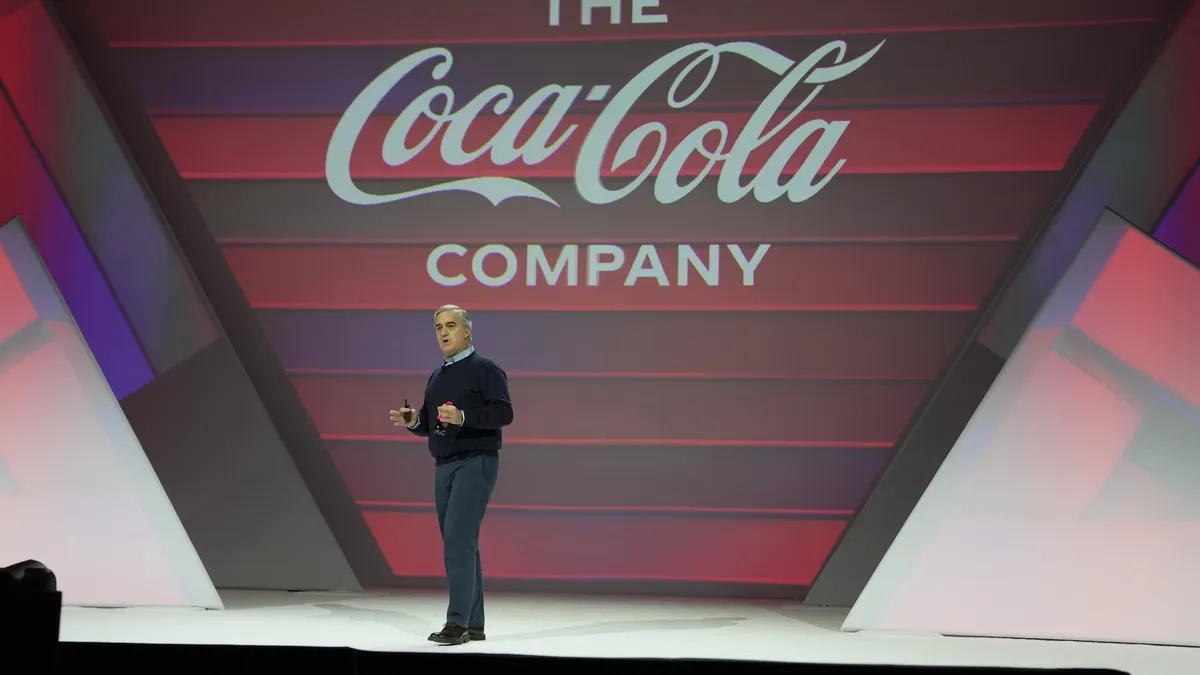
ORLANDO — When Manolo Arroyo began work as global chief marketing officer for the Coca-Cola Company at the start of 2020, the beverage giant had three burning issues to address. For almost two decades, it was not recruiting new consumers in total; despite being a trendsetting advertiser for years, it was late to embrace digital marketing; and it was very fragmented, running around 2,000 different marketing programs, 3,000 new product launches every year and working with more than 6,000 agencies around the world.
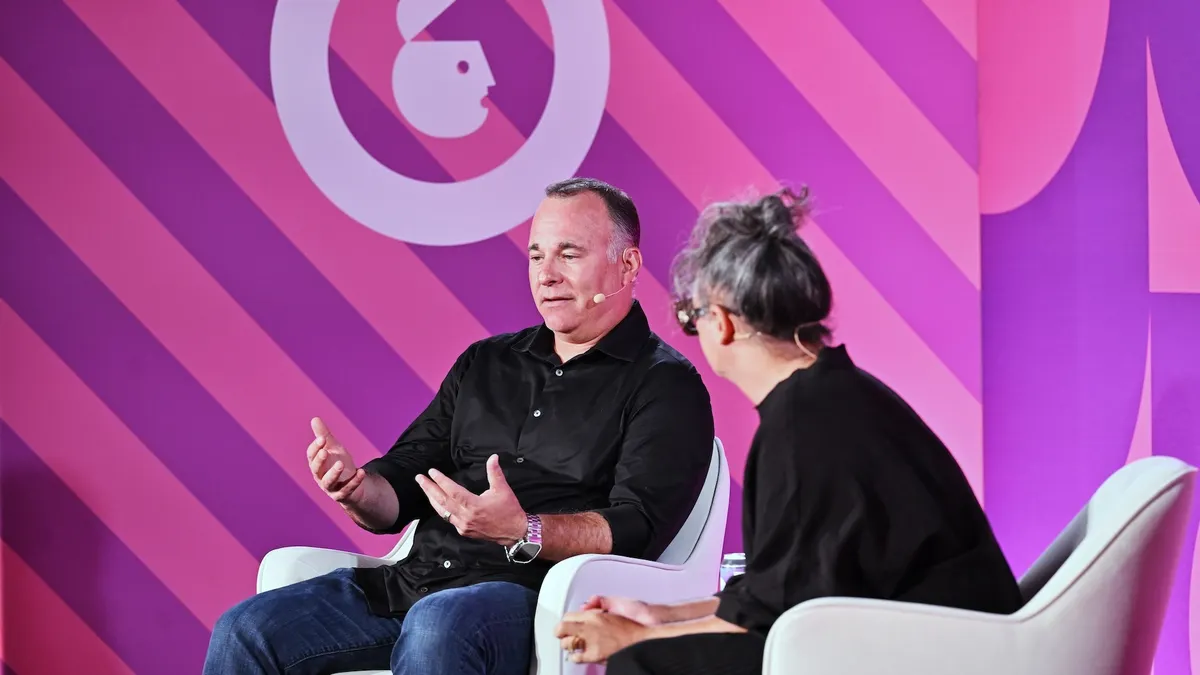
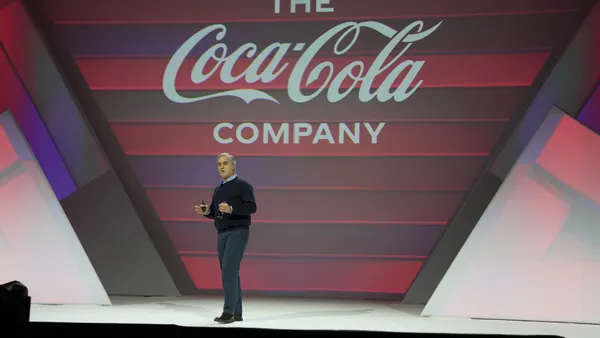
“It was a time to stop for a minute, in the view of the game, and rethink the future of our market,” Arroyo said during a presentation at the Association of National Advertisers Masters of Marketing conference on Oct. 21.
Arroyo has overseen a transformation of Coca-Cola’s marketing strategy and organization that has yielded some of its best growth in years. And the transformation continues: Coca-Cola on Oct. 22 announced the completion of its global marketing operating system review, selecting Omnicom as its media partner in North America.
The company will retain WPP Open X as its media partner globally, outside of North America, with Dentsu continuing to handle media in Japan and South Korea. Publicis Groupe won Coca-Cola’s North American media account last year but withdrew from the review after taking on PepsiCo's global media duties last month.
“Our review was about designing the future of our marketing organization,” Arroyo said in a statement. “The best marketing systems are built when you combine the best marketing talent with the right partnerships. We are confident that this combination of global scale, local expertise, innovation and collaboration gives us exactly that.”
WPP Open X will continue to serve as Coca-Cola’s global creative partner, and WPP retains its creator, media and marketing remit. In North America, Omnicom will unite media, data, CRM, loyalty and creators in a connected ecosystem. The new structure will be implemented in phases beginning Dec. 1.
From brand love to consumer base
During his Masters of Marketing keynote, Arroyo detailed the problems Coca-Cola faced before embarking on its marketing transformation, what that process required and how its marketing has handled opportunities like this summer’s World Cup and its efforts to tie Fanta to Halloween.
For years, the key metric for Coca-Cola’s marketing teams was brand love. But increases in brand love did not always correspond with increases in brand performance, and the company needed to shift its paradigm and follow a metric more closely tied to business results.
“We decided to shift to total consumer base, which is a behavioral-driven metric, as the primary correlation and causation of growth in our P&L, and then understand which equity drivers really impact behavioral change for which audiences,” Arroyo said.
Coca-Cola then decided to key in on four key areas: pruning its portfolio; focusing on bigger and bolder innovation; moving to digital marketing to drive effectiveness and efficiency; and redesigning the marketing operating system, both internally and externally.
After previously having more than 400 brands, Coca-Cola is now down to about 170, with a mix of global, regional and local brands across all beverage segments, a reduction that has simplified its operations and supply chain. Thirty-two are billion-dollar brands, including sparkling soft drinks Sprite, Fanta and variants of its trademark cola; sports beverages Powerade and Bodyarmor; water brands Smartwater and Vitaminwater; and juice labels Minute Maid and Simply.
“A brand is a promise… that is delivered through experiences that leave a long-lasting memory,” Arroyo said of building billion-dollar brands. “It's about memory structures that trigger a behavior change that results in and generates economic value.”
Experiences drive results
Coca-Cola creates memory structures in several ways, including products that win with taste, function and packaging superiority. In the beverage category, half of the memory generation is created in the first moment a consumer interacts with a brand, both offline and online, per the company’s data, making retail experiences key. And in an increasingly artificial intelligence-powered world, live experiences in sports, music, food, culture and entertainment allow brands to stand out.
Digital is the connective tissue that unites product, retail and live experiences. In 2019, less than 30% of Coca-Cola’s media spend was invested in digital; by the end of this year, that percentage will be about 70%. To drive this change, Coca-Cola in 2021 created Studio X, the globally connected network that powers its marketing across creative media, enabled with the same common data and tech.
“For a company that has been, for so many decades, primarily anchored on television advertising, it was very important to change our ecosystem and operating model,” Arroyo said.
Since rethinking its marketing metrics, transforming its marketing and shifting to digital, Coca-Cola has ushered in an era of growth. After two decades of struggling to increase its consumer base, the company has added 160 million new consumers. The company has driven top-line growth, expanded its margins and increased its return on invested capital, per Arroyo. Coca-Cola in Q2 beat Wall Street estimates for earnings and revenue, and is scheduled to release Q3 earnings before the market opens on Oct. 27.
“We drove not only behavioral change, but also brand equity,” said Arroyo. “[Brand] love can be increased as well, but it follows the behavior, and that has translated immediately in our volume growth, in our transactions growth and therefore in our P&L.”