

With major brands directing more budgets to social and creator-first marketing, legacy broadcasters are making the case for a balanced media diet, even when the upfront price tag of formats like premium video is steeper.
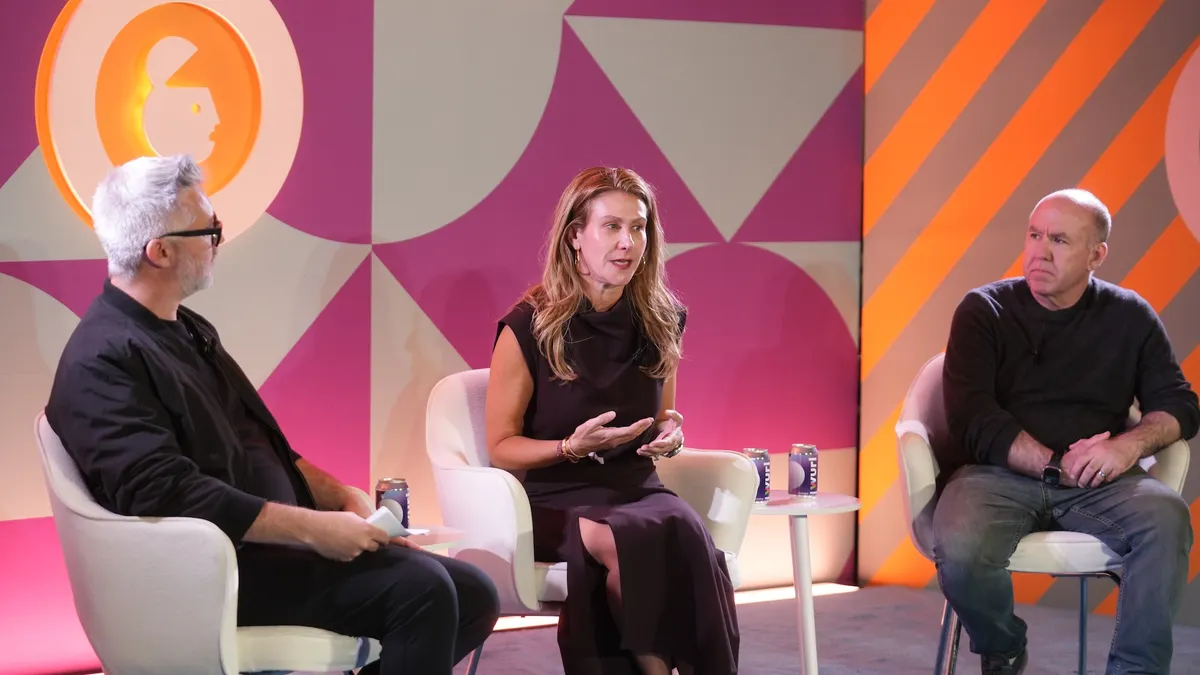
NBCUniversal for the past several years has been collaborating with Gain Theory, WPP’s marketing effectiveness consultancy, on marketing mix models and research that show how premium video — the Peacock owner’s bread and butter — can deliver superior performance when stacked up against campaigns that skew lower funnel. The two companies discussed takeaways from their partnership during a talk at an Association of National Advertisers event hosted at WPP’s downtown Manhattan offices last Thursday.
NBCUniversal and Gain Theory have run simulations which leverage syndicated data from advertiser categories including automotive, CPG, retail and pharmaceuticals to pressure-test the value of premium video, or well-produced video advertising that airs in trusted, brand-safe media environments. Scenarios where dollars allocated to premium video were rerouted to non-premium social and digital advertising delivered notably worse results. In one case, a simulated media plan that shed premium video spend experienced a 29% drop in incremental revenue. Meanwhile, the tactics that ended up receiving the premium video resources saw 20% declines in return on investment compared to the more well-rounded media plan.
“[By] eroding that foundation or removing those [premium video] dollars to the other tactics in search of maybe short-term efficiency or whatever, that will not only impact the performance of that premium video buy, but also the overall performance of your media plan,” said Vignesh Kumar, a senior director at NBCUniversal specializing in measurement and insights, during the ANA presentation.
The upshot is that obsessing over tangible near-term gains may actually hamper performance in the long run. Marketers still need to make that case to their CFO, which can be an uphill battle even when backed by data-driven insights.
“You have to have somewhat of a complex marketing framework. That’s the reality of how we do business and how we understand what we’re trying to do with these campaigns,” said Laura Laird, senior director at Gain Theory, during the talk with Kumar. “So having the framework reflect that complexity, but then being able to translate it in a really simple and concise way, particularly to the rest of the organization, it’s by no means easy.”
Tentpole opportunities
Kumar’s point about short-term efficiency comes as CMOs are facing greater pressure to tie marketing directly to results, which can be difficult to do with premium video channels aligned toward longer-term goals. Macroeconomic volatility is further rattling the industry, with marketing departments often the first to feel cuts in the case of a downturn. That said, the video advertising space is evolving with the rise of internet-connected TV and may perform better in middle-funnel areas like search than its reputation suggests, per Kumar.
“We know that the middle of the funnel is incredibly important. That’s really where purchase decisions are being made,” said Kumar. “What we saw is that while premium video does take up a significant share of media budgets in the brands that we measured, we saw that it really was punching about its weight in terms of driving that middle-funnel performance.”
Premium video this year is getting a boost from cyclical events like the Winter Olympics and FIFA World Cup that have drawn a significant amount of marketing activity, to the benefit of publishers like NBCUniversal. Live sports were inarguably the dominant programming topic at the upfronts, a recent series of presentations aimed at wooing advertisers in which NBCUniversal participated. The category is incredibly expensive for advertisers, with costs only seeming to go up. Still, treating such tentpole moments as one-off activations often means marketers are not getting the most bang out of their not-inconsiderable buck.
“[A]dvertisers that show up to those big events and then are consistent with audience targeting, specifically, we saw them drive 54% higher middle-funnel engagement compared to advertisers that are just in those big events alone,” Kumar said. “When you think about consistent messaging, it’s really about ensuring that you’re not just showing up to those big events, but you’re also understanding which tactics work for you every day and pairing that with those big moments.”
Tapping into fandom
The ANA talk frequently returned to the potential downsides of a social-heavy marketing approach, a tactic which has become more common in the industry as marketers chase younger digital natives that have tuned out linear TV. Kumar dug into the point when discussing fandoms, a part of consumer culture that is frequently built around TV and film franchises — think Bravo’s slate of high-theatrics reality TV — but fostered through social media.
By pairing Gain Theory’s marketing mix modeling with additional research, NBCUniversal found that its premium ad experiences drove 79% higher attentiveness compared to digital and social platforms that condition viewers to scroll their feed, according to Kumar. In addition, campaigns mixing tactics generated 84% higher consideration intent versus purely social marketing efforts.
“What we saw is that premium video is foundational to your overall media plan, and that’s because it’s reaching a truly engaged and avid fan base,” said Kumar.