
“Sociable” is the latest commentary on important social media developments and trends from industry expert Andrew Hutchinson of Social Media Today.
YouTube announced updates to its artificial intelligence labels on video clips, which will make it easier for users to see when a video has been created using AI, and may help to limit confusion and misinformation in the app.
YouTube launched AI labels for content in 2023, and the platform has since refined its labeling requirements and processes to align with AI innovations, in order to provide a higher level of transparency around AI-generated elements in videos.
And now, YouTube is looking to make these labels more prominent, while it’s also rolling out improved AI detection, in order to ensure that AI content is being highlighted as such.
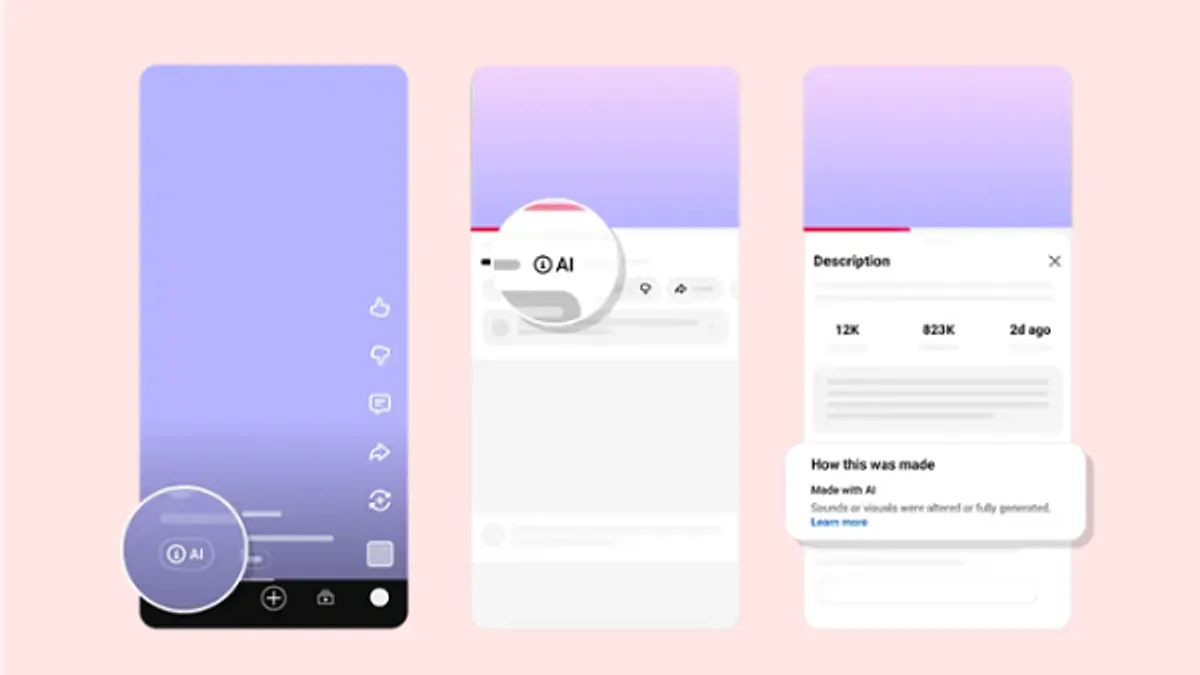
First, YouTube is moving the disclosure label for “photorealistic and meaningfully AI-altered or generated content” to a more prominent position within the playback screen.
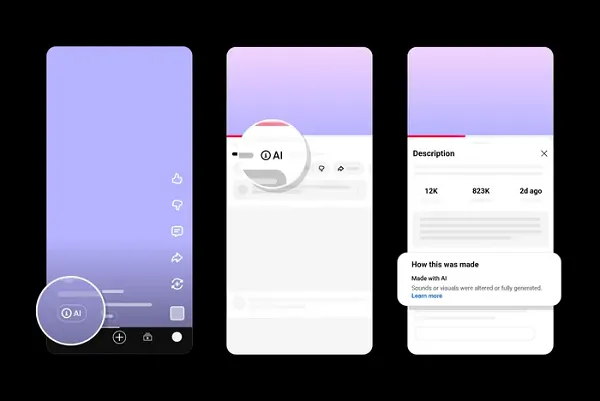
As shown in this example, YouTube will now display an “AI” information tag alongside the description of AI-altered content.
As explained by YouTube: “For long-form videos, the label will now appear directly below the video player, above the description. For Shorts, the label will appear as an overlay on the video itself.”
YouTube said that by making these labels more prominent, viewers will be able to get the context they need at a glance.
“This is now the single label format for all photorealistic and meaningfully AI-altered or generated content on YouTube,” the company said. “For content that is unrealistic, animated, or slightly altered, viewers can find this disclosure in the expanded description.”
YouTube is also updating its AI detection process, in order to ensure that AI-altered content is correctly tagged by creators.
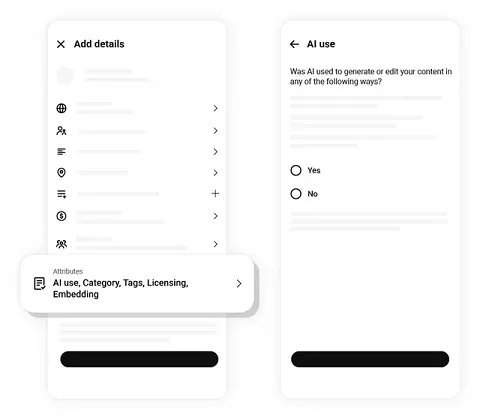
YouTube already requires creators to add an AI tag when they’ve used AI in the creation process, but now, it will also supplement this with improved internal scanning to detect AI.
“Starting in May 2026, we’re rolling out new internal signals to help identify AI-generated content,” YouTube said. “If a creator doesn’t specify whether or not they used AI, but our systems detect significant photorealistic AI use, we will now automatically apply a label.”
YouTube said that creators can update their video tags if YouTube’s detection gets this wrong, and incorrectly flags their content as AI-generated.
But for content created using Google’s AI tools, or content that includes C2PA metadata, AI tags will be permanent and non-removable.
It’s interesting to see social platforms working to promote AI usage on one hand, through an ever-increasing array of AI tools. Indeed, YouTube itself just announced a new AI remix option for Shorts, which enables users to generate entirely different versions of other people’s content.
Yet, on the other hand, that increasing adoption is also leading to more manipulation, slop and an infection of AI-generated garbage.
As such, social platforms need to introduce more tools to limit the impact of AI content. In other words, it’s like they’re causing the problem, then implementing the solution, all of their own volition.
But no matter how they approach it, AI-generated content isn’t going away, and as such, it is important for the platforms to take more steps to increase transparency and reduce confusion around AI-generated material.