Dive Brief:
- Heinz is showing bland food a red card in a social-first campaign timed to the quarterfinals of the World Cup, according to information shared with Marketing Dive.
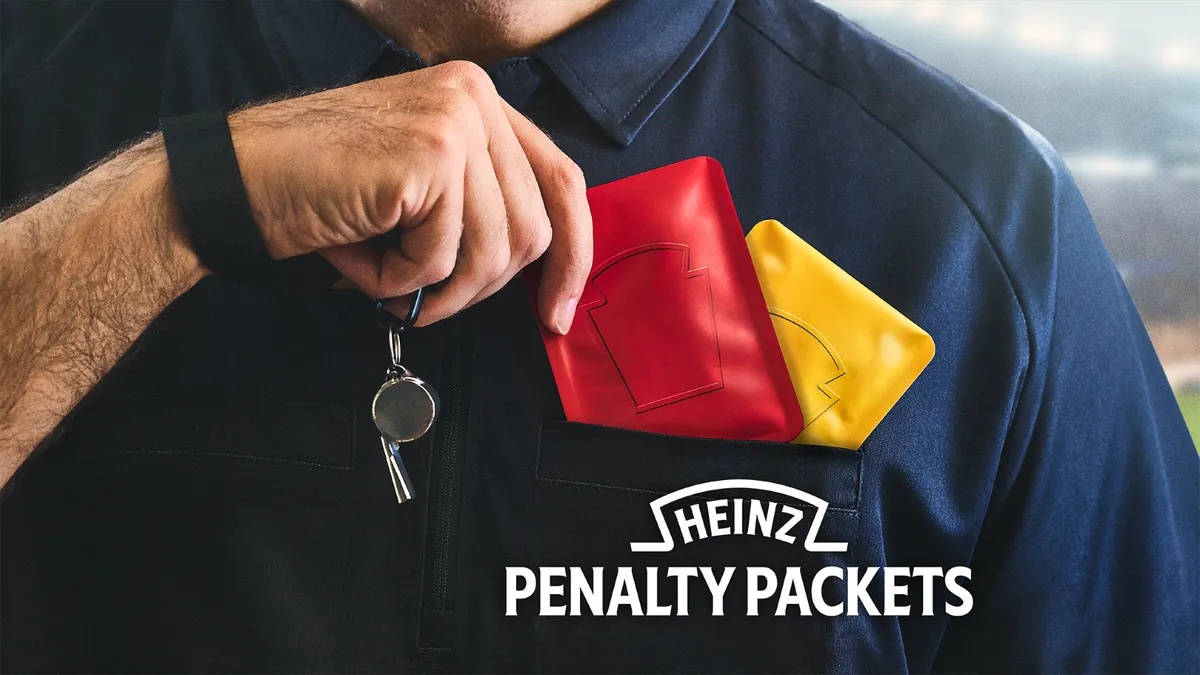
- At the center of the campaign are Penalty Packets, extra-large condiment packets that hold twice the amount of ketchup and mustard compared to standard packets. They are designed to look like yellow and red penalty cards, two iconic symbols in soccer, that also happen to be the same color as the brand’s condiments.
- The campaign, which was developed by in-house agency The Kitchen, spans user-generated content, social video and creator content. The initiative is an expansion of the “Irrational Love” brand platform, which the brand launched in 2023 to unite its global creative strategy.
Dive Insight:
In an effort to keep Heinz relevant during the final weeks of the World Cup, the brand’s new social-first campaign combines a well-known symbol of soccer culture while addressing a common consumer complaint there isn’t enough product in condiment packets.
The World Cup this summer has seen a record number of red cards given to players by officials, with 13 handed out as of July 5. This is more than the last two tournaments combined, with four given out in 2018 and 2022. Red cards are given out for a range of infractions, from unsportsmanlike conduct to foul play. Yellow cards are for less serious offenses and serve as warnings. Two yellow cards equals one red.
The Kraft Heinz Company has made significant sports investments in recent months as it moves to focus on its Away From Home food service business. In March, the company entered into a five-year partnership with the NFL, making it the league’s first official condiment partner.
The World Cup effort kicked off with a social video showing a series of unsauced foods, such as burgers and hot dogs. Consumers then show their food either a red or yellow packet, like referees do when a soccer player commits a foul, before covering the meal in either mustard or ketchup directly from the packet. The video then encourages consumers to post using #PenaltyPackets on social media.
“In the world's biggest game, red and yellow are synonymous with wrongdoing. We wanted to flip that meaning and Heinz Penalty Packets do just that. They're the first-ever sauce packets that let fans call a foul on no flavor, and resolve it in real-time with more Heinz,” said Simon Au, executive creative director, The Kitchen, in press materials.
The packets will be available for a limited time via microsite. Each box, which retails for $1.57 as a nod to the 57 on Heinz bottles, comes with one red and one yellow packet, along with extra normal-sized packets to serve as “substitutions,” another common soccer term referring to when one player is swapped out for another.
The effort could help the brand tie into the conversation around red and yellow cards. There was significant controversy recently over a red card given to U.S. striker Folarin Balogun. He was supposed to sit out the match against Belgium, but was granted a suspension and allowed to play after an effort was made by the White House to have the penalty reviewed.
While not an official sponsor, Heinz has taken steps to maintain a presence during the World Cup. Under FIFA’s “clean stadium” policy, venues must cover or rename brands not associated with the tournament. This has led to viral images of tape over clearly identifiable bottles of Heinz condiments. Heinz Canada leaned into the coverup, putting out an image of the branding on one of its bottles covered up, calling itself the “unofficial stadium ketchup.”