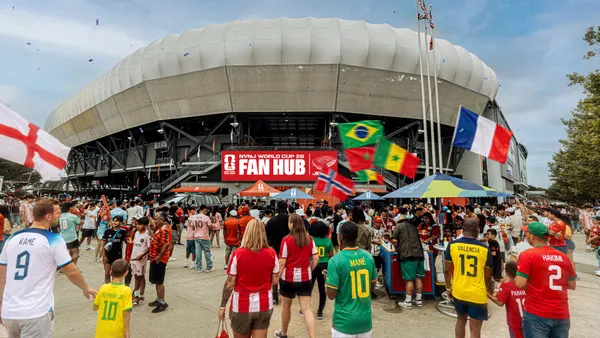


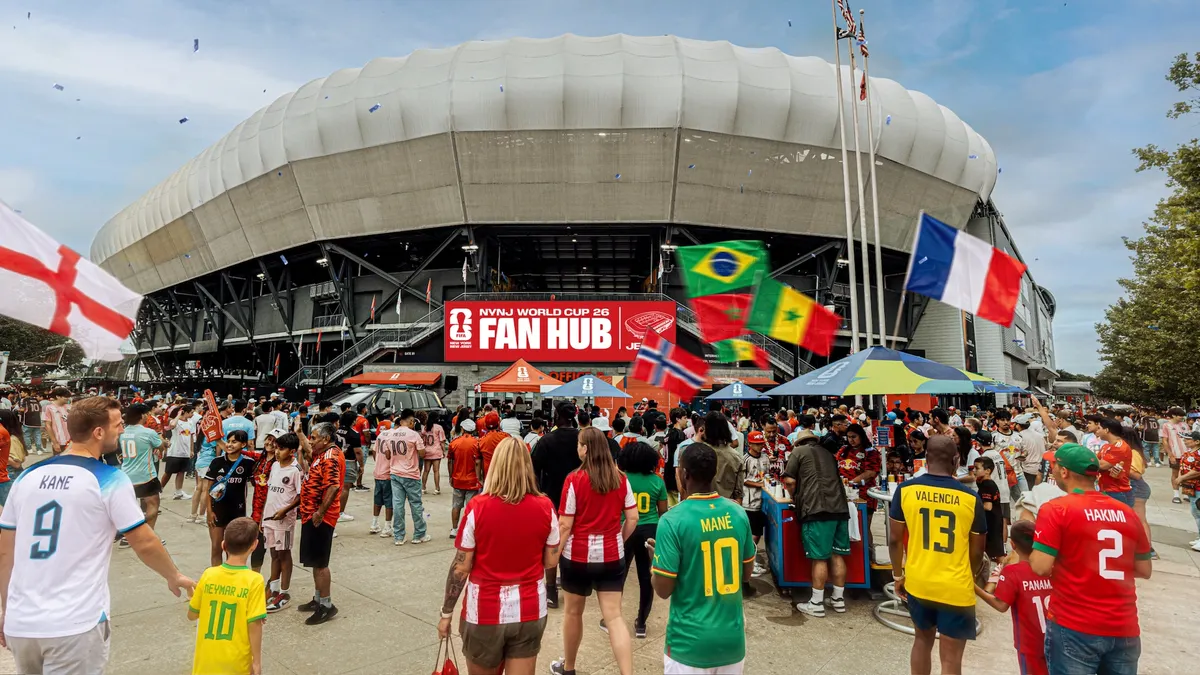
NEW YORK — Volkswagen of America is doubling down on its presenting partnership with U.S. Soccer following a summer when the World Cup drew massive attention to the sport in North America and a bevy of brand activations.
The extended deal, which runs through 2032 and includes a larger marketing investment, still encompasses all 27 U.S. Soccer National Teams but now also features a sponsorship of U.S. Soccer’s newly opened flagship training center in Atlanta, along with more programming focused on youth access to sports. In addition, the automaker is deepening its roster of individual ambassadors, including U.S. Women's National Soccer Team Coach Emma Hayes and star center back Naomi Girma.
While Volkswagen is riding the hype for the most recent global FIFA soccer tournament, it’s also looking to stoke anticipation for events including the Women’s World Cup in Brazil next year and a Summer Olympic Games in Los Angeles in 2028. The brand, which first started working with U.S. Soccer in 2019, continues to support other areas of the organization’s portfolio as well, such as Deaf, Powerchair and Beach Soccer.
U.S. Soccer is just one piece of Volkswagen’s evolving approach to experiences and integrations. The company is collaborating with NBCUniversal on celebrations of NBC’s centennial, enlisting celebrities such as Rachel Dratch and Tina Fey. Volkswagen last year helped to sponsor the “Saturday Night Live” 50th anniversary bonanza, where it showcased its ID. Buzz electric bus in an update on a classic sketch.
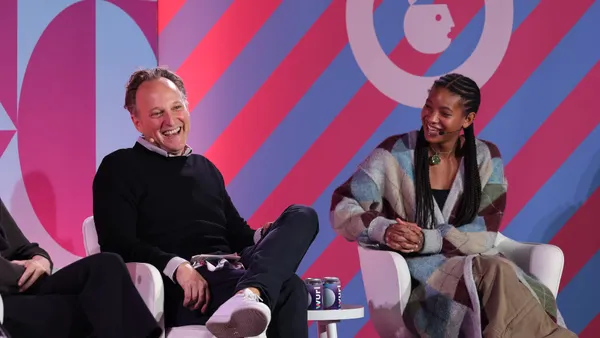
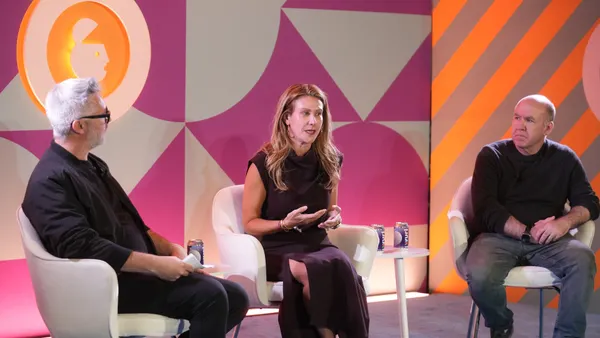
Rachael Zaluzec, CMO and senior vice president of customer experience at Volkswagen of America, sees such partnerships as driving deeper consumer connections, as well as a way to strengthen the brand in the face of headwinds impacting the automotive industry.
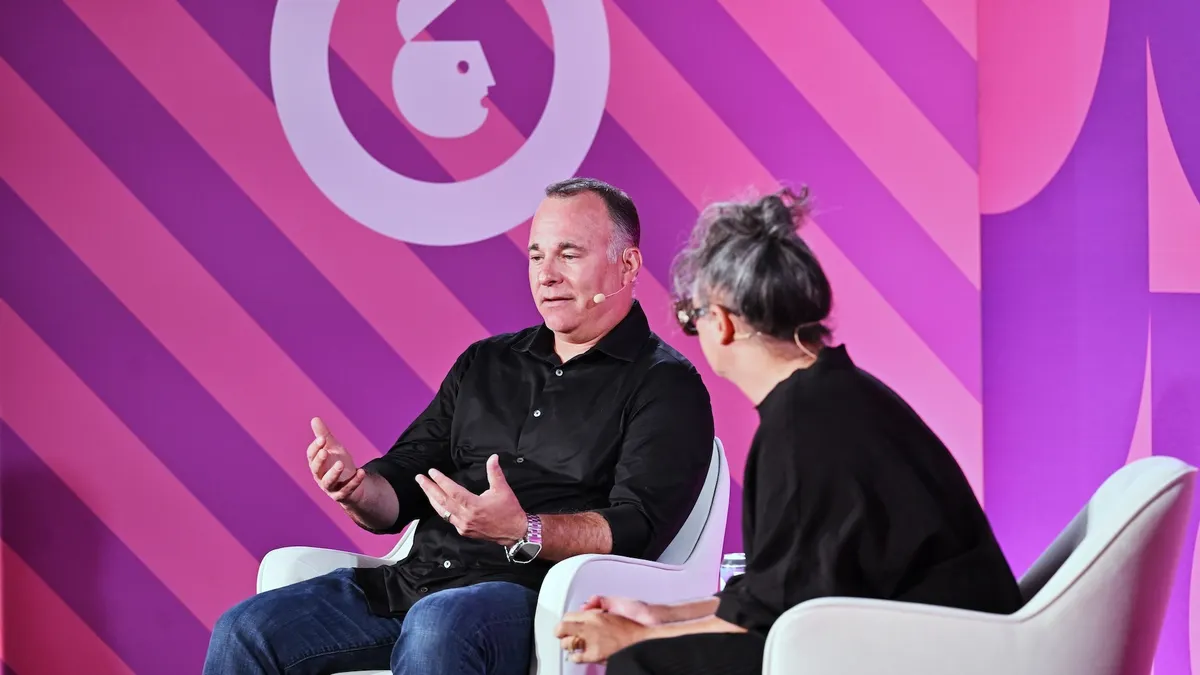
“Planting those seeds and making those emotional connections now will not only pay off today, but it's going to pay off in the future,” Zaluzec said in an interview that took place at Advertising Week on Wednesday. “That's why partnerships are so critically important. I get that credibility, but I also get the scale of the fandom of those different entities.”
Marketing Dive spoke to Zaluzec, a Volkswagen veteran, about her partnership strategy, brand nostalgia and identifying the right cultural connections.
The following interview has been edited for clarity and brevity.
Marketing Dive: What brings you to Advertising Week?
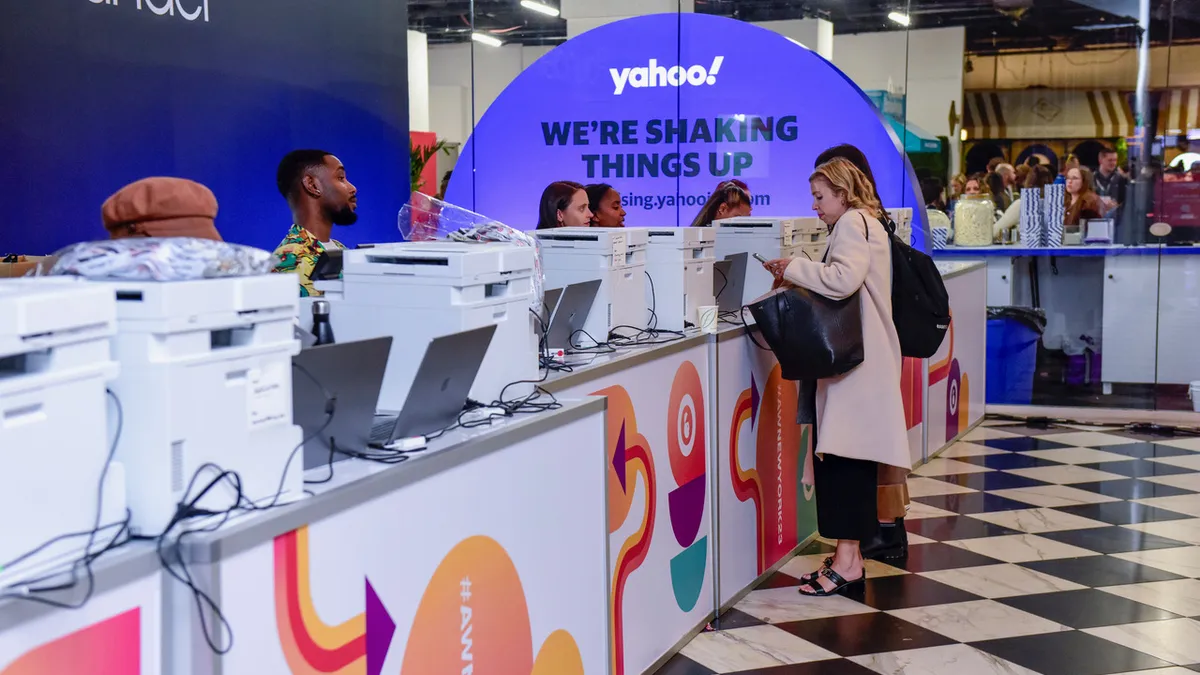
RACHAEL ZALUZEC: This is actually the first time I've been here, mostly because Q4 is a crazy busy time in automotive. I’m here because of the work that we're doing with NBC and the fact that we are on the heels of launching our next big flagship product, the 2027 Atlas. Calendar-wise, it actually worked out better for me to be here to talk about the things that we're doing — it's more non-traditional advertising, leveraging cultural moments and leveraging some of NBC’s really unique [intellectual property] to make Volkswagen visible.
We've got multiple activations that start today, and then will continue not only through NBC’s tentpole event on Dec. 10, but even thereafter. We're associating with talent directly, with Tina Fey and Rachel Dratch, but we're also showing up with NBC at other moments like the Macy's [Thanksgiving] Day Parade.
How are you approaching cultural marketing, including with NBC?
Volkswagen has a rich history of being embedded in culture. If you think back to the early days, with the Beetle and the [Type 2] bus, or in the '80s and '90s when you had the Jetta and GTI, we were always in media, but it was actually our drivers that made us culturally relevant. Whenever I look for those moments, it has to be a place that is credible and makes sense. We're not a domestic [car brand]. We don't message the same way domestics do.
The first time we partnered with “SNL” in a big way was the 50th anniversary. They actually approached us because Lorne Michaels had a very short list of brands that he would be willing to entertain in the different categories. Volkswagen happened to be one of them, and it was also in the year that we were first introducing the ID. Buzz to the market. The vehicle has a winky personality. It probably wouldn't have made sense with brands that don't have that similar type of humor.
When they approached us about NBC100, we knew the formula works, but it couldn’t be a rinse and repeat. It can't be another skit. Where we landed is, in my honest opinion, actually stronger than the "SNL" work that we did a little over a year ago.
What’s the background on your work with U.S. Soccer?
We were what I would call early adopters, so we are not on the bandwagon. Volkswagen has been a presenting partner for U.S. Soccer since 2019. We're a challenger brand, that's a challenger sport. We're about democratizing mobility and a slightly elevated premium vehicle. They're about democratizing a sport to let everybody play.
The piece that is really relevant to Volkswagen is that we don't just sponsor the big national teams. We sponsor the entire federation. We have what's called the extended national team: the Deaf team, the Powerchair team, the Futsal team, the Beach Soccer team. And then, with this extension of the relationship, there’s so much more kid's programming.
If Volkswagen did American football, everybody would go, "Huh?" The value and the cultural fit I don't think would be as strong. Volkswagen globally partners with so many other different national teams. It gives us that equity in the brand across the board.
The media environment for sports was very different in 2019. What are you amplifying now versus in your initial deal?
There's more partnership with the talent itself. So many of the women's team are moms, and that speaks directly to who our target customer is. The brand works not just for their professional and vertical needs, but it also works for their families. It's more relatable, which works in social and those other channels that don't necessarily need a big linear campaign. It's almost more authentic if it comes through those direct social handles of the talent.
Traditional advertising almost seems more valuable in automotive than in some other categories.
We'll stay in linear. You have to be seen to have that share of mental availability. But the credibility and the emotional connection is important, particularly for a brand like Volkswagen. We're an emotional brand and we're an intentional purchase. In those new channels, that's where you get that authenticity, and that's what helps me.
You had a Super Bowl ad this year bringing back Volkswagen’s iconic "Driver's Wanted" campaign. What did you learn from that?
I will call that one of my banner moments. It's not the first Super Bowl spot I did, but bringing back "Drivers Wanted" — when I consider the employees who have been around for so long, our dealer network and our deep enthusiasts — that campaign still resonates.
The refresh of it wasn't just in linear, and that's where I was super proud of the work that the team did. We had the linear spot to get the attention, but we released teasers in social. We partnered with Emma Chamberlain on her podcast to be the introduction, and looked for people who were authentic drivers already bought into the brand. Emma is a perfect example of it. She actually has a GTI tattoo on herself.
She has an interesting, dedicated story to her tattoos. The GTI tattoo she has on her on her forearm is dedicated to those memories she had with her dad driving a GTI. You think of that authentic connection and who she is in terms of an innovator and somebody who isn't afraid to challenge the status quo. That's where we look for either those influencers or stories to make sure that, when we show up in culture, it makes sense and that it's defensible.
Do you have plans to go back to the Super Bowl next year?
Here's my point of view on the Super Bowl: You only go if you have something really relevant to say. Bringing back “Drivers Wanted” was relevant and big. It had been 20 years in the can when we revisited it. With Atlas launching in Q4, we're having our "what to say" moment now. Next year, at least for now, I don't have something that's powerful enough of a message that's going to require that platform. We'll have plenty of other things that we message throughout the year in different tentpoles, particularly with the Women's World Cup. But just being a responsible marketer, a responsible businesswoman, [the Super Bowl is] an investment that needs a purpose.
We're at an interesting time now in auto generally and with Volkswagen, which is doing a significant restructuring. How is any of that affecting what you do as CMO?
It is a super dynamic period in auto for multiple reasons: tariffs, the economy in general and then just changes in technology. It's not boring. That's why it's much more critical for me to find moments that matter, that break through the clutter of everybody who's trying so hard to be front and center and get the attention and only [marketing] a price point, because it is a very price-sensitive auto market right now. That's still important, but the market is going to change, and things will bounce back. That's just the cycle of what happens in automotive.