

Dive Brief:
- Zevia is again skewering artificial intelligence with a new advertising campaign meant to shore up a positioning as a better-for-you soda brand made with natural ingredients, per news shared with Marketing Dive.
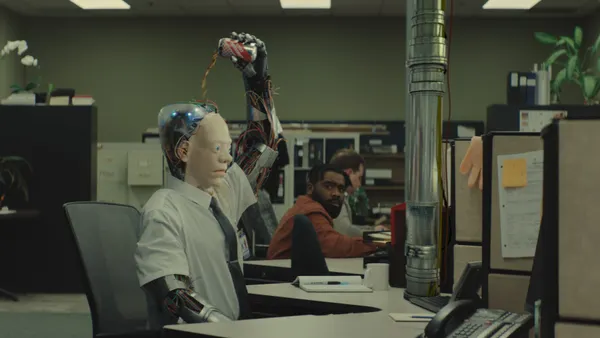
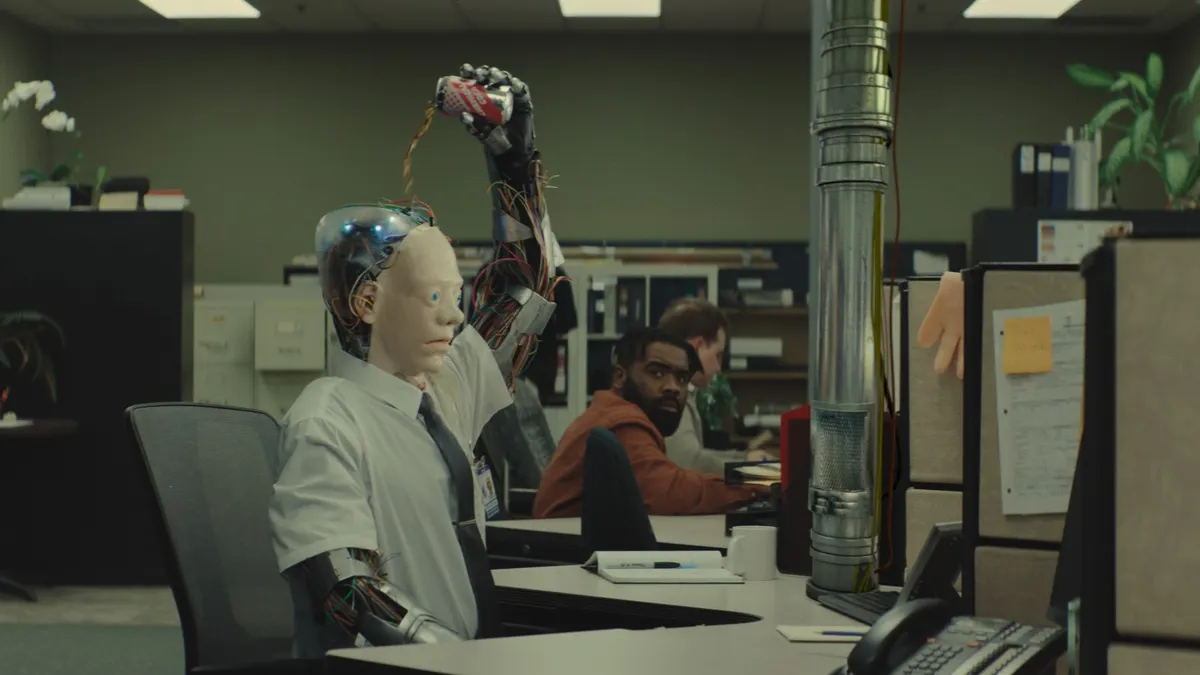
- “Real Soda for Real Humans” follows an office employee as he’s confronted by a robot coworker for buying Zevia at a vending machine instead of “artificial sludge” with “chemicals to grease your inside circuits.” The office drone then takes a sip of Zevia and begins to shut down, a robotic arm falling off in the process.
- Media includes 15- and 30-second national connected TV ads, Meta and YouTube buys and a multiday activation at the South by Southwest festival inspired by CAPTCHA human-verification prompts. Zevia has made critiquing AI a central part of its awareness-building strategy, an increasingly common approach in CPG.
Dive Insight:
Zevia continues to draw a connection between the AI advertising craze and the artificial ingredients it has dinged Big Food rivals for using in their products. The nearly 20-year-old brand, which sweetens its beverages with stevia leaf extract, says its new national campaign is part of a larger anti-artificial platform that is targeted at consumers who are seeking better-for-you options and experiencing AI fatigue.
The humorous effort developed with independent creative agency Party Land embodies AI frustrations in the form of a creepy but clunky robot coworker who questions peers making healthier choices at the vending machine before malfunctioning over a single, euphoric sip of Zevia. Creative shows off newer flavor additions like Strawberry Lemon Burst.
Along with paid advertising, “Real Soda for Real Humans” features an activation at the SXSW conference through March 14 where visitors must participate in a CAPTCHA-inspired verification check to enter the space. In addition, Zevia is running a “Prove You’re Human" digital sweepstakes and paid and earned social extensions of the creative.
The campaign lands as Cola Wars sparring is again on the rise, aligning with a larger uptick in combative marketing. Pepsi appeared at the Super Bowl in February with an ad that shows a polar bear — an icon typically associated with chief rival Coca-Cola’s marketing — taking the Pepsi Challenge and experiencing an identity crisis after preferring Pepsi Zero Sugar in a blind taste test.
Zevia previously criticized Coke for the soft drink giant’s controversial decision to use generative AI to produce its holiday marketing. Zevia’s “Break from Artificial” campaign, which debuted in 2024, is loaded with AI-generated imagery that underscores the uncanny valley effect while “Real Soda for Real Humans” has a more grounded look. Multi Agency was behind “Break from Artificial.”
Marketing has been in focus for Zevia as it tries to capitalize on the booming interest in better-for-you soft drinks, a field that includes probiotic competitors like Poppi and Olipop. Net sales at Zevia rose 4% last year, to $161.3 million, bolstered by wider distribution of its products at Walmart. The brand expects marketing to account for between 12% and 13% of revenue in 2026, slightly up from 2025 levels.
“Our improved performance for the [2025] year was supported by powerful marketing that clearly differentiated Zevia PBC as the antidote to the artificial, and as a product with no fake ingredients and no fake claims,” said Zevia PBC CEO Amy Taylor on a recent earnings call with investors. “Key campaigns showcased Zevia PBC’s use of creative, culturally relevant content and high-profile brand fans to boost brand awareness, reinforce our positioning and appeal to consumers that are just trying to do a little bit better with healthier choices.”
Upcoming summer marketing activities with new and existing brand ambassadors will represent Zevia’s “most significant investment in reach and cultural relevance to date,” Taylor added.
Other better-for-you food and beverage marketers have portrayed AI as a foil for their authenticity and all-natural ingredients. Blue Diamond’s Almond Breeze in January debuted a campaign starring the Jonas Brothers, where the musical sibling trio are pitched AI slop by a pair of clueless agents before settling on just being themselves to endorse the product. Liquid Death around the Olympics also ran a commercial that leans into technology fears with an AI-generated figure skater who turns into a fiery-eyed demon in the rink after mentioning the brand doesn’t use artificial sweeteners.