

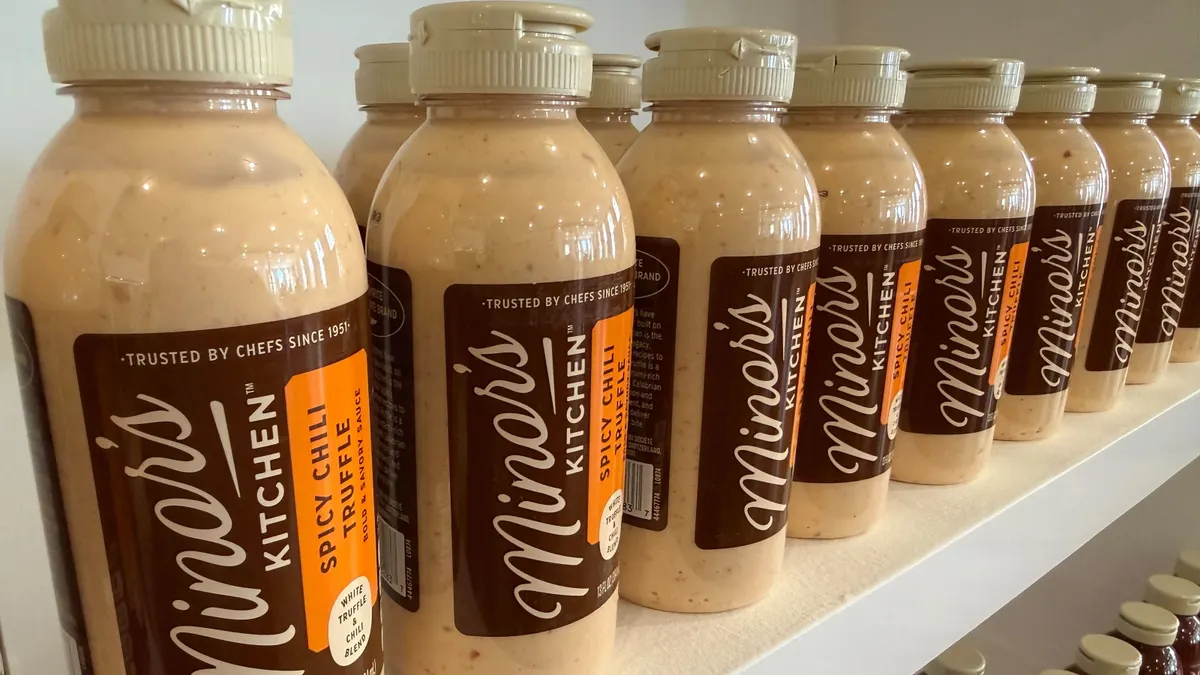
For Nestlé, innovation can come in many different packages. The CPG giant is cracking into at-home condiments for the first time through the launch of Minor’s Kitchen, an offshoot of its Minor’s foodservice brand, and expanding its focus on frozen foods. The company is also embracing more culturally forward marketing, recently deepening Coffee Mate’s collaboration with the world of Harry Potter through a pop-up cafe themed around the fantasy series’ Butterbeer beverage.
“Since we are in over 97% of households, we get this unique view into [consumers’] kitchens, into their habits, into their motivations,” said Nestlé USA’s Chief Marketing and Innovation Officer Vicki Felker in her first media interview since stepping into the role in 2023. “That really inspires a great deal of our innovation so that we can help reduce frictions and be there for important moments in their food and bev journey.”

Underpinning Nestlé’s R&D and collaborations is a bigger focus on social listening and technology, including in-house artificial intelligence capabilities, Felker explained. The company is broadly retooling its portfolio, including through pruning efforts executives have described as “ruthless,” as it tries to meet changing consumer tastes and kick-start more growth. Sales declined 2% for Nestlé last year, though organic growth was up 3.5%, an improvement over 2024.
Marketing Dive recently spoke with Felker about Nestlé’s House of Nestlé event showcasing product innovation in New York last month, where it debuted Minor’s Kitchen, as well as how the marketer keeps a pulse on evolving consumer desires.
This interview has been edited for clarity and brevity.
MARKETING DIVE: Some of Nestlé’s portfolio focus is changing. How is that affecting your priorities as CMO?
VICKI FELKER: Regardless of how the portfolio is aligned, my role is about ensuring that we are delivering unprecedented consumer delight with our strong portfolio of brands. I'll take a great example: Coffee Mate. Coffee Mate sits within our coffee and beverage division, but it's our job to understand why Coffee Mate matters to the consumer. What we deeply understand is that Coffee Mate has the ability to transform a daily coffee routine, which a lot of people might think could be mundane, into a moment of enjoyment. Also, in this social world, [consumers] use it as self-expression. My job is to help make sure that our brand is culturally relevant. If you follow the Coffee Mate example, what we really showcased at the House of Nestlé was [how] Coffee Mate is so committed to elevating these daily rituals with flavors and experiences that reflect who consumers are.
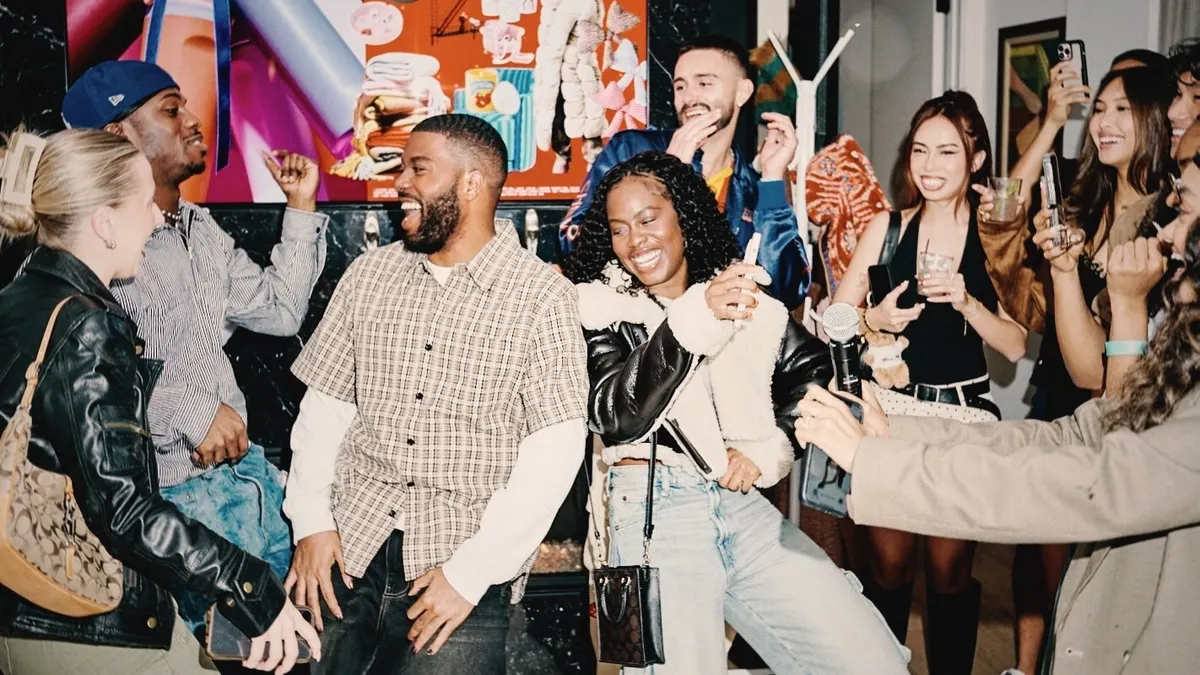
One of the big collaborations that we did was with Harry Potter. We have a Coffee Mate Butterbeer, we've got flavored cream enhancers, we also have cold foam that everyone got to taste. We had, just recently in New York City, a Coffee Mate and Harry Potter Butterbeer cafe that came alive so that we could offer an immersive experience for our consumers that was done in partnership with Warner Bros. Discovery Global Consumer Products.
We have to drive and lead the categories that our brands participate in. The way that we do that is by continuing to grow our unique relevance and make sure that we're winning and delighting the consumers in the moments where they most need our brands.
How do you identify those opportunities? Not just partnerships like Warner Bros., but also the actual flavors that come out of that?
We have a pretty solid insights engine that we utilize to go deep on the entire consumer journey. We map the consumer journey extensively. We know what our primary consumers of Coffee Mate are consuming in terms of media, and we know how bold they want to go with their flavor expressions. When you think about delivering magic to their cup every moment, Harry Potter just felt like a very natural [fit]. And then we do a series of solid testing to make sure that it’s relevant and that it delivers. We also follow up and make sure that we do all the product testing to ensure that we satisfy [customers].
Has the pace of that innovation sped up at all, and if it has, how do you balance that with making sure the product is right and testing well?
We’ve built a really strong what we call foresight muscle and our social intelligence, our social listening muscle. I'm very proud of the work that we’ve done to make that very real-time and actionable for us. We also have accelerated the rate of our consumer validation work. There are rapid consumer validation tools that we use now versus our historic, more time-consuming [methods]. So we get to the answer faster, but we don’t sacrifice the consumer experience and the testing.
How involved were you with developing Minor’s Kitchen? What was it like launching a new brand for a new category for Nestlé?
I was deeply involved. I’ve been in my role now for about two-and-a-half years. We were starting to see stats, like that 86% of the meals that are consumed in the U.S. are eaten at home. With the demands on the consumer today, people are looking for a guaranteed culinary experience and they have an expansion of their flavor palates. We started looking at this 75-year-old brand, [Minor’s], that we have back-of-house that has been cultivated with chefs across the years. It was the perfect opportunity for us to bring this into people’s pantries and give them that same guaranteed taste exploration.
Figuring out what the right sauces were to begin with, what the right format was for us to bring, it was a lot of fun to build that organically. A lot of the work and innovation that we do is under existing brands, so this was a lot of fun. It also leverages the immense scale that we believe we have by being so prominent in both in-home and out-of-home. Now, we’re able to offer something to consumers that has been vetted by chefs.
Are there particular marketing channels you’re focusing on more given that you have the social listening muscle built out on the back end?
We’ve expanded our digital and social investment greatly over the course of the last few years. We tend to be digital-first in our way of thinking. We’ve done a really good job of making sure that there are immersive experiences that you can have as well. We also know that influence is not a one-way portal anymore. We get our hands in the products of our fans and hope that our fans can help spread the news of something that they really are enjoying. Social plays a big role in how we launch while we also do some of the more traditional, awareness-driving work.
We also have a strong partnership with our retailers. Some of our retailers are really strong opportunities to drive awareness. Shopper marketing, retail digital media — you can get to full-funnel activations with an Amazon, with a Walmart. Their tool kit is certainly expanding and that wouldn’t have been in our tool kit necessarily five years ago.
It's been almost a year since Nestlé announced some of its in-house AI capabilities. What are you most focused on with AI in marketing at the moment?
First of all, we have a proprietary consumer segmentation tool. It places consumers in unique segments so that we can then understand how to translate their needs for those specific need-state moments that we’re trying to win and help solve frictions in their life. We’ve used AI in that tool so that our marketers can have conversations with an agent to better know that consumer. Now, that will never replace talking to our core consumer, but it helps us shape our thinking faster, utilizing AI within this framework.
We also use AI for concept building. We have an innovation tool that we use that helps us get to rapid concepts. What would have taken maybe four weeks before on concept ideation in support of a front-end innovation session we’ve taken down to days and, in some cases, hours to get an inspired concept or two that you want to pull through. We’re really utilizing AI in a few of these spaces as an enabler so that the people working on the business can go get to the higher-order work faster and be deeper on it.