

CANNES, FRANCE — Cutting through the noise at Cannes Lions, a notoriously busy global gathering of advertisers, can be an uphill battle. OpenAI is looking to do so with an ad platform that’s just four months old, seizing on an event where artificial intelligence feels omnipresent and viewed as both an enabler of and threat to the creative ideas the show celebrates.
The startup is making its official festival debut this week by pitching major brand marketers and agencies in attendance on the idea that their industry is shifting from an attention-based economy to an “intelligence economy” anchored around chatbots. In this world, where users conduct more in-depth queries, OpenAI says ChatGPT will provide a differentiated layer of insight than what’s available elsewhere in digital.
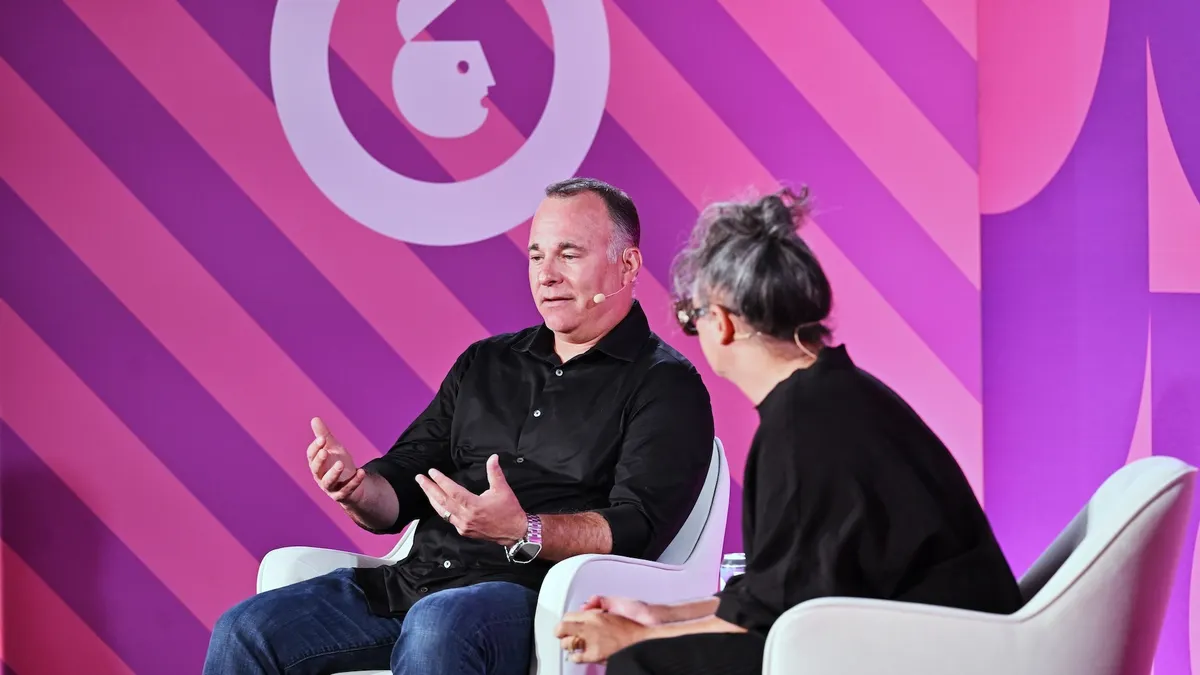
“The big difference is, for our app, people come in with a job to be done,” said David Dugan, OpenAI’s head of global ads solutions, during a media briefing with reporters on Monday. “It’s super intentional. They give us information about a problem they’re trying to solve and it's a perfect context for a marketer to deliver a targeted ad solution to them.”
ChatGPT ads, which entered testing in February, are positioned by OpenAI as playing an influential role in the decision layer of purchasing journeys — effectively the middle of the marketing funnel, when consumers research a topic more deeply and compare different products. Roughly 20% of queries in ChatGPT have a direct commercial intent, according to Dugan. Other platforms, including Google, are revamping their experience around AI conversations that can be more winding and complex than traditional searches, but also present opportunities for contextually relevant campaigns and commerce capabilities.
ChatGPT’s nearly 1 billion users express other behaviors that could lay the groundwork for contextually relevant ads down the line. For example, a person beginning to research the right time of year for a family trip to the Swiss Alps isn’t showing direct commercial intent, but rather predictive possibilities that marketers might capitalize on, Dugan explained.
“If an advertiser can get in front of that conversation and introduce themselves at the right moment, there's going to be value there,” said Dugan, who joined OpenAI from Meta in March. “That upper-funnel piece is going to be a little bit harder to measure. It’s just something that is new to the industry.”
What’s working so far
Since February, ChatGPT ads have scaled to seven markets, last week entering Japan and South Korea, with Latin America territories like Brazil and Mexico on deck.
Criteo, an early ad-tech partner, on Monday said over 2,000 brands are now advertising on ChatGPT through its platform. Criteo and StackAdapt have lowered ChatGPT spending minimums in recent weeks, Adweek has reported, which could incentivize further adoption. OpenAI has also implemented a self-service ads manager to encourage uptake. ChatGPT ads rolled out on a cost-per-thousand impression bidding model before introducing cost-per-click, which has quickly grown popular.
Marketers value ChatGPT for its scale, per Dugan, and some customers anecdotally have told OpenAI that they receive higher-quality traffic from their ChatGPT campaigns versus other channels. Refining the call to action in ChatGPT ads is also proving effective for the format, which surfaces in a sponsored box below the chatbot’s organic answers.
“One thing that we're learning is when the call to action is positioned as a benefit or as a response back to that original consumer question, we’re seeing much higher response rates than someone just listing the name of the product,” said Dugan.
One closely watched metric at OpenAI is cross-out rates — when someone hits the X button in the top corner of the ad to make it go away — which have dropped by 50% since launch, according to Dugan. OpenAI got a good deal of flak for running ads in the first place, but Dugan indicated that the decision has not resulted in a noticeable hit to the user experience. ChatGPT ads are served in the AI program’s free and cheaper-priced Go tiers, which together make up the majority of its audience.
“So far, the main takeaway has been there's been no degradation in user behavior if they're exposed to an ad,” said Dugan during a Q&A portion of the briefing. “That gives us confidence that ads are working and it’s not having any negative impact on behavior.”
Move fast, preserve trust
The race to stand up advertising infrastructure comes as ChatGPT readies a hotly anticipated initial public offering. Advertising will likely be an important piece of OpenAI’s narrative around revenue generation, where it is facing sharper scrutiny due to the astronomical costs of AI development. Revenue from advertising is also a way to subsidize other features, like eventually providing users of the free version of ChatGPT with more image uploads per day, according to Dugan.
Even as OpenAI is forging into ads at a fast clip, executives underlined four principles aimed at maintaining user trust: keeping sponsored ads separate from organic chat responses; not sharing conversational information with advertisers; preserving user choice and control, such as allowing users to clear their ChatGPT history; and delivering long-term value.
OpenAI also emphasized that it is not going it alone on the advertising front, recognizing the complexities of getting areas like measurement right. Ahead of the show, the company announced a partnership with data-collaboration platform LiveRamp, adding to a roster that also includes Criteo, Adobe and StackAdapt, as well as a major agency holding companies. LiveRamp’s initial focus is allowing advertisers running ChatGPT campaigns to use its Conversions API Hub for extending measurement beyond browser-based tracking, but the ad-tech firm said it will continue to work with OpenAI as it expands into ads.
“The AI companies have realized it’s much easier to just start with an infrastructure that exists and works to access the partners, the advertisers, the information they need,” said LiveRamp CEO Scott Howe in an interview later in the day. “It felt like a natural outgrowth of all of the things we do already.”
OpenAI executives at Cannes Lions also tried to allay concerns that what they’re building in both ads and on the AI workflow front is a threat to creative talent that historically has been the driving force behind the festival. Feelings on AI at Cannes Lions, as well as the broader encroachment of Big Tech, have been decidedly mixed, but that hasn’t seemed to cool the hype for ChatGPT.
“The feedback that I’ve gotten from the agencies is they’re excited to have a new platform to experiment with,” said Dugan. “I think they understand the fact that the level of context that we get is different from other platforms that are out there, and they’re getting the fact that this is not a keyword-based buy, so it’s different from traditional search.”