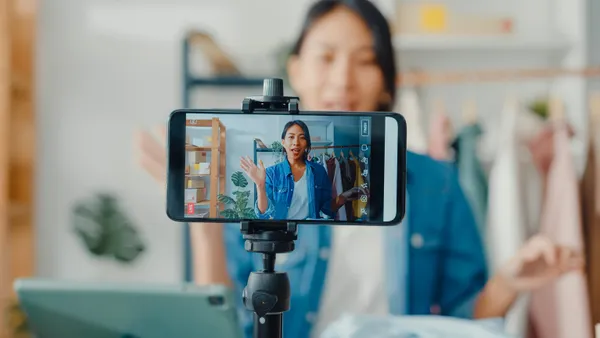
Despite influencer marketing’s significant growth in recent years, marketers face a number of challenges bringing a strategy to life. Two of the biggest hurdles are measurement and the fact that no one owns the entire creator ecosystem within an organization.
These are among the takeaways from the Association of National Advertisers’ latest “Influencer Marketing: Reducing Waste and Optimizing Investment” report, which found that two-thirds of marketers surveyed said measurement was the most difficult part of influencer marketing. In fact, measurement far exceeded other challenges, including vetting, negotiating, contracting and finding influencers, which all were named by between 40% and 45% of respondents.
“Influencer marketing has really moved from what in the past was a more experimental tactic to [being] a really critical strategy for brands,” said Leah Marshall, vice president, digital and influencer marketing at the ANA. “Our members consistently report measurement is the trickiest element of creator marketing.”
Why amplifying creator content is growing
One reason why measurement is so challenging is that social platforms have different definitions and methodologies for metrics such as views, reach, engagement and video completion. There is also no standard to account for audience duplication across channels, which makes even straightforward data like impressions difficult to gauge.
“It makes apples-to-apples comparisons very difficult,” Marshall said. “We really need standardized measurement in this area, including common definitions and methodologies across platforms.”
ANA’s cross-media measurement service Aquila is working on standardized media measurements, but it hasn’t begun efforts on creator marketing, which will require buy-in from the social platforms, agencies and marketers, something that could be challenging, Marshall noted.
In the meantime, a growing number of marketers are taking the measurement challenge into their own hands by spending more to amplify influencer content as a work around.
“The measurement insights you get from paid media are much more robust and comprehensive than if you don’t use paid media,” Marshall said.
Spending to amplify content on social media is expected to equal creator-sponsored content revenues of nearly $14.2 billion in 2027 and surpass those revenues in 2028, according to an eMarketer forecast from earlier this year. The ANA’s report called this point “a pivotal crossover,” in which brands promote the content of their creator partners rather than simply relying on influencers’ audiences.
Promoting creators’ content also offers marketers an opportunity to optimize results by boosting content that performs well, Marshall said. While the report recommends a 30/70 paid to native split for awareness and a 70/30 split for conversion, the actual ratio may need to be tied to the campaign’s metrics and outcomes.
“It shouldn’t be a default setting,” she said. “It should be very strategic and intentional.”
Defining goals is a must
Which gets to another challenge marketers face with influencer marketing: embracing the necessity of outlining objectives and metrics before a campaign launches in order to be able to understand and replicate success.
“There’s a bit of a phenomenon where creators and influencers are [seen as] an effective strategy, and then [marketers are] just rushing in to utilize them,” Marshall said. “You need to start with the end goal in mind. For example, we’re now seeing creators used more frequently in commerce marketing. So is the end goal sales? Is it conversions? Or is it more of an awareness play?”
Defining end goals is becoming even more important as marketers broaden how they use influencers and influencers broaden their capabilities. Where creators were once primarily used to drive discovery, they can now sell products directly through online marketplaces like TikTok Shop.
“In the past, influencers were seen as driving to a store for a product,” Marshall said. “Now, they are the store … That’s a pretty profound shift.”
Adding to the complexity, more marketers are turning to micro-influencers with smaller but more engaged audiences. According to Kantar’s 2026 Media Reactions report, more brands are likely to invest in micro-creators (66%) and nano-creators (61%), over macro-creators (41%) and mega-influencers (42%).
These two factors – more uses throughout the funnel and more partnerships with smaller creators – mean it is critical for marketing organizations to align themselves internally on the creators they want to work with and how they want to deploy those partnerships.
“As creator marketing becomes more and more popular, more business units within the marketing organization want to jump on the bandwagon,” Marshall said. “We’re even seeing, especially with global brands, that two [units] are sourcing with [the same] creators and negotiating against each other. … No one’s owning the entire creator ecosystem within the organization.”
The creator economy generated $37 billion in marketing spend last year and is on track to hit $44 billion in 2026, according to the IAB, which classified creators and influencers as a core media channel. As the space grows, marketers may need to adjust their approach to this segment. Marshall recommends empowering one group within an organization to manage creator relationships as this can smooth negotiations, content approvals and, increasingly, in-market amplification and measurement.