Marketers have long used novelty items as a way to tap into consumers’ niche interests in creative and unexpected ways. In the past few months, a slate of marketers have looked beyond their usual stomping grounds to release high-end handbags as a way to build an emotional connection with fans of fashion.
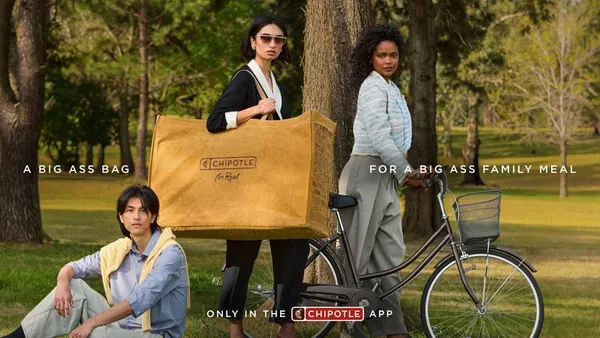
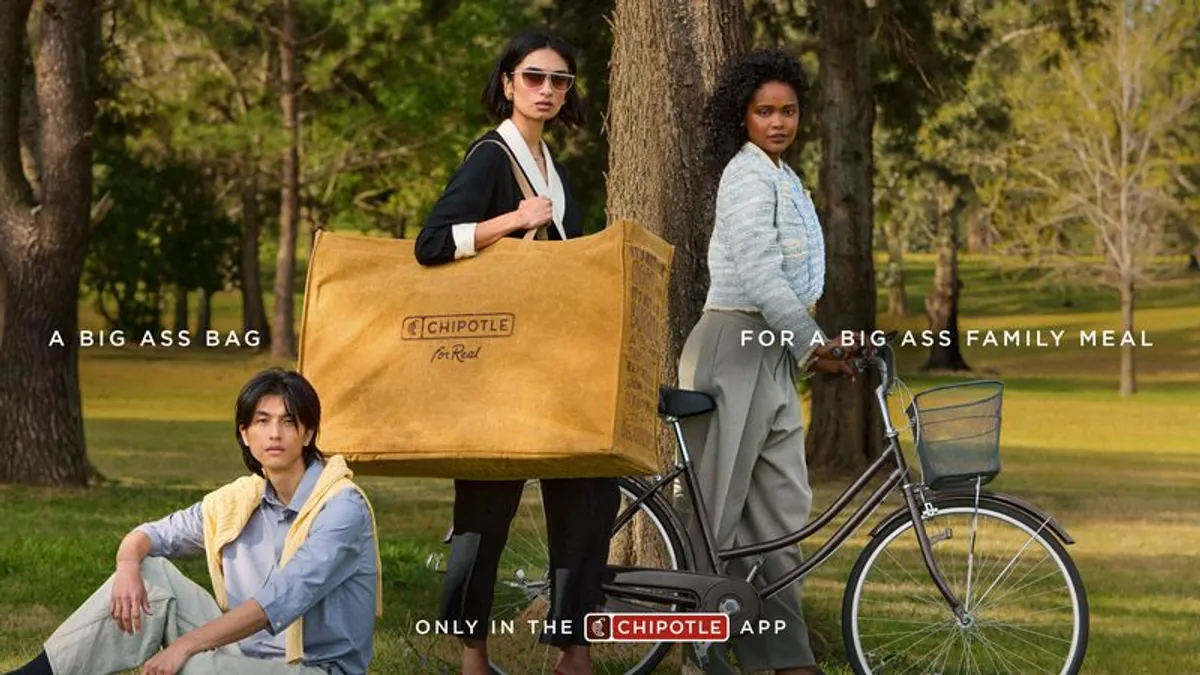
Chipotle today debuted a “Big Ass Chipotle Bag,” a limited-edition version of its takeout bag that capitalizes on the current trend surrounding oversized fashion bags. Betty Crocker, Poppi and Cadbury have also clasped onto the trend.
Unreal Snacks recently collaborated with designer Rachel Comey on the Coco Bag, a silver clutch inspired by the brand’s packaging, that debuted at New York Fashion Week during Comey’s Spring/Summer ‘27 show. The bag is one way the brand is attempting to surprise its target audience while staying true to its values, explained Chief Commercial Officer Alison Whritenour.
“Fitting into [our consumers’] lifestyle is bigger than just the choices that [they’re] making for snacks or delights during the day, and I think that’s certainly something that Unreal has seen in this moment, but also many other brands [that are] really jumping into these unexpected partnership conversations that really allow them to be seen as a values-led choice for a lot of consumers,” Whritenour said.
The Coco Bag features a silver Tyvek exterior, chosen to resemble the look and structure of an Unreal chocolate wrapper, and a striped cotton interior with colors from the brand’s palette and Comey’s recent collection. Inside pockets were designed to fit Unreal products. The brand’s partnership with Comey was amplified during her show with food installations by Alice Malaret, a food designer.
The bag is available for preorder on Comey’s website for $425 before its official drop on Feb. 1. While the price is steep, the move is meant to flex the brand’s ability to step into new spaces, including luxury fashion, through strategic partnerships, Whritenour said. Unreal has recently prioritized brand tie-ups as a way to attract first-time buyers.
“This year in particular, we wanted to look for ways to do something a little bit unexpected, and certainly for us, we really view ourselves as being in great taste, so looking for others around us who also have great taste on many different levels was a big part of that strategy,” she said.
Bringing snacks to the runway
The decision to pursue a fashion partnership was influenced by Unreal’s core audience of millennial women, who value curation and expressing their personal taste, Whritenour said. Comey fronts her eponymous, wholly independent label, which produces women’s daywear, denim, bags and more. The designer is credited in Unreal’s announcement with creating items through the lens of how women actually live.
“There’s something we love about the everyday nature of fashion — you engage with it daily, it’s part of how you move through the world, it’s part of your values and how you express yourself,” said Whritenour. “For us it just felt like a very natural place to enter the conversation.”
The effort from Unreal comes as the global chocolate market is expected to grow to $135.3 billion in 2026, up from $128.9 billion the year prior, according to Fortune Business Insights. Simultaneously, the better-for-you snacks market is also experiencing growth. Unreal creates chocolate snacks, like dark chocolate-covered almonds and milk chocolate-covered pretzels, using gluten-free and non-GMO ingredients with no artificial preservatives.
“I think we are seeing ourselves in a new conversation around fashion and Fashion Week, and that above all has just been an amazing immediate proof point for us.”

Alison Whritenour
Chief Commercial Officer, Unreal Snacks
Other marketers similarly have their sights set on fashion. Timed to New York Fashion Week, Poppi teamed with designer Grace Ling, who transformed a can of the beverage into a 3D-printed runway bag. Tied to its largest U.S. campaign to date, Cadbury linked with fashion brand Luar to create a crystal-clad, insulated clutch designed to hold chocolate bars.
Chipotle’s 3-foot-wide version of its takeout bag promotes the chain’s digital-exclusive Family Meals offering. Chipotle will dole out the bag — which has a 170-liter capacity — through a multiweek digital sweepstakes open to Chipotle Rewards members in the U.S.
“We took one of the most recognizable parts of the Chipotle experience, gave it an outsized upgrade, and created something that's impossible to miss,” said Chief Brand Officer Fernando Machado in a press release. “It's fun, it's ridiculous and it's exactly the kind of thing we knew our fans would want to get their hands on."
In August, Betty Crocker debuted a packaging refresh with a trio of cake slice handbags inspired by its most popular flavors. The handbags were first dropped Aug. 25 for $89 and sold out within a day. A second drop went live Sept. 10 and saw thousands of consumers queued at once in hopes of securing a bag.
For Betty Crocker, the move was a way to engage with longtime fans — who would easily recognize accents on the handbag like the brand’s signature red spoon as a zipper pull — while inviting a new generation of consumers to build their own relationship with the company, explained Sarah Peck, senior brand manager for Betty Crocker at General Mills.
“We know people have a lot of nostalgia for Betty, and we want that nostalgia to feel fresh and relevant today,” said Peck, in emailed comments. “The handbags turned recognizable Betty Crocker details into a form of self-expression, giving fans a way to engage with the brand outside the kitchen.”
Unreal is measuring the results of its Coco Bag through a combination of immediate consumer response and earned media, Whritenour said. So far, the effort has shown signs of paying off.
“We love what we’re seeing out of the gate,” Whritenour said. “I think we are seeing ourselves in a new conversation around fashion and Fashion Week, and that above all has just been an amazing immediate proof point for us.”
The move into fashion accessories speaks to the brands’ ambitions to find a larger place in consumers’ lives.
“Overall, I think any choices that consumers make around brands, especially in the food and beverage space, are a representation of themselves, their values and their lifestyles,” she said. “It’s important, no matter who you are, to be an integral part of [their] life.”