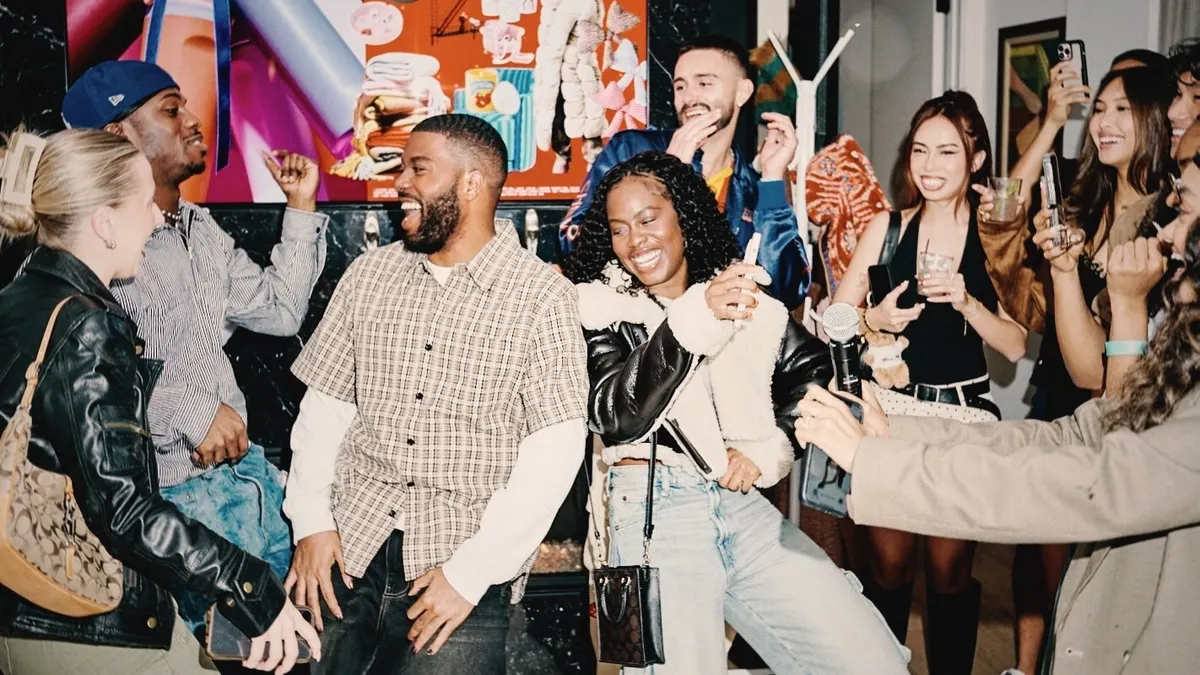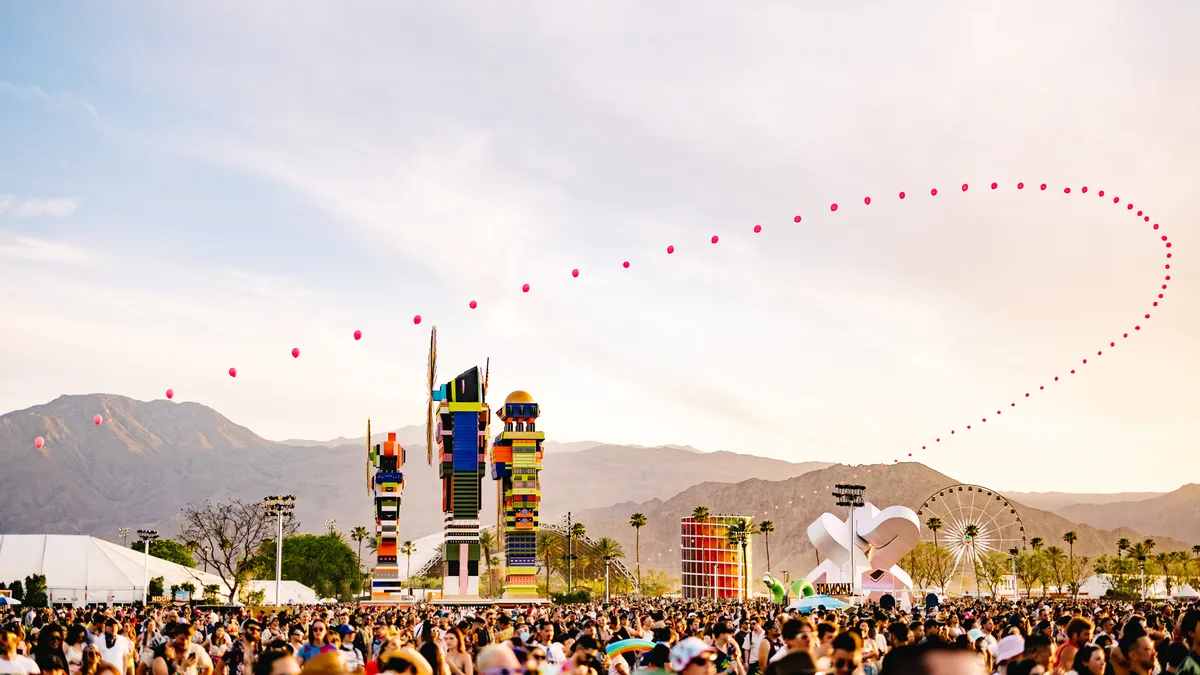
Amid price volatility and ongoing macroeconomic uncertainty, experiences carry value. Research indicates that 85% of consumers are more likely to buy from a brand after attending a live event. Additionally, nearly 90% of consumers report that brand experiences are more memorable than TV ads.
In turn, marketers are increasingly turning to experiential marketing as a way to build brand loyalty. In April, Pizza Hut shifted its Hut Rewards loyalty program toward a more experiential system. Earlier this month, Heineken tapped into FIFA World Cup hype for a campaign encouraging consumers to skip work and watch soccer matches together.
“At the end of the day, it’s all about your customer and creating that connection,” said Melissa Levy, president of experiential agency Sparks. “You have to create that emotional bond in order for someone to be brand loyal or have brand love, and that is directly connected to why you’re seeing a rise in experiential.”
Levy joined Sparks, which has done work for brands including T-Mobile, Michelob Ultra, Google and Amazon, at the start of the year following nearly 15 years at Publicis-owned Digitas. Marketing Dive spoke with Levy to discuss the consumer behavior driving experiential’s growth, how marketers can track success with the strategy and what role procurement plays in the space.
The following interview has been edited for clarity and brevity.
MARKETING DIVE: How would you describe the state of experiential marketing today?
MELISSA LEVY: Experiential is having a moment right now, and it’s pretty amazing. Experiential has often been an afterthought in the marketing mix, kind of like a tack-on activation if there was extra budget. But I think with the fragmentation of attention, digital fatigue, the desire of so many people to be in-person at events, both personally and professionally, and the rise of the “Instagrammable” moment, the time has come for experiential.
Can you share more about what consumer behaviors are driving the shift toward experiential marketing?
There are really three big shifts. There’s the increase of visual platforms — when Instagram came on the scene, and now TikTok, it changed everything. There’s now a real desire for content and visuals, of taking pictures of places and experiences. Restaurants have Instagram walls. Baby showers have places where you can take pictures. People have created these environments in real life that are specifically for taking pictures and posting.
[The COVID-19 pandemic] also did a number on a lot of people. They were inside for so long, and people were afraid for so long. And now you’re seeing the pendulum swing. People are getting back into the real world. They’re getting off their phones.
And then there’s the rise of sports. With attention being so fragmented in the digital world, it’s difficult to find and buy audiences. Sports is the intersection of media and experiences. There’s the shared love of a team. There’s communal nights. There’s the highs and lows of being together. That’s all combined with a real desire for human connection.
Thanks to the rise of digital, marketers have become accustomed to tracking everything. What is the state of measurement in the experiential world? What should marketers be looking for?
We talk a lot about needing to measure experiential. To me, experiential falls underneath a broad brand metrics measurement. For years, all we had were these brand metrics and everybody believed in them, and then we got into measuring our return on ad spend and all those other digital metrics. But the truth is, we need to recognize that these [broad brand] metrics matter, that engagement with your brand matters for the long-term value of your company.
I think we need to get better at convincing people and showing real business outcomes with experiential. Brand metrics are about creating desire. They’re about creating awareness and consideration. Those are metrics that, if you do it right, create loyalty and love and repeat purchase — but you have to be willing to wait those out.
What role does procurement, which includes tasks like logistics and vendor sourcing, play in advertisers’ experiential strategies? Are there growing pains?
It’s interesting, having just come from a digital agency, procurement is just starting to creep in. On the experiential side, it’s a little bit different — events and exhibits have been typically procurement-led. One of my biggest challenges is that a lot of companies treat events and exhibits like vendors. Procurement gets involved and it’s like, “Can you build the box and how much does the box cost?” What I find frustrating in the agency side of our business is that part of what the client is paying us for is strategy and creativity.
Experiential is an end-to-end creative experience, so when procurement comes in, it’s challenging to explain to them the value of strategy. It’s harder to explain than the nuts and bolts of fabrication, which is what they’re used to.
Procurement needs to evolve to understand how to procure services as well as goods, particularly in the experiential space. If procurement is going to drive these conversations, marketing has to have absolute and equal say at the table. I think it is on the marketer and the organization to understand the value of experiential and communicate that to the procurement departments, because if procurement doesn’t understand [the value], it becomes a race to the bottom and creativity will be driven out of everything that we do.