CeraVe on Tuesday launched a social content series in support of the L'Oréal brand’s Invisible Mineral Sunscreen SPF 50, per details shared with Marketing Dive.
The campaign looks to connect with a Gen Z audience that has recently embraced tanning culture that can damage skin. Google searches for “tanning” are at their highest point in five years, and more than one-fifth of Gen Z adults prioritize getting a tan over protecting their skin, per American Academy of Dermatology data shared by the brand.
“As we watched trends like 'tanmaxxing' and 'UV index hacking' surface, we saw an opportunity to change the conversation around sun care,” Esther Garcia, U.S. brand general manager at CeraVe, said in a statement. “We didn't want to add another warning to the conversation. We wanted to build something tangible with Gen Z that shows healthy sun habits can fit naturally into everyday life.”
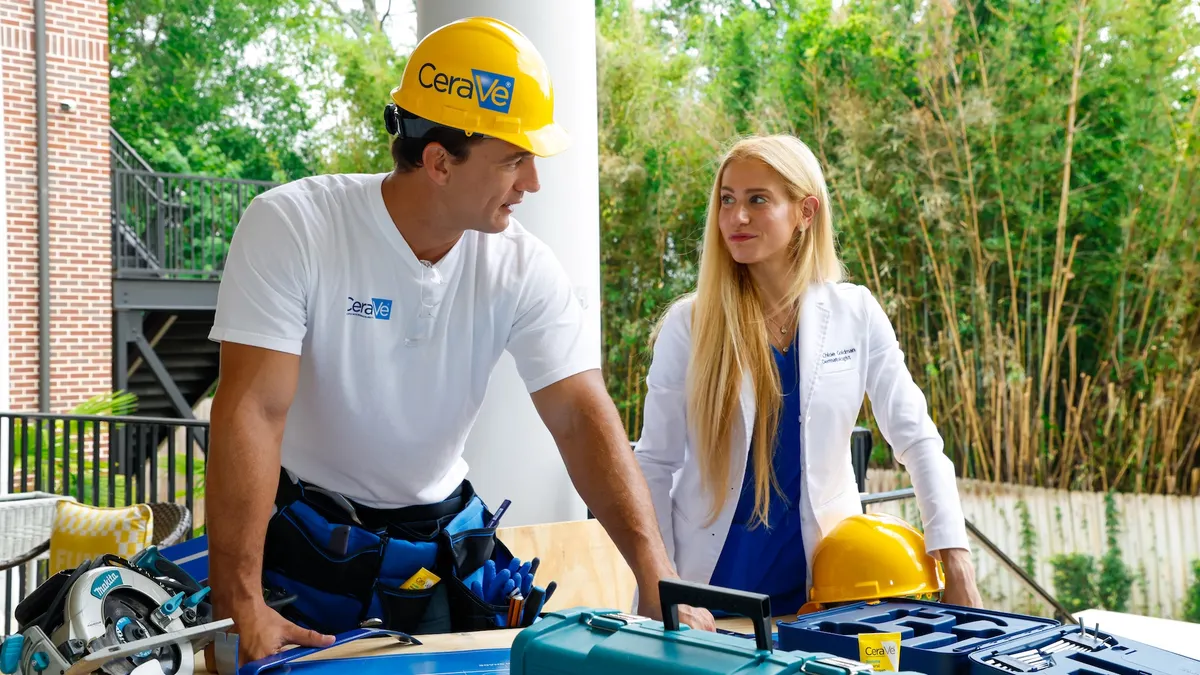
The content, launching Tuesday across social platforms, features television personality Tyler Cameron in partnership with board-certified dermatologist Dr. Chloe Goldman and taps into home improvement tropes as the brand seeks to renovate both a sorority house and encourage better sun habits. Videos feature the pair having a “tan-trum” by destroying a tanning bed with sledgehammers and power tools, along with planning and executing a renovation while applying sunscreen.
The series culminates in a new outdoor space for the Alpha Eta chapter of Delta Delta Delta, a sorority at Florida State University in Tallahassee chosen because of Florida’s status as one of the states with the highest year-round UV exposure. The renovations include the addition of greenery and a pergola to provide shade, sunscreen stations, Delta Delta Delta letters made out of UV-reactive material, UV-meters, fabric awnings and an outdoor lounge area.
The new work is the latest CeraVe effort to fuse medical education and entertainment, which the brand has called “edutainment” or “medutainment,” as it has with social-first, NBA-themed campaigns around moisturizers and anti-dandruff products. This time around, the brand is turning to a social content series, embracing the short-form video trend that has swept media and marketing.
“A lot of our campaigns have been social-first, and that's just been a way to be able to take our consumers along the journey, but also to take an audience that is driving the conversation and driving the insight and meeting them where they are,” said Jasteena Gill, CeraVe U.S. senior vice president and head of marketing. “This is a more social-first series that's very episodic in nature… Renovation goes in phases, and sun habits also require a renovation.”
While other CeraVe campaigns have looked to promote products in categories already embraced by consumers, the sunscreen push represents a slightly different challenge: educating about and encouraging behaviors that run counter to cultural trends.
“Over the years, we've been able to become staples in Gen Z routines with our cleansers and our moisturizers, and through that we've been able to also understand what continues to have them comply with a routine, whether it's better skin health or addressing certain skin concerns,” Gill explained.
To that end, CeraVe designed Invisible Mineral Sunscreen SPF 50 to meet consumer needs around blendability and texture, while also delivering sun protection benefits. The social-first campaign looks to deliver those product benefits in a way that is as engaging as possible.
“It's an important part of our mission as the number-one dermatologist-recommended skincare brand to continue to educate the public, even if that means that it will be a little bit more of an uphill battle on getting a new habit,” Gill said.
L’Oréal in the first half of 2026 saw 6.5% adjusted like-for-like growth, per an earnings report. The company's L'Oréal Dermatological Beauty division delivered double-digit gains, led by CeraVe, executives said on an earnings call, noting how innovation like its sunscreen helped drive the brand's upswing.