

L’Oréal was early to the branded microdrama boom in the U.S., running a holiday effort for Maybelline last year that riffed on Hallmark romance movie tropes. The beauty and cosmetics giant around Halloween again dipped its toe into the short-form video genre that has ballooned in popularity as marketers produce entertainment they hope can attract scroll-oriented viewers but requires a different touch than a glossy ad campaign.
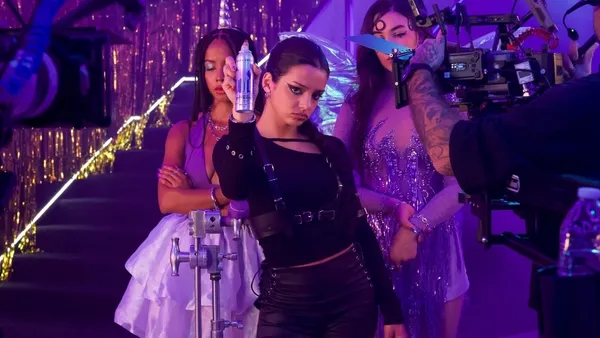
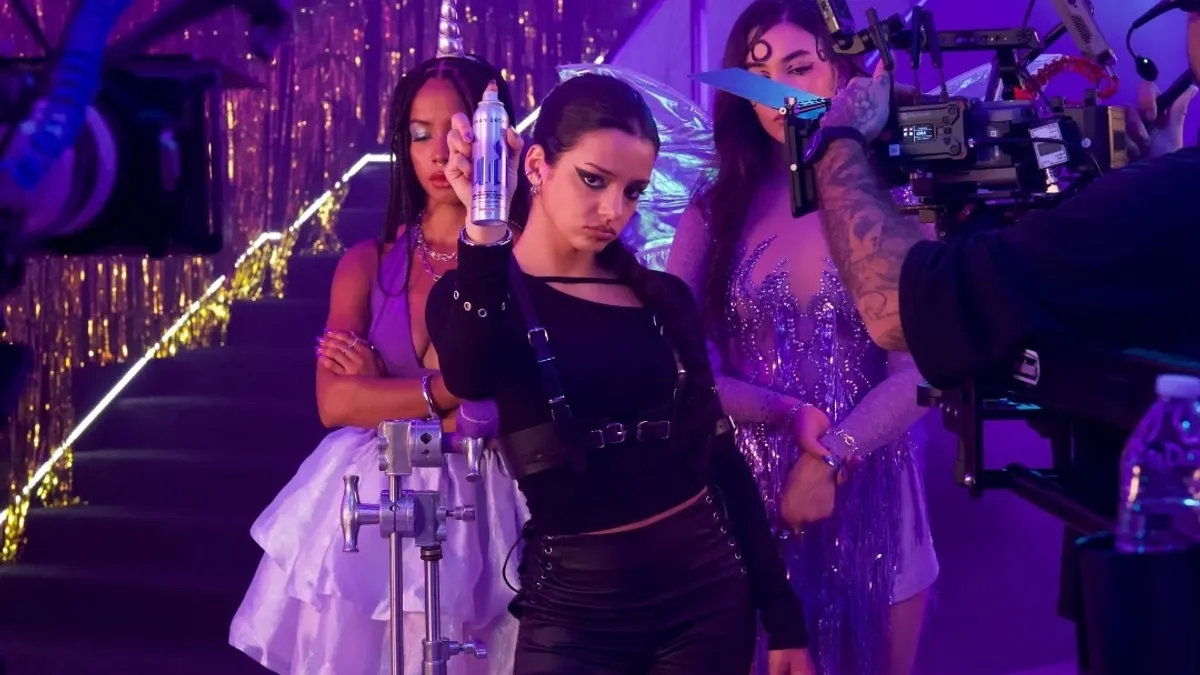
The company’s Urban Decay brand on Oct. 24 debuted a vertical video series on ReelShort titled “Ghost Hunter Hotline,” which runs six episodes that generally last just a few minutes each. The story follows protagonist Zoe as she dishes out justice to romantic interests who suddenly went silent on the communications front, or “ghosted” her and her friends, while showing off Urban Decay’s aptly named Ghosting Spray product. A former fling eventually returns and throws a wrench in some of Zoe’s plans, the type of soapy twist typical to cliffhanger-heavy microdramas. The overarching idea was to blend elements typical to the spooky season with tongue-in-cheek commentary on modern dating culture.
“Ghost Hunter Hotline” generated 3.8 million views in the five-day window after launch while sitting at No. 2 on ReelShort’s most-viewed shorts ranking, according to data shared by the brand. L’Oréal’s microdrama experiments are part of a larger effort to think differently from an old-school advertising mindset that puts the chief focus on product messaging and brand story.
“It’s something that we’ve now known in the creator era for the last couple of years, which is that you really need to think about your audience first, and you think about entertainment first as the primary purpose [of marketing],” said Han Wen, chief digital and marketing officer at L’Oréal USA.
Staying on trend
Rather than create the microdrama content with an external agency, as it had done in the past, L’Oréal produced, developed and distributed “Ghost Hunter Hotline” in collaboration with ReelShort, relying on its knowledge of what appeals to the genre’s audience. ReelShort, which is owned by Crazy Maple Studio, is one of the leading dedicated microdrama platforms, on track to generate over $1 billion in revenue this year, according to third-party industry analyses.
“We went into it knowing that we wanted to test directly with a platform rather than a more hybrid format,” said Wen.
Urban Decay proved to be the right fit for the content type in a L’Oréal portfolio that spans dozens of brands. Halloween is a major occasion for the luxury label, which was founded in the mid-’90s in Los Angeles and promotes an edgier, antibland image. L’Oréal acquired Urban Decay in 2012 to reach higher-end young shoppers.
Other marketers are turning to microdramas because they can be turned around quickly and on the cheap. “Ghost Hunter Hotline” came together faster than a traditional ad campaign, in about four weeks, according to Wen.
“Speed is really important in the current context of marketing, where trends move very quickly,” said Wen.
Wen acknowledged that not all of L’Oréal’s bets on emerging social video spaces have panned out in the past. She pointed to Periscope, a now-defunct livestreaming service under Twitter, and BeReal, a pandemic-era flash in the pan. Still, Wen expressed optimism about microdramas, which have become a mainstream fixture in China and continue to see traction in the U.S., where mobile-first viewing is becoming more dominant.
“You realize that there is something here that people do engage with organically,” said Wen of microdramas.
“To me, it seems like it's worth learning in terms of how U.S. audiences — and then consumers of our brands — would adapt to that behavior here and make sure that we're on the forefront of that,” Wen added. “The only way that we know that is to actually engage with it and try a couple of different things.”