NEW YORK — At its latest upfront presentation, Netflix reminded advertisers what its combination of technology, entertainment and scale can provide to those looking to engage its attentive and growing audience. Executives on May 13 shared impressive statistics and unveiled new pilots and capabilities across programmatic, agentic AI and data-driven insights.
In between, there were appearances from stars including Florence Pugh and Millie Bobbie Brown and the usual dog and pony show theatrics — literally: The presentation featured three pups courtesy of the Westminster Kennel Club, which will broadcast its dog show on the platform in 2027.
“If the last couple of years were about proving we're a durable player, this year is about establishing ourselves as a more formidable one,” said Amy Reinhard, Netflix’s president of advertising, during the presentation. “We've proven we're effective. We're expanding ads to more places, and we're ready to compete with anyone.”
Netflix, which recently shifted to counting monthly active viewers, claimed it has 250 million monthly active viewers around the world. As that number grows, over 60% of sign-ups are choosing the company’s ad-supported plan, and nearly half of its members, 44%, who see an ad on Netflix never saw it on broadcast TV or other streamers, providing advertisers with unique audiences.
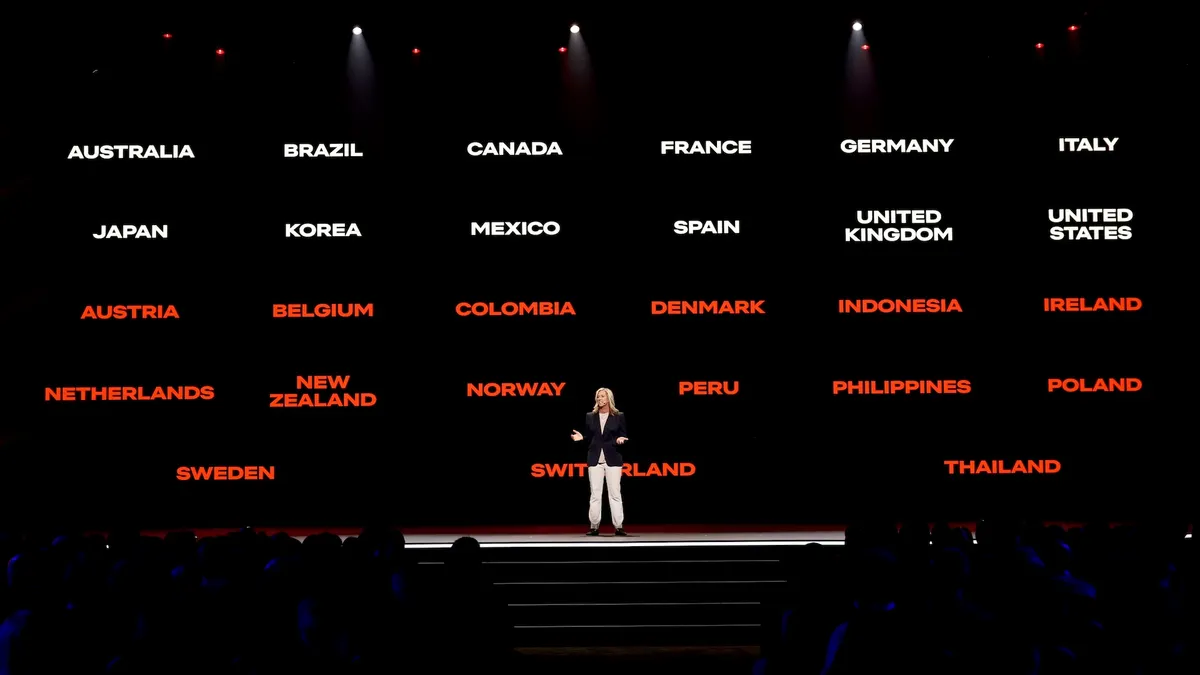
That audience is expected to grow in 2027 as Netflix expands its ads plans from its initial 12-country slate to 15 new countries: Austria, Belgium, Colombia, Denmark, Indonesia, Ireland, Netherlands, New Zealand, Norway, Peru, the Philippines, Poland, Sweden, Switzerland and Thailand. The platform will also open new ad inventory across podcasts and vertical videos globally in 2027, along with expanding brand partnerships with its official fan site, Tudum.
As discussed on its recent earnings call, Netflix is turning to artificial intelligence and machine learning tools that it has used for decades to help build out its ad business. DoorDash, Target and TurboTax have recently tested AI-powered capabilities that look to better match advertiser creative with the platform’s content — a capability that will be brought to every ad-supported region by the end of 2026.
The company is also testing AI agents to manage, optimize and purchase ads, in addition to the AI-driven tools that it already offers around developing and optimizing media plans based on brand objectives. Additionally, AI is being used to adapt assets for different formats, like vertical video or pause ads, and the company is testing new personalized ad loads and frequency caps that are dynamically adjusted based on viewing behavior.
“On top of new inventory, we're also marrying art and science better than anyone else,” Reinhard said. “AI is already making advertising with Netflix easier and more efficient.”
Simplified campaigns, driving results
Netflix during the presentation unveiled new tools, capabilities and partnerships that span planning, buying and measuring outcomes of ad campaigns. The offerings are part of the Netflix Ads Suite, which was deployed to all its ad-supported territories in the fall. Along with tapping the cast of “Emily in Paris” to detail its full-funnel solutions, the presentation featured Nicolle Pangis, vice president of advertising at Netflix, who joined the company after a stint as CEO of the cable ad sales company Ampersand.
“I know the pressure on every dollar is higher than ever, and I also know that you're looking for fewer, more strategic partners who provide high quality environments at the scale you need to streamline your buys and drive better results,” Pangis said during the presentation.
A new Audience Insights API helps advertisers learn about member characteristics and behaviors, while a Reach Curve API assists in forecasting campaign reach. The company has integrated with partners including Snowflake and Amazon Web Services around data clean rooms, and will add InfoSum as a partner by the end of the year. Netflix also works with Dentsu, Horizon, Omnicom, PMG and Tinuiti on solutions like planning APIs and clean rooms.
Additionally, Netflix is expanding programmatic capabilities to Live and Pause Ads using Dynamic Ad Insertion tech, allowing clients to buy through their preferred demand-side platform partners — first in the U.S. and Canada this summer before expanding more widely by the end of the year. The company will also enable programmatic audience targeting for all ad-supported countries on Amazon DSP by June 1 and Yahoo DSP in the months after, providing a timeline for previously announced partnerships.
While the battle over audience measurement continues, Netflix has joined the list of publishers working to prove outcomes, not just impressions. Campaigns on the streamer drive almost two-times the TV norm on long-term brand building, and perform 23% above benchmarks for purchase intent compared to competitors, per data shared by Netflix.
Dove, which partnered with the company around hit show “Bridgerton” for a campaign that spanned consumer products and custom spots, notched more than 1 billion impressions across seven markets and saw an almost 60% increase in new shoppers for products. Meanwhile, a partnership between Airbnb and “Nobody Wants This” around the booking platform’s experience offerings boosted awareness and purchase intent, delivered a return on ad spend more than double the industry benchmark and helped drive bookings.
“It's no surprise that ads on Netflix drive greater attention, more brand awareness, higher engagement and more search and web visits, but they also drive higher sales, lift purchase intent and return on ad spend, compared to our competitors,” Pangis said.