Sprite today announced the launch of a new campaign that sees the Coca-Cola brand dipping into consumer conversations around hip-hop culture, which it has been associated with for four decades. “The Living Tracklist” seeks to establish an evolving canon of hip-hop’s most impactful songs and leverages tactics such as packaging, social content and a digital experience powered by song lyric site Genius, per details shared with Marketing Dive.
“Sprite has never been a brand that just shows up when hip-hop is trending. Sprite has been with the culture and of the culture since day one,” said Chris Keyes, director of creative and strategy for Sprite North America, in a statement.
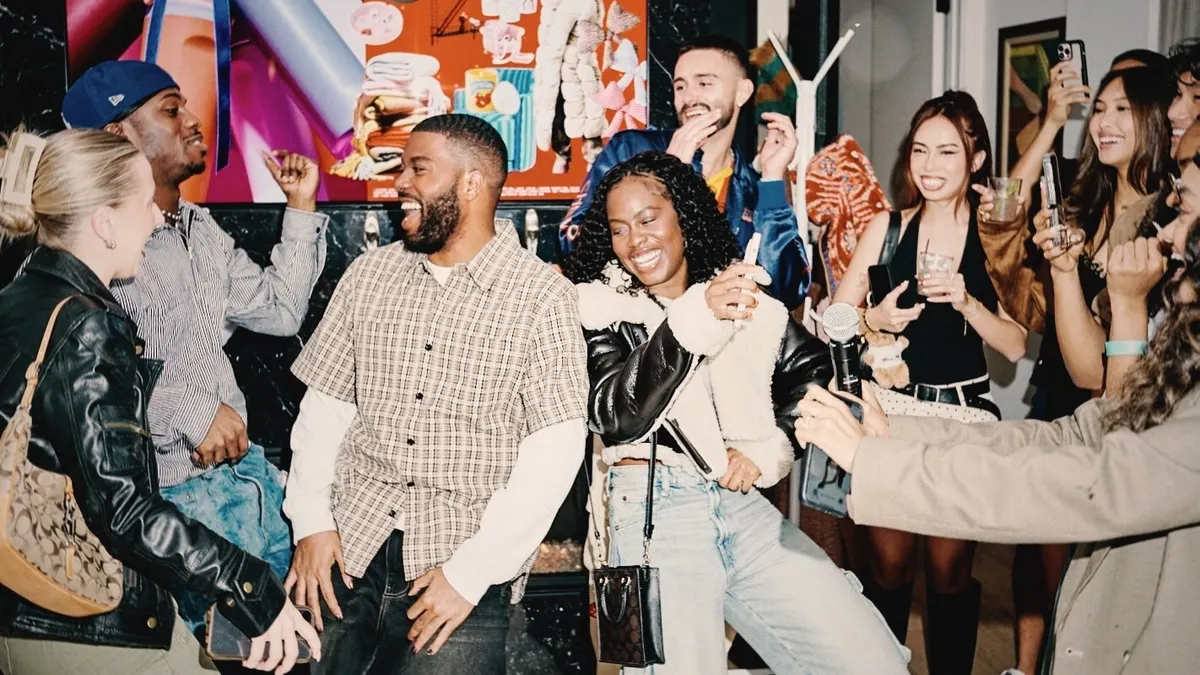
True to its name, “The Living Tracklist” is a Spotify playlist meant to be discussed and changed over time. To assemble the initial slate of songs, Sprite and Genius brought together seven figures from the world of hip-hop as a Cultural Authority Panel: Angie Martinez, Speedy Morman, Scottie Beam, Nyla Symone, Rob Markman, Joshton Peas and Frazier Tharpe. The panel’s discussion is being shared as a 40-minute YouTube video, along with cutdowns for social that further the debate.
“The disagreements are what makes this campaign special, and so as we think about the social content, we will be intentionally leaning into asking people, ‘Did we get it right? Do you like this song? Do you agree?’ We want to encourage the discussion and the dialogue, because that's where the richness and the engagement happens,” said Terika Fasakin, senior brand director for Sprite, in an interview.
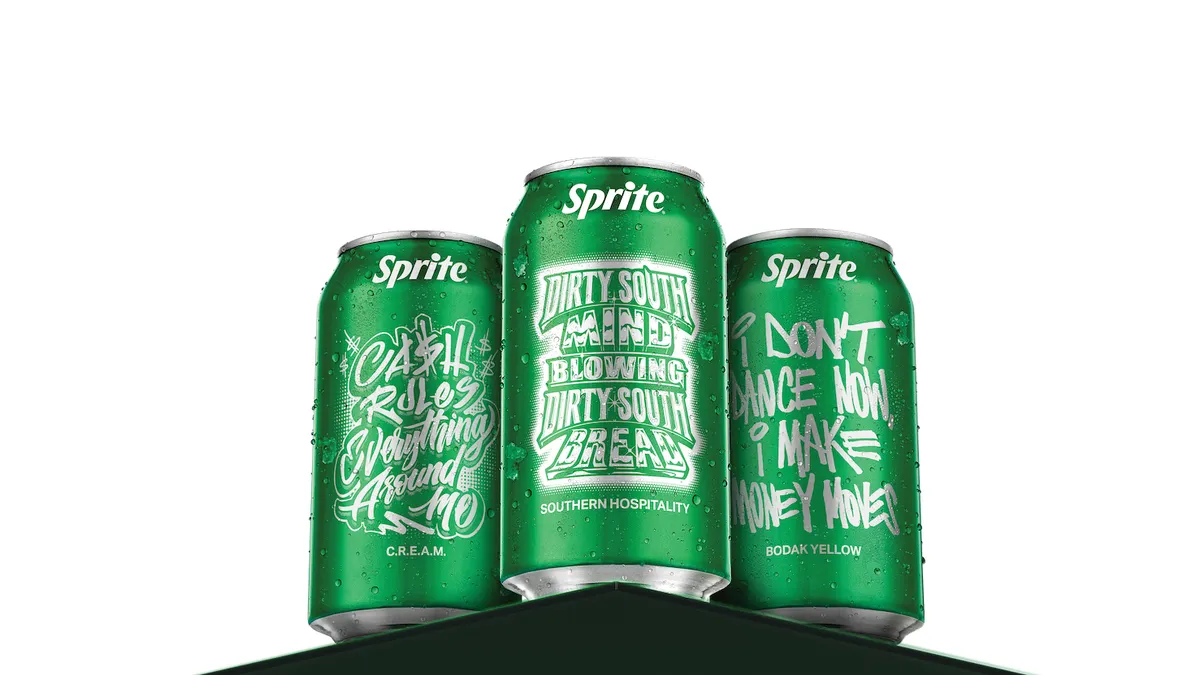
The tracklist will also live as 26 limited-edition packaging designs that feature key lyrics from iconic hip-hop songs from the late 1970s to today. The effort, which spans The Sugarhill Gang’s “Rapper’s Delight” to GloRilla’s “TGIF,” represents the most songs that Sprite has ever licensed at once. The new packaging will appear on Sprite and Sprite Zero cans and bottles from July through September. The designs were created by six illustrators and nod to the different styles of the six decades represented.
As has been de rigueur for Coca-Cola brands, on-pack QR codes will play a key role and lead consumers to an immersive digital space built around a custom Genius-hosted microsite where they can dive deeper into the conversation, watch additional video content and enter surprise sweepstakes.
“If you create something that people want to learn or read about, or experience, or debate, the business part of it will come. That is how it's always been for Sprite, with our support of hip-hop,” Fasakin said. “When you go onto the digital site, there's a broader list of songs, and then even outside of that, because this is a living, breathing campaign, It will never be definitive, it will never be a marker in time. This is meant to inspire discussion.”
The campaign will be supported with advertising in out-of-home, audio, retail, digital and social channels, with amplification by Genius and media company Complex, which developed custom co-branded social content for the effort.
Earlier this year, Sprite launched “It’s That Fresh,” a global platform that includes a refreshed visual identity, global partnerships and a sonic identity created in collaboration with hip-hop producer Mustard. The brand has had strong volume growth globally, CEO Henrique Braun said on an earnings call. Overall Coca-Cola organic revenues grew 10% in Q1 2026.
Sprite’s deep connection to hip-hop music and culture dates back to 1986, when rapper Kurtis Blow appeared in a commercial. The brand launched its iconic “Obey Your Thirst” ads in 1994 and evolved it into an “Obey Your Verse” campaign in 2015. The hip-hop-themed “Thirst For Yours” campaign in 2019 supplanted “Obey Your Thirst,” which returned in 2024 as part of the brand’s push to reach Gen Z consumers and helped Sprite surpass Pepsi. With “The Living Tracklist,” Sprite’s long legacy of marketing around hip-hop music and culture continues.
“There's a big responsibility that we put on ourselves to represent hip-hop and honor it each time that we do a campaign,” Fasakin said. “It doesn't get easier because we've been doing it for 40 years. Each time you have to sit down and be willing to not take the easy route.”
Correction: A previous version of this article attributed a quote to the wrong executive. The article has been updated with the correct attribution.