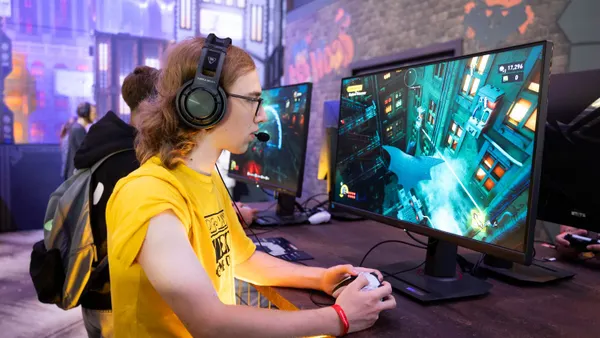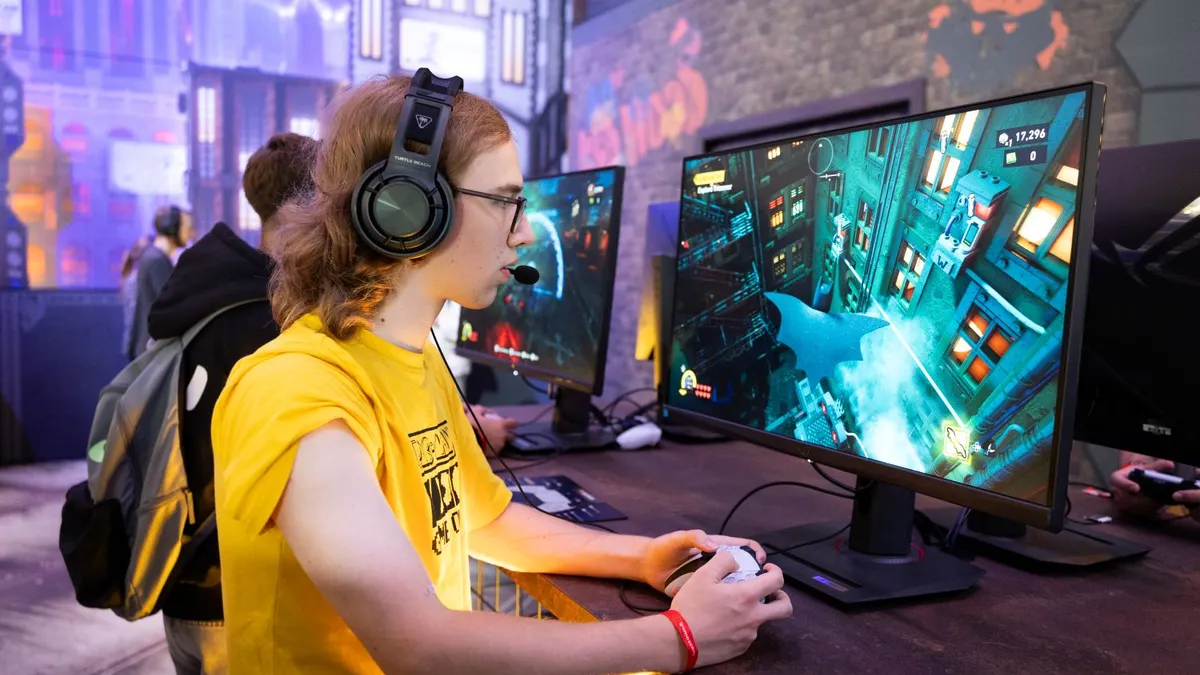
NEW YORK — Gaming has remained an area of interest and confusion for marketers for years. The messaging from the gaming industry has remained consistent: there are massively engaged, mostly young audiences ripe for the taking. Technology has improved, both on the advertising side and within the games themselves, and it's time to move beyond rewarded video and mobile pop-up ads.
But despite its audience size of 3.6 billion players, gaming still commands only a fraction of advertising budgets.
“For the past several years, gaming has been singing this very familiar song. The audience is enormous. The engagement is extraordinary and the advertising dollars are not following,” said Cintia Gabilan, senior vice president, Centers of Excellence & Industry Initiatives at the Interactive Advertising Bureau, during the keynote address for the trade group’s PlayFronts gathering on Sept. 17.
Marketers, platforms, developers and other industry stakeholders converged in New York at the PlayFronts to evaluate why, despite the major strides in gaming over the past few years, investment still lags. Topics covered included mobile gaming, advancements in measurement and more.
To help marketers keep up with the rapidly changing landscape, Marketing Dive compiled a list of the top five takeaways from IAB PlayFronts.
Beyond audience size
Marketers know that consumers game. Two-thirds of Americans between the ages of 5 and 90 game at least an hour per week, per 2026 data from the Entertainment Software Association. The size of the audience has always been a draw for marketers, especially given the highly engaging nature of the channel. When consumers game, they are rarely on a second screen, unlike with other mediums such as TV. The size and receptiveness of the audience is no longer the question.
The conversation around gaming is now centered around practicality, per Gabilan. How do you explain gaming to senior leaders unfamiliar with the channel? How does gaming fit in the overall media plan? How does measurement work?
During her address, Gabilan compared gaming to connected TV. Americans spend approximately 20% of their media time with the channel, but only about 7.7% of media spend is dedicated to CTV, she said.
“The gap is still closing, but it's a channel that we all already consider mainstream,” said Gabilan. “Gaming has exactly the same shape of problem, if you will. It's just very much earlier in the curve.”
Mobile gaming as cornerstone
Mobile gaming remains the backbone of gaming advertising, and for good reason. Approximately 62% of mobile gamers are Gen Z or millennials, making the category a good option for those looking to target ever-important young consumers, per Marian Thomas, senior director of partnerships, research and measurement at mobile game developer Zynga. Beyond that, 82% of mobile gamers are heads of household and 54% are parents, said Thomas.
Interactive and rewarded video ads are the bread and butter of mobile game advertising. Instead of being a pop-up or an interruption, these formats make players feel like they’re getting something out of the advertisement, which creates positive brand experiences.
“It works because it's a highly engaged audience. They're attentive, they're active, they're receptive. Those rewarded and interactive ads drive deeper engagements and stronger responses, and higher attention scores,” said Thomas.
But mobile game advertising isn’t without its flaws: It is very easy to overload the consumer with advertising.
“It's highly engaging, but at the same time, if you do it too much, it becomes an annoyance,” said Benjamin Chua, client media lead at WPP Media, in a discussion with Jorge Prado, co-founder and CEO of Admazing Co.
The gaming golden age
More than ever, gamers have access to well-made, highly engaging titles. It is easy to look at gaming and think players stick to one title and the marketer selects the game with the desired target audience. But, that couldn’t be farther from the truth, experts say.
“That model is gone because there are more games than ever, and more good games than ever,” said Shahar Sorek, CMO of Overwolf, a company specializing in user-generated content, such as in-game apps and mods.
While presenting an extra layer of complication, following players across titles can provide marketers with a unique opportunity. They can continue to engage with players and stay ahead of the industry curve.
“What gaming has is a perception problem,” said Sorek. “The map got more complex, so the buy looks harder. None of that is a statement about the medium. It's a statement about how the medium is being read… 2.4% of [media] spend against 67% of the country playing every week, it's not a stable equilibrium. The only question is who fixes it early and who is still catching up.”
One measurement to rule them all
Like all channels, measurement is crucial when it comes to gaming. However, what gets measured, and how, is still a major question in the space. Gaming is seen by many of the top marketing executives as an experiment or a risk. Proven, consistent measurement of success will be necessary for the channel to secure its fair share of the media plan pie.
“The audience moves across many titles, so your plan has to move with it. And proof: measure what matters. Not that they clicked during playtime, but did it change what they did afterward,” said Overwolf’s Sorek.
Laying out how measurement will work may help advertisers be more successful when pitching gaming to higher-ups, said Andy Martinson, senior marketing manager at H&R Block. Not all gaming is the same, and marketers need to figure out what’s important to your brand and build around that.
“There are so many different ways to measure gaming,” said Martinson. “You've got gaming that is like programmatic… you have displayed in-game pieces and then you've got interactive games.”
Show me the money
The unequal amount of spend gaming receives is at the center of the gaming advertising conundrum. However, over the course of the PlayFronts, several new questions surfaced: Is gaming really not getting its due? Or is the money just hidden in other line items? Are Twitch activations considered gaming? Or is it social media? Are partnerships with gaming creators funded by an allotted gaming budget? Or does that fall under influencers?
The answer to these questions may not be so straightforward. How gaming is budgeted still shouldn’t prevent brands from getting into the space. How the category is labeled doesn’t change the fact there are a lot of options for marketers to experiment with.
“Since it's an emerging platform, there's so many different options, there's so many ways to build into gaming and do interesting new things,” said Martinson. “You don't always have to sit in a box … [Gaming] is new, it's cheap, which is the best possible thing for a market.”