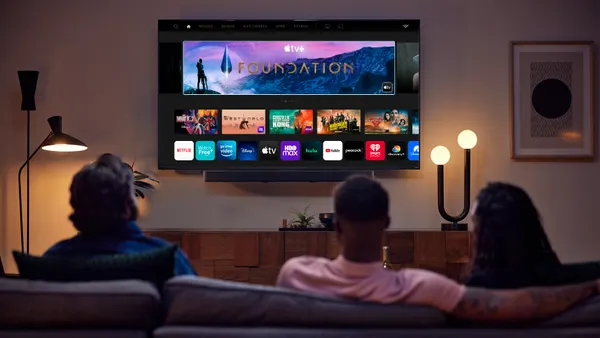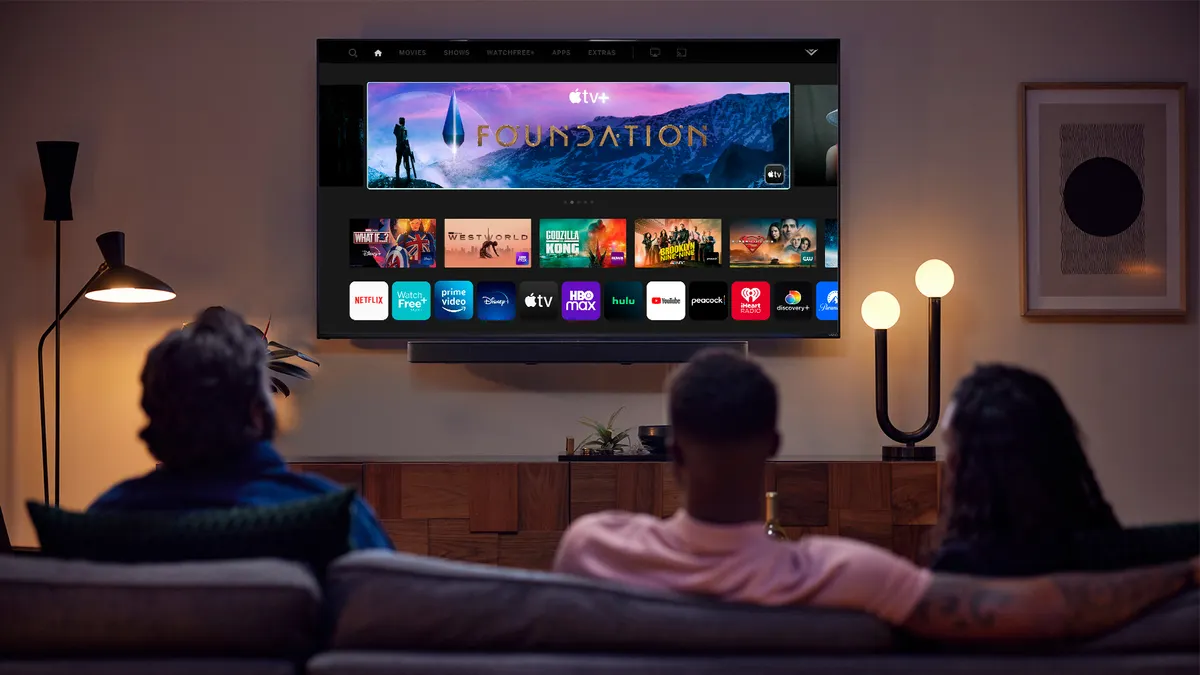
Walmart last week announced plans to acquire Vibe.co, a connected TV ad platform designed with small- and mid-sized businesses and mid-market brands in mind. The deal, reportedly for $1.2 billion in cash, is the retailer’s latest move to further build its ad business and its largest investment in the space since buying smart TV maker Vizio for $2.3 billion in 2024.
The deal reflects Walmart’s need to keep growing its business as it chases Amazon, a company with a more mature ad business that makes roughly ten times in ad revenue per year.
“This is good news because it lowers the barrier to entry for CTV, particularly for small and mid-sized businesses that may have found TV advertising too complex in the past,” Martin Kristiseter, CEO at Digital Remedy, wrote in emailed comments. “The conversation is shifting from ‘Should I invest in CTV?’ to ‘How do I make sure I still have clear measurement and access to my data as these platforms continue to evolve?’”
The addition of Vibe.co will help the retailer bring more advertisers into its ad ecosystem, which promises closed-loop measurement and retail outcomes. The deal unites Walmart’s deterministic purchase data and Vibe’s probabilistic cross-device identity graph, further connecting exposure and outcomes, according to Jesse Math, vice president of strategic partnerships at Keen Decision Systems.
“Together, the promise is a more complete picture of omnichannel ROI, one that captures how spend within Walmart creates halo on direct channels, and how spend outside of Walmart feeds velocity back into Walmart,” Math said in emailed comments.
The growth of Walmart Connect, in both capabilities and overall ad spend, makes the retailer’s pitch stronger but complicates decisions for marketers grappling with an already fragmented market.
“What’s the right amount to spend with Walmart versus Amazon versus Kroger? What’s the right balance between retail media and Google Search and Meta? What’s the right split between on-platform Walmart investment and off-platform?” Math said.
Connecting with CTV
The acquisition, which is subject to customary closing conditions, comes as Walmart continues to see momentum in its advertising business, with 36% growth in the U.S. in the first quarter of fiscal 2027, spurred by engagement with marketplace sellers who grew ad spend by over 50% and saw a corresponding lift in sales. Walmart Connect, the company’s retail media arm, saw a 44% increase, excluding Vizio.
“Combining its retail data, Vizio and now Vibe's self-serve platform gives advertisers a simpler way to activate CTV campaigns and measure results,” said Kristiseter. “It's clear Walmart wants to compete more aggressively with Amazon by making its advertising ecosystem easier to use and more performance-driven.”
Walmart’s doubling down on CTV aligns with industry trends. Nearly 70% of CTV advertisers expect to increase their spending this year on the channel, according to Advertiser Perceptions research. In kind, the number of small spenders investing in CTV has increased from 60% in 2024 to 85% in 2026, per IAB's Digital Video Ad Spend & Strategy Report.
The deal comes just weeks after the Fox Corporation bought Roku for $22 billion, uniting the media company’s portfolio with a CTV platform that reaches more than 100 million global households. Similarly, Pinterest in December acquired CTV advertising platform TvScientific, bringing its intent-based audience insights to the channel for the first time. Walmart’s Vibe.co deal speaks to how CTV is at the center of audience intelligence, commerce data and consumer relationships, according to TJ Hunter, CMO at ad platform Keynes.
“Walmart clearly sees an opportunity to bring more advertisers into the CTV ecosystem, but it also reinforces a bigger shift that's happening across the industry,” Hunter wrote in emailed comments. “Companies are increasingly viewing streaming TV as a place where media, commerce, data, and customer engagement intersect.”
Walmart has continued to build out Connect. This month, Walmart brought its audiences to streaming video on YouTube through Google’s Display & Video 360 and opened Vizio inventory through Yahoo DSP via Magnite. The retailer in April launched the Connect Select marketplace to make it easier to buy streaming TV ads through Walmart DSP, an effort — like the Vibe deal — aimed at small- and medium-sized businesses.