

CANNES, LIONS — Ask Cannes Lions attendees what’s top of mind at the show, and the safe money is on “artificial intelligence” as the answer. Part of that is due to some of the festival’s attention-grabbing new entrants, but platforms and publishers nearly across the board are eager to demonstrate that their bets on the space, including in agentic AI, are moving from the realm of hype into reality.
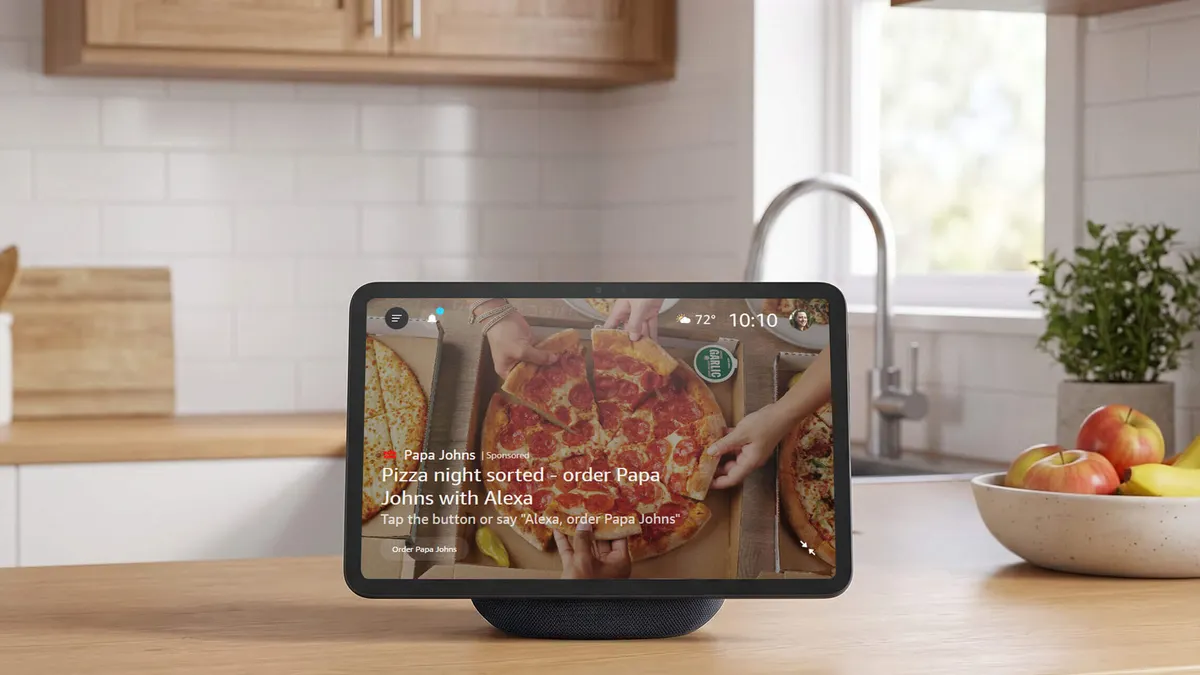
Amazon this week unveiled a new ad format, Alexa+ Agentic Ads, that underlines the focus on leveraging AI to deliver more tangible outcomes for brands. Customers that are served an ad can strike up a voice chat, weigh different buying options and complete their transaction without having to leave the Alexa interface.
In a demo shown by Amazon, a woman who is interested in getting concert tickets to see Jill Scott refines her results by noting the occasion is her mom’s birthday and that she’s open to paying more for premium seating options. She eventually finds front-row seats on Ticketmaster, all via voice commands.
Papa Johns and The Orchard, a subsidiary of Sony Music Entertainment, are early partners on Alexa+ Agentic Ads, which are currently running in beta on Amazon’s Echo Show devices. Alexa+ became publicly available earlier this year following a beta period in 2025. Toward the end of last year, Amazon confirmed to TechCrunch that more than 1 million people had access to the generative AI assistant. According to information shared by Amazon, Alexa is used in tens of millions homes.
Amazon plans to bring the format to Fire TV as well, where it will live in the carousel-like Feature Rotator experience on the home screen. While the testing period is early days, executives emphasized they don’t view Alexa+ Agentic Ads as a limited experiment or theoretical use case.
“We have ad products that are live today. This isn’t something that we’re talking about or [saying] ‘we’re working on it,’” said Charlotte Maines, Amazon vice president of devices content and advertising, in an interview Wednesday.
Alexa+ Agentic Ads do not require rigid phrases to know when to complete an action, according to Maines, and can pick up on subtler cues. Amazon sees the conversational nature of the technology as a way to eventually realize more personalized, relevant ads, echoing where other AI platforms believe they can deliver value to brands. In Papa John’s case, Alexa may remember a customer’s favorite toppings from a prior conversation, and surface those as a recommendation for repeat orders.
“This is literally the first thing of so much more opportunity for innovation, because Alexa+ — just as all of these agentic AI assistants — is new,” said Maines. “My job is to make sure that, as customer engagement grows, advertisers can participate in those high-intent conversations.”
Leveraging Amazon’s tech stack
Cannes Lions may make for a crowded AI playing field, but Amazon sees an advantage over upstarts thanks to the same assets that have powered its advertising division into a $70 billion engine. Those include an robust demand-side platform, established measurement capabilities and a rich trove of transaction-level data.
“We’ve got this incredible Amazon advertising tech stack, infrastructure business, where we are very well positioned to pull things into the DSP, for example, [or] offer something self-service and programmatic very quickly,” said Maines.
Amazon is also aligning its new agentic products with a larger suite of automation tools, including creative agents that help advertisers develop, create and deploy campaigns on the platform.
“[Advertisers] can be as involved or not involved as they want in terms of their creative teams on how they generate these assets, but we ... offer a plug and play solution,” said Maines. “We do have this foundation, so we're able to offer a lot of data on how creative performs historically.”
The often winding, more intimate nature of consumer conversations with AI chatbots raises potential privacy concerns as the channel intersects more with advertising. OpenAI, for example, has pledged to not share conversational information with advertisers as it tries to preserve user trust.
Maines described a use case where she lost her young son’s water bottle, and Alexa serves up replacement recommendations — some sponsored — that remember his age range and preferred color, orange. That level of tailoring is enabled by information shared with the AI, but there is a “firewall” in place when it comes to the ad-tech stack, according to Maines. Privacy is another area where Amazon’s longer legacy in advertising may provide a leg up amid the AI explosion, she explained.
“We are using the information to create a better first-party model, but that doesn’t change anything about the fact of how we engage with advertisers, in terms of the way that we use data to get the best ad for you,” said Maines. “We’re lucky that we just have decades of a foundation of building products based on both creating a very personalized and relevant experience and doing it in a way that's safe for customers’ privacy.”
Editor’s note: This article was updated to include information about Alexa’s user base provided by Amazon post publication.