Celsius Holdings is looking to reinvigorate Rockstar, which it acquired from PepsiCo as part of a larger investment partnership in 2025. Rockstar was founded in 2001 and acquired by PepsiCo in 2020 for $3.85 billion, but has seen its share of the energy drink market decline as new entrants and consumers entered the category.
Central to Rockstar’s revamp efforts is a marketing push led by Rishi Daing, who was brought on as CMO for the entire portfolio shortly after the acquisition. Daing has more than two decades of marketing and commercial leadership experience, including more than 15 years at PepsiCo, and is focused on reinvigorating a brand that fills a gap in the Celsius portfolio.
“Everybody's talking about modern energy — I describe it as the second gold rush for energy drinks — but the fact remains that about a third of new consumers coming in [to the category] still like traditional energy,” the executive told Marketing Dive. “Rockstar was just an incredible brand with a lot of in-built inherent equity. The brand value was so much higher than its market share.”
Celsius Holdings started the year strongly, delivering record first-quarter revenue of $783 million and surpassing 20% dollar share of the total U.S. energy beverage market. With a portfolio that also includes its namesake functional energy drink and women-focused Alani Nu, the company continues to execute a strategy that helped it grow full-year revenue 85.5% to $2.5 billion in 2025.
“As we move through 2026, we remain focused on investing behind our brands to support growth, including additional marketing investment across the summer selling period while continuing to improve the quality and consistency of our earnings profile,” said CFO Jarrod Langhans on a recent earnings call.
Sports and music marketing
To help unlock the brand’s latent value, Rockstar recently launched a new “Live Loud” brand identity that brings back yellow as its key color and returns the brand to a disruptive ethos. During its last few years under the PepsiCo umbrella, Rockstar unveiled a simplified look and targeted a broader, more modern consumer base. The “Live Loud” work serves as an expression of a brand historically targeted at a traditional energy drink audience that skews more male and down-market.
“We’re modernizing its original tone and voice, making it more relevant to the 20-year-old of today. Our consumers have aged; we just haven't brought in the next generation,” Daing said. “To use what the language was 25 years ago, 20 years ago, even 15 years ago is not as relevant to consumers today.”
Key to “Live Loud” is a push to reach consumers not through mainstream culture, but through subcultures in music and sports that were Rockstar’s initial bread and butter. Unlike other brands that have partnered with massive properties like Coachella, Rockstar has focused its aim on smaller festivals, usually with a hard rock bent befitting the brand’s name, including Sick New World in Las Vegas, Sonic Temple Art and Music Festival in Columbus, Ohio, and Kilby Block Party in Salt Lake City. Along with marquee events, the brand’s music marketing will focus on the regional and local level.
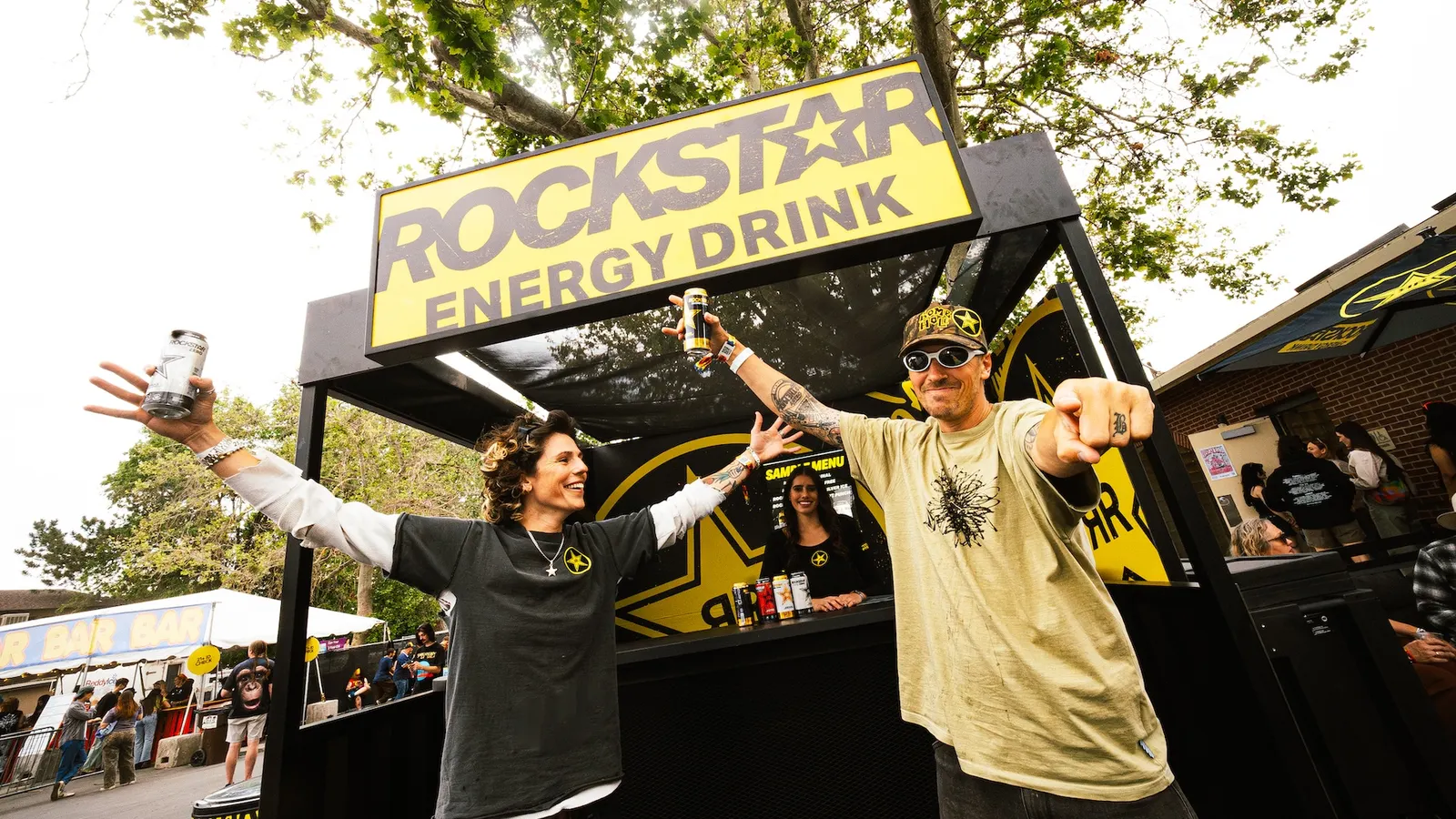
“We are really expanding our field marketing teams. We're going to put the right amount of investment in there, but we want to find those smaller venues, also those smaller, emerging artists that are crowding the 1,000-person venue, not necessarily the 50,000-person venue,” Daing said.
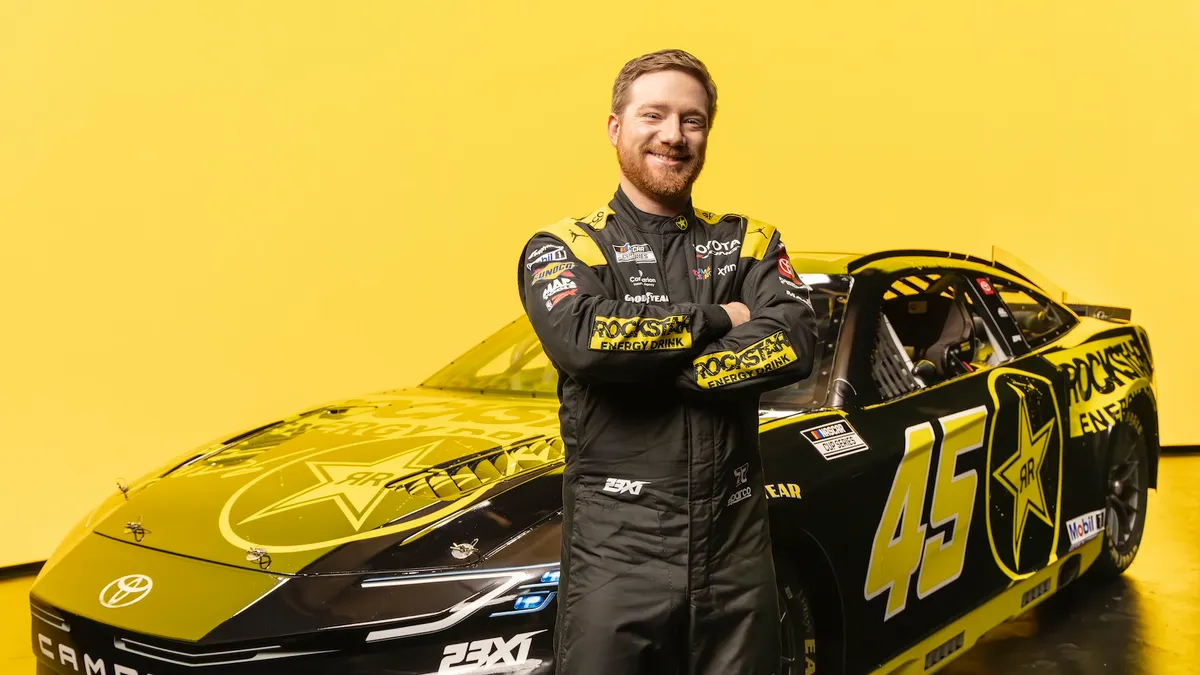
Rockstar is also returning to NASCAR, a sport in which it last had a sponsorship more than a decade ago and one where competitors Red Bull and Monster are active. The brand announced a partnership with driver Tyler Reddick in April, a month after he became the first driver in NASCAR Cup Series history to win the first three races of a season. For Rockstar, NASCAR provides a foothold in areas where the brand’s sales are weaker.
Reddick will be featured in Rockstar’s marketing campaigns, digital content and on-track integrations. The multiyear partnership also connects the brand with the organization Reddick drives for, 23XI Racing. Co-founded by NBA legend Michael Jordan, 23XI continues to boost its commercial footprint, which also includes partnership with Coca-Cola and Monster Energy.
“West Coast is really where our core strength is, but in the last few years, the East Coast has completely fallen off [for Rockstar],” Daing said. “We know our brand resonates on the East Coast, we just have to give it a little bit more color, bring it more to life, make it more relevant, and we felt NASCAR — with extremely high fandom in the East and the South — would make sense for a brand like Rockstar.”