McDonald’s will no longer be an official sponsor of the FIFA World Cup, following a partnership that spanned more than three decades, the chain announced late last week. The company described the move as an evolution of its marketing model and how it invests in global partnerships, potentially disrupting the QSR sports sponsorship space.
“Looking ahead, sport and culture will remain important ways we connect with our fans as we sharpen our focus on creating distinctive McDonald’s experiences that deepen those connections year-round,” Morgan Flatley, McDonald’s global chief marketing officer and head of new business ventures, said in a statement.
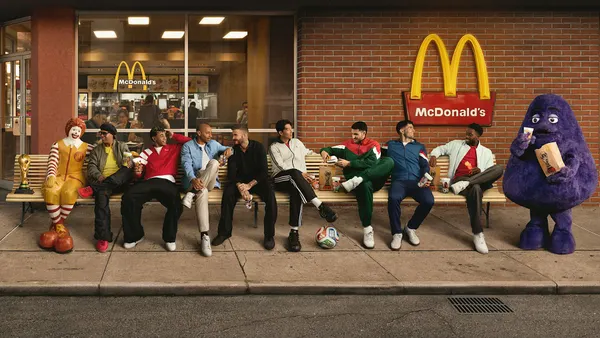
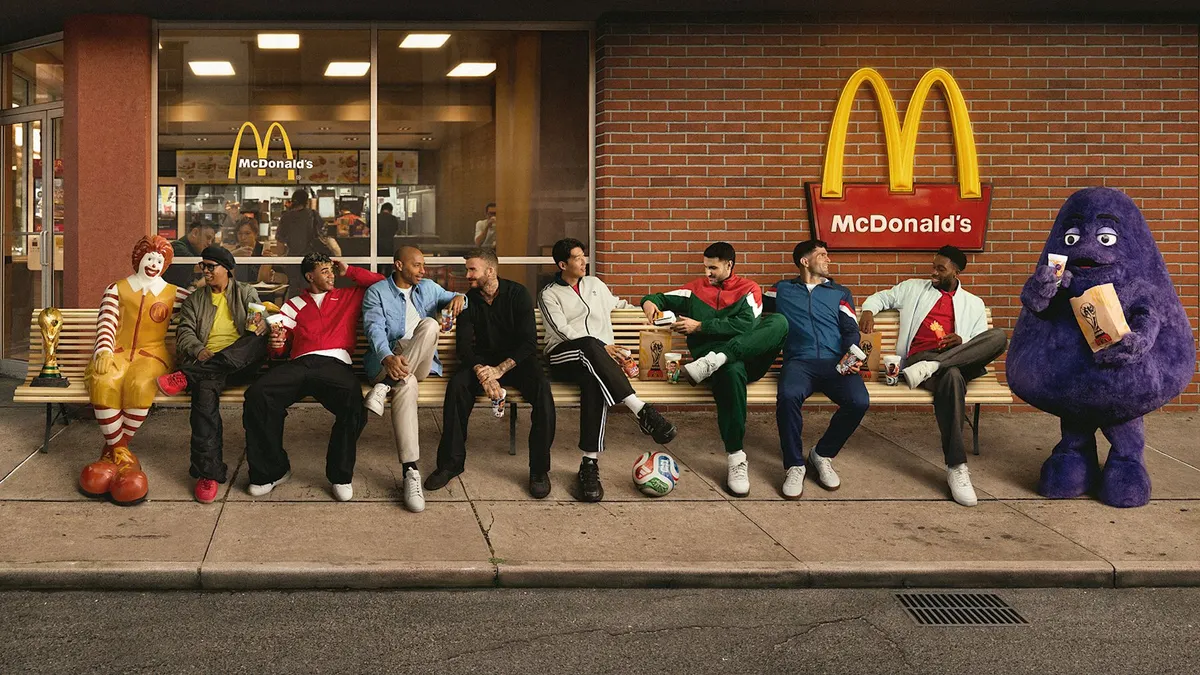
McDonald’s began its official sponsorship of the global soccer tournament in 1994. The chain this year rolled out its largest-ever World Cup effort, reaching more than 100 markets with a campaign that included soccer stars collaborations, collectible cups and experiential elements.
The campaign provided a lift to McDonald's Net Promoter Score and its social media buzz among young consumers, per Kantar data shared with Marketing Dive. McDonald’s saw 0.8% same-store sales growth in Q2 2026. A drop in traffic during the period was a drag on performance, with the company attributing one-third of the traffic loss to its World Cup campaign.
“While the campaign provided a lift to the business and generated excellent system excitement, the campaign underperformed versus our expectations,” CFO Ian Borden said on an earnings call.
The end of McDonald’s FIFA partnership could speak to broader changes in the sports marketing and media landscapes than simply the underperformance of this year’s campaign. While sponsoring a league like FIFA represents one of the few opportunities for marketers to reach billions of consumers around the globe, imperatives around dynamically deploying content across platforms have become more costly.
“The rights holders are providing the platform, but in a lot of cases, the onus is on the brands to activate against that effectively,” said Bob Lynch, founder and CEO of SponsorUnited. “You've got to spend another probably $70 to $100 million dollars, just to bring those things to life outside of the spend with FIFA… do they feel like they're set up to do that most effectively in that environment?”
McDonald’s and competitors hit the field
While it will no longer sponsor the World Cup, the chain continues to invest in soccer and sports more broadly, including its sponsorship of Ligue 1 in France and a tie-up with MLS team Chicago Fire FC that will give the chain its first naming rights partnership for a major pro sports stadium in the U.S. In addition, McDonald’s invests in its long-running All-American Games program and around Formula 1 in Latin America.
McDonald’s has hundreds of partnerships with individual teams and athletes and is the second-largest spender in the QSR category within North American team sports behind Chick-fil-A, per SponsorUnited data shared with Marketing Dive. The post-FIFA focus on smaller partnerships could allow the chain to be more nimble with its investments after it committed nearly $80 million towards its World Cup partnership for the 2026 cycle alone.
“They may be able to A/B test at scale different programs and things that they can do, but it's also going to require a tremendous amount of work because you're going to be doing it in a distributed fashion,” the executive said. “It probably creates a little bit more chaos if you're sitting on the marketing teams.”
McDonald’s is actively exploring other opportunities, according to the company. The chain is operating a new marketing model that focuses on creating fan-first experiences, leaning into its own brand and IP, securing year-round engagement and spanning both local relevance and global scale. The marketing model is part of a strategic plan that McDonald’s unveiled in June and detailed during a September investor day.
While McDonald’s FIFA exit leaves a gap in the organization’s sponsorship roster, the outcome will likely be more complicated than seeing one of its QSR competitors slide into the role, due to the large investment that could entail — even if such a brand was able to negotiate from a position of strength. The move will likely have other downstream implications in QSR marketing for competitors in the space, now that McDonald’s potentially can spend marketing dollars previously earmarked for FIFA elsewhere.
“Maybe [there’s] a space where other QSR companies have been in, now all of a sudden [McDonald’s is] able to deploy capital into those environments as well,” Lynch said. “I do think it creates some disruption in the category.”